
Africa
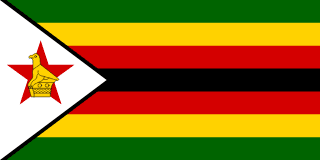
Zimbabwe is a landlocked country in southern Africa, bordered by Zambia to the north, Mozambique to the east, South Africa to the south, and Botswana to the west.
Zimbabwe's name comes from the Shona phrase 'dzimba dza mabwe,' meaning 'houses of stone,' referring to the Great Zimbabwe ruins, an ancient stone city that gives the modern country its name.
Landscape: Mostly high plateau (the Highveld), with the Zambezi River and Victoria Falls to the north and lower-lying terrain toward the borders.
Climate: Subtropical, moderated by altitude, with a distinct wet and dry season.
Food: Sadza, a maize porridge similar to Zambia's nshima, is the everyday staple, typically eaten with a meat or vegetable stew.
Harare was founded in 1890 as a fort by British colonial pioneers and originally named Salisbury, only being renamed Harare upon independence in 1980. With a population of around 1.5 million, it remains Zimbabwe's political and economic centre.
The Zimbabwe Bird, a soapstone carving found at the ancient Great Zimbabwe ruins, is the country's most significant national symbol, appearing on both the flag and currency, representing the nation's ancient heritage.
Shona stone sculpture, a modern art movement drawing on traditional spiritual beliefs, has gained significant international recognition since the mid-20th century, and traditional Ndebele beadwork and basket weaving remain actively practised crafts. Traditional Zimbabwean mbira, a thumb piano used in spiritual ceremonies for centuries, remains a significant and actively performed musical tradition.
Great Zimbabwe, a stone city built between the 11th and 15th centuries and one of the largest ancient structures in sub-Saharan Africa, gives the country its name, and Victoria Falls, shared with Zambia, is another of Zimbabwe's defining landmarks. The Matobo Hills, with their distinctive granite rock formations and ancient rock art, are a UNESCO World Heritage Site and hold deep spiritual significance to local communities.
Hwange National Park, Zimbabwe's largest, holds one of the largest elephant populations in Africa, and Mana Pools, along the Zambezi River, is known for exceptional wildlife viewing on foot rather than only by vehicle.
Zimbabwe is majority Christian, though traditional Shona and Ndebele spiritual beliefs continue to be practised and often blended with Christian faith, and the country has two major ethnic groups, the Shona and Ndebele, each with distinct languages and traditions.
Zimbabwe is a significant exporter of tobacco, gold, and platinum group metals, with agriculture and mining both forming substantial parts of the national economy.
Independence Day on April 18th marks 1980, when Zimbabwe gained sovereignty following a long liberation struggle against the white-minority Rhodesian government. Heroes' Day in August honours those who died in that liberation war, and Unity Day, observed the day after, commemorates a 1987 agreement that ended a period of significant post-independence internal conflict. Zimbabwe's Defence Forces Day in August honours the country's military and its role in the independence struggle.
Cricket holds a genuinely significant place in Zimbabwean sporting culture, unusual for a southern African nation otherwise more commonly associated with football, and the country has produced internationally competitive teams at various points since independence. Football also draws a large domestic following, and Zimbabwe has produced Olympic swimming and golf champions relative to its population. Zimbabwean athletics has produced several notable middle-distance runners at continental competitions.
Zimbabwe is a presidential republic, with a President serving as both head of state and government. The country was led by Robert Mugabe from independence in 1980 until 2017, when he was removed from power in a military-backed transition, one of the longest and most consequential tenures of any African leader of the post-independence era. Zimbabwe's land reform programme in the early 2000s significantly reshaped the country's agricultural sector and economy. Zimbabwe's economy has faced significant challenges from hyperinflation and currency instability in recent decades.
Mount Nyangani is Zimbabwe's highest point at 2,592 metres. The lowest point is where the Save River exits the country, sitting around 162 metres above sea level, Zimbabwe's lowest point despite being well above true sea level, since the country is entirely landlocked.
There's no especially close match for Zimbabwe's flag, the seven horizontal stripes in green, gold, red, and black, combined with a white triangle bearing a red star and the distinctive Zimbabwe Bird emblem, make it one of the more visually detailed and genuinely unique national flags in the world.
Adopted in 1980 when the country gained independence and was renamed from Rhodesia to Zimbabwe.
Home to Victoria Falls, known locally as 'The Smoke That Thunders.'
Play today's Flagpie →© Flagpie 2026