
Asia
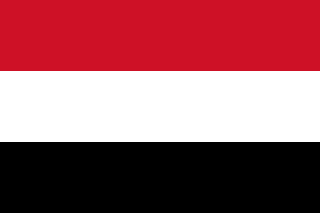
Yemen sits at the southern tip of the Arabian Peninsula, bordered by Saudi Arabia to the north and Oman to the east, with coastlines on the Red Sea and the Gulf of Aden.
Yemen's name likely comes from an ancient Semitic root meaning 'south' or 'right-hand side,' reflecting its position relative to the direction early Arabian peoples used for orientation, tied to the rising sun.
Landscape: Ranges from a hot coastal plain along the Red Sea and Gulf of Aden to mountainous highlands and desert further inland.
Climate: Desert climate across most of the country, cooler and wetter in the mountainous highlands.
Food: Saltah, a spiced meat stew topped with a frothy fenugreek paste, is widely considered the national dish.
Sanaa is one of the oldest continuously inhabited cities in the world, with tradition tracing its founding to the biblical figure Shem, son of Noah, and its old walled city, a UNESCO World Heritage Site, contains distinctive multi-storey tower houses decorated with elaborate geometric brickwork dating back centuries. With a population of around 3 million, it has served as Yemen's capital through significant recent conflict that has severely affected the country.
The golden eagle, tied to the same Eagle of Saladin symbolism shared with Egypt and Iraq, appears on Yemen's coat of arms, and coffee, since Yemen is widely regarded as the birthplace of coffee cultivation and trade, remains deeply significant to national identity.
Yemeni silverwork, particularly the intricately decorated jambiya ceremonial dagger still genuinely worn by many Yemeni men, and traditional Yemeni tower-house architecture, built from mud brick and stone without modern engineering, reflect centuries of distinctive craft heritage.
The Old City of Sanaa, with its densely packed multi-storey tower houses, and the island of Socotra, so isolated that roughly a third of its plant species exist nowhere else on Earth, are among Yemen's most significant and distinctive sites.
Socotra's extraordinary isolation has produced remarkable endemic species, including the dragon's blood tree, with its distinctive umbrella-shaped canopy, found naturally nowhere else in the world.
Yemen is majority Muslim, split between Sunni and Zaidi Shia populations, and the country's ancient heritage as part of the historic Kingdom of Sheba remains significant to national identity, even as decades of recent conflict have severely affected daily life and infrastructure.
Yemen's formal export economy has been severely affected by prolonged conflict, with historic exports including crude oil and coffee, particularly the historically significant mocha coffee variety named after Yemen's Red Sea port of Mokha.
National Day on May 22nd marks 1990, when North and South Yemen unified into a single country. Revolution Day on September 26th commemorates the 1962 revolution that overthrew North Yemen's monarchy, and given Yemen's overwhelmingly Muslim population, Eid al-Fitr and Eid al-Adha are both major national holidays. Yemen's Correction Movement Day in June marks a significant 1974 shift in South Yemen's political leadership.
Football holds the largest domestic following in Yemen, even amid a devastating and ongoing civil war that has severely affected the country's sporting infrastructure and daily life more broadly. Traditional Yemeni bull-butting and camel racing remain practised in some regions as part of broader cultural heritage.
Yemen's political situation has been severely unstable since a civil war broke out in 2014, with the internationally recognised government controlling parts of the country while Houthi rebel forces control the capital, Sana'a, and other significant territory, making Yemen's current governance genuinely difficult to describe with confidence given the ongoing conflict. Yemen's historic mocha coffee variety, named after its Red Sea port, remains a point of cultural and agricultural pride.
Jabal An-Nabi Shu'ayb is Yemen's highest point at 3,666 metres, the highest peak on the Arabian Peninsula. The lowest point sits at sea level along Yemen's coastlines on both the Red Sea and Arabian Sea. Yemen's terrain ranges from coastal plains to significant highland areas in its western interior.
Egypt, Syria, and Iraq all use variations of the same red-white-black horizontal Pan-Arab tricolour Yemen does, tracing back to the 1916 Arab Revolt flag, and Yemen's plain design, without any central emblem, star, or script, makes it the simplest version among this closely related family of regional flags, easily confused with any of them at a glance. Yemen's plain, unadorned stripes make it the simplest version among the closely related Pan-Arab flag family.
Adopted in 1990 when North and South Yemen unified, combining the red-white-black Pan-Arab colours both countries already shared.
Home to the island of Socotra, so isolated that around a third of its plant life exists nowhere else on Earth.
Play today's Flagpie →© Flagpie 2026