
South America
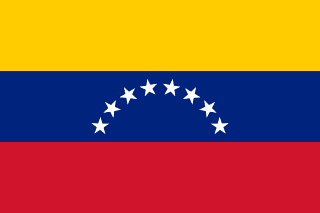
Venezuela sits on the northern coast of South America, bordered by Colombia to the west, Brazil to the south, and Guyana to the east, with a long Caribbean coastline. Its name means 'little Venice,' after early explorers were reminded of Venice by stilt houses built over Lake Maracaibo.
Venezuela's name means 'little Venice,' given by early Spanish explorers who were reminded of the Italian city after seeing Indigenous stilt houses built over the water of Lake Maracaibo.
Landscape: Includes the Andes in the west, vast Llanos plains in the centre, the Orinoco river basin, and Amazon rainforest in the south.
Climate: Mostly tropical, though cooler in the Andean highlands.
Food: Arepas, a corn cake often split and filled, are a genuine daily staple, alongside pabellón criollo, a dish of shredded beef, rice, beans and plantain.
Caracas was founded in 1567 by Spanish conquistador Diego de Losada, chosen for its valley location offering some protection from coastal pirate raids common at the time. With a population of around 2.9 million, it grew into Venezuela's political and economic centre, particularly after the country's oil boom in the 20th century.
The troupial, a brightly coloured member of the oriole family, is Venezuela's national bird, and the orchid Cattleya mossiae is the national flower, closely tied to the country's rich tropical biodiversity.
Venezuelan craft traditions include Indigenous basket weaving and pottery from various Amazonian communities, and the country has a strong tradition of maracas and other percussion instrument making, tied closely to its folk and popular music. Venezuelan folk music, particularly the joropo style associated with the country's plains regions, remains a genuinely popular living tradition, often performed at both formal and informal gatherings.
Angel Falls, the tallest uninterrupted waterfall in the world, drops nearly a kilometre in Venezuela's remote Canaima National Park, a UNESCO World Heritage Site. Mount Roraima, one of the tepui tabletop mountains shared with Guyana and Brazil, is believed to have inspired Arthur Conan Doyle's novel The Lost World, given its dramatic, isolated plateau.
Venezuela's share of the Amazon rainforest and the unique tabletop mountains, or tepuis, of Canaima National Park support extraordinary biodiversity, including species found nowhere else due to the tepuis' long geological isolation.
Venezuela is majority Roman Catholic, and the country's population reflects a mix of Indigenous, European, and African heritage, similar to much of the wider Caribbean and northern South American region.
Venezuela holds the largest proven oil reserves of any country in the world, and crude oil has historically formed the overwhelming majority of its export revenue, though production has declined significantly in recent years amid broader economic difficulties.
Independence Day on July 5th marks 1811, one of the earliest declarations of independence from Spain anywhere in Latin America, and Battle of Carabobo Day on June 24th commemorates a decisive 1821 victory that effectively secured Venezuelan independence. Christmas in Venezuela includes the distinctive tradition of roller-skating to early morning mass in Caracas, with some streets closed to traffic specifically to allow it. Feria de la Chinita in Maracaibo each November combines religious devotion with one of the country's most significant gaitera music celebrations. Carnival in the days before Lent is celebrated nationwide with particular flair in coastal towns.
Baseball, unusually for South America, holds the largest following in Venezuela rather than football, a legacy of significant early 20th-century American cultural and economic influence, and the country has produced a remarkable number of Major League Baseball players relative to its population. Boxing has also produced multiple Venezuelan world champions across the decades. Venezuela's beauty pageant tradition, though not a sport, is followed with an intensity that rivals major sporting events nationally.
Venezuela is a federal presidential republic, with a President serving as both head of state and government. The country has experienced severe political and economic crisis in recent years, including a heavily disputed political landscape, hyperinflation, and one of the largest sustained emigration waves in modern Latin American history.
Pico Bolívar, named after independence leader Simón Bolívar, is Venezuela's highest point at 4,978 metres, accessible via one of the world's longest and highest cable cars. The lowest point sits at sea level along Venezuela's Caribbean coastline.
Colombia and Ecuador both use the exact same yellow-blue-red horizontal tricolour Venezuela does, all three tracing back to Gran Colombia, and Venezuela's specific arc of white stars in the blue stripe is what sets it apart most clearly, representing the provinces that signed its declaration of independence, a detail neither Colombia nor Ecuador's flags carry in the same way.
Designed by Francisco de Miranda.
Based on the flag of Gran Colombia, first flown in 1806, with the number of stars changed several times as the exact number of founding provinces was disputed, most recently set at eight in 2006.
One of only 17 officially recognised 'megadiverse' countries, especially rich in bird species.
Play today's Flagpie →© Flagpie 2026