
Asia
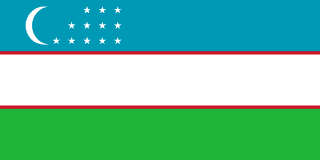
Uzbekistan is a landlocked country in Central Asia, the only one entirely surrounded by other landlocked countries, bordered by Kazakhstan, Kyrgyzstan, Tajikistan, Turkmenistan, and Afghanistan.
Uzbekistan's name comes from the Uzbeks, the country's dominant ethnic group, whose own name is often linked to a 14th-century Mongol khan called Uzbeg, combined with the Persian suffix 'stan,' meaning 'land of.'
Landscape: Mostly desert and steppe, including part of the Kyzylkum Desert, with fertile irrigated valleys along its major rivers.
Climate: Extremely arid continental, hot summers and cold winters.
Food: Plov, a rice pilaf considered something of a national obsession, is widely regarded as Uzbekistan's defining dish.
Tashkent has been a significant Silk Road city for over 2,000 years and became capital of modern Uzbekistan following independence from the Soviet Union in 1991. With a population of around 2.9 million, it was extensively rebuilt following a devastating 1966 earthquake, giving much of the city a distinctly Soviet-era architectural character alongside its much older historic core.
The Humo, a mythical phoenix-like bird from Central Asian and Persian legend, appears on Uzbekistan's national emblem, representing happiness and freedom, and traditional Uzbek ikat textile patterns are closely tied to national artistic identity.
Uzbek ikat weaving, using a distinctive resist-dyeing technique to create blurred, vibrant patterns, is one of Central Asia's most internationally recognised textile traditions, and Uzbek ceramics from Rishtan, using a distinctive blue glaze, remain produced using techniques centuries old.
Samarkand and Bukhara, two of the most significant historic cities along the ancient Silk Road, contain extraordinary collections of Islamic architecture, including the Registan in Samarkand, widely considered one of the most beautiful public squares in the world, and both are UNESCO World Heritage Sites.
Uzbekistan's Aral Sea region, once one of the largest lakes in the world before Soviet-era irrigation projects caused it to shrink dramatically, remains a significant and ongoing environmental case study, though remaining desert areas support species adapted to the harsh conditions left behind.
Uzbekistan is majority Muslim, and the country's Silk Road cities were historically among the most significant centres of Islamic scholarship, art, and architecture anywhere in the world, a heritage still very visibly reflected in Samarkand and Bukhara today.
Uzbekistan is a significant exporter of natural gas, gold, and cotton, historically one of the world's largest cotton producers, though the industry has faced significant international scrutiny over past labour practices.
Independence Day on September 1st marks 1991, when Uzbekistan declared sovereignty following the collapse of the Soviet Union. Nowruz, the Persian spring New Year shared with Iran and several regional neighbours, is celebrated with particular enthusiasm, reflecting the deep Persian and Turkic cultural blend found throughout Uzbekistan's ancient Silk Road cities. Uzbekistan's Teachers' and Instructors' Day in October honours the country's educators nationwide. Uzbekistan's Memorial Day honours victims of political repression under Soviet rule.
Wrestling and boxing both hold significant places in Uzbek sporting culture, the country having produced a remarkable number of Olympic medallists in combat sports relative to its population, drawing on a deep regional tradition of wrestling shared across Central Asia. Football also draws a significant domestic following. Uzbek gymnastics has also produced notable competitors at recent Olympic Games.
Uzbekistan is a presidential republic, with a President holding substantial executive authority alongside a bicameral parliament. The country was led by Islam Karimov from independence in 1991 until his death in 2016, one of the longest tenures of any post-Soviet leader, and Uzbekistan has pursued a gradual programme of economic and social liberalisation under his successor. Uzbekistan's cotton and natural gas exports remain central to its economy, alongside a significant gold mining sector.
Khazret Sultan is Uzbekistan's highest point at 4,643 metres. The lowest point is at the Sariqamish Depression near the border with Turkmenistan, sitting around 12 metres below sea level. Uzbekistan's terrain includes significant desert alongside fertile irrigated valleys along its major rivers.
Turkmenistan's flag shares a similar light-blue and green colour theme with Uzbekistan's own blue-white-green horizontal bands, both reflecting Turkic and Islamic symbolism common across Central Asia, though Uzbekistan's crescent-and-stars combination and red-bordered stripe divisions set it apart from Turkmenistan's carpet-pattern design. The crescent-and-twelve-star combination is distinct from the carpet-pattern design used by neighbouring Turkmenistan.
Adopted in 1991 shortly after independence from the Soviet Union.
The only country in the world entirely surrounded by other landlocked countries whose names all end in '-stan'.
Play today's Flagpie →© Flagpie 2026