
North America
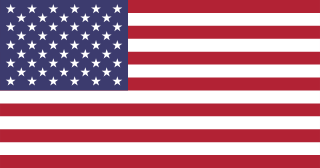
The United States spans the middle of North America, bordered by Canada to the north and Mexico to the south, with coastlines on the Atlantic and Pacific Oceans and the Gulf of Mexico, along with Alaska in the northwest and the island state of Hawaii in the Pacific.
The United States takes its name simply from its founding structure, a union of individual states that agreed to govern themselves collectively, formalised in the Declaration of Independence in 1776 and later the Constitution. 'America' itself derives from the explorer Amerigo Vespucci, whose first name was applied to the continent by European mapmakers in the early 1500s.
Landscape: Enormous and varied, from Atlantic and Pacific coastlines to the Rocky Mountains, the Great Plains, deserts in the southwest, and Arctic terrain in Alaska.
Climate: Ranges from tropical in Hawaii and southern Florida to arctic in parts of Alaska, with most of the mainland experiencing four distinct seasons.
Food: Regional cooking varies hugely, but burgers, barbecue, and Tex-Mex are among the most internationally recognised American food traditions.
Washington, D.C. was purpose-built as the national capital, established by the Constitution and located on land ceded by Maryland and Virginia specifically so no existing state could claim the seat of government as its own. It was named for George Washington, and construction began in the 1790s. With a population of around 670,000 within the district itself, it's built almost entirely around federal government, home to Congress, the White House, and the Supreme Court, with comparatively little large-scale industry of its own.
The bald eagle, chosen for its strength and long lifespan, is the national bird and appears on the Great Seal of the United States. The rose is the official national flower, and oak the national tree, both designated by federal law in the 1980s and 2000s respectively.
Given its size and immigrant history, American craft traditions vary enormously by region, from Appalachian quilting and woodworking to Native American beadwork, weaving, and pottery specific to individual nations and tribes, many of which remain distinct living traditions rather than purely historical practices.
The Statue of Liberty, a gift from France in 1886, remains one of the most recognised monuments in the world, alongside natural landmarks like the Grand Canyon and Yellowstone, the world's first officially designated national park. Historic sites such as Independence Hall in Philadelphia mark the country's founding directly.
The bison, once numbering in the tens of millions before being hunted to near extinction in the 19th century, has become a symbol of conservation recovery in the American plains. Grizzly bears, bald eagles, and American alligators are among the country's other well-known native species, spread across its very wide range of climates and habitats.
The United States has no official religion, and the Constitution specifically separates church from state, though the country remains majority Christian, with Protestant and Catholic traditions both well represented. Immigration has also made it home to sizeable Jewish, Muslim, Hindu, and Buddhist communities, among many others.
The US is a major exporter of aircraft, machinery, refined petroleum products, and agricultural goods, alongside services and technology, and remains the world's largest single economy by nominal GDP.
Independence Day on July 4th, marking the 1776 Declaration of Independence from Britain, is the country's most significant patriotic holiday, typically marked with fireworks and barbecues nationwide. Thanksgiving, held on the fourth Thursday of November, centres on a family meal traditionally featuring turkey, and Memorial Day in late May honours military personnel who died in service.
American football is the most-watched sport by a wide margin, with the Super Bowl regularly drawing the largest television audience of any single annual broadcast in the country. Basketball and baseball, the latter once called America's pastime, both remain hugely popular, and the US has become a dominant Olympic power across a huge range of individual sports.
The United States is a federal presidential republic, with power split between the executive (the President), legislative (Congress, itself split into the House and Senate), and judicial branches. Elections for President happen every four years, and the country's two-party system, dominated by the Democratic and Republican parties, has remained remarkably stable since the mid-19th century.
Denali in Alaska, at 6,190 metres, is the highest point in the United States and the tallest peak in North America, only surpassed for prominence by a handful of peaks worldwide. Death Valley in California holds the lowest point at 86 metres below sea level, and also holds the record for the highest reliably recorded air temperature on Earth.
Liberia's flag is the closest match by a wide margin, both use red and white stripes with a blue canton, a direct and deliberate echo since Liberia was founded by freed African Americans in the 19th century, though Liberia's canton holds a single star rather than fifty. Malaysia's flag also uses a similar striped layout with a canton, in a different colour combination and with a crescent and star rather than stars alone, similar in structure but distinct enough in colour and detail not to cause real confusion.
Changed 27 times since 1777, each time to add a star for a newly admitted state. The current 50-star version has been in use since 1960, the longest of any version.
Home to more active volcanoes than any country other than Indonesia, most of them in Alaska and Hawaii.
Play today's Flagpie →© Flagpie 2026