
Asia
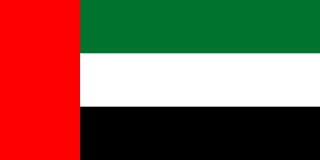
The United Arab Emirates sits on the southeastern coast of the Arabian Peninsula, bordered by Saudi Arabia to the south and Oman to the east, with a coastline on the Persian Gulf.
The United Arab Emirates' name reflects its formation in 1971, when seven separate emirates, each ruled by its own sheikh, united to form a single federal country.
Landscape: Mostly desert and coastal plain along the Persian Gulf, with the Hajar Mountains rising along the eastern border.
Climate: Desert climate, extremely hot summers with high humidity along the coast.
Food: Al machbous, a spiced rice dish with meat or fish, is a traditional Emirati staple, alongside a huge range of international cuisine reflecting Dubai's global population.
Abu Dhabi, one of the seven emirates, serves as the UAE's political capital, chosen for that role at the country's founding due to its size, oil wealth, and the influence of its ruling family. With a population of around 1.5 million in the city itself, it's generally quieter and more government-focused than Dubai, the country's larger commercial hub.
The falcon holds deep cultural significance in the UAE, tied to a long tradition of falconry historically central to Bedouin desert life, and appears on the country's coat of arms. The Tribulus omanense, a small desert flower, is the national flower.
Falconry remains a genuinely practised, government-recognised cultural tradition in the UAE, alongside sadu weaving, a traditional Bedouin textile technique using geometric patterns, recognised by UNESCO as part of the region's intangible cultural heritage.
The Burj Khalifa in Dubai, completed in 2010, is the tallest building in the world, and Sheikh Zayed Grand Mosque in Abu Dhabi, completed in 2007, is one of the largest mosques in the world and open to visitors of all faiths.
The Arabian oryx has been successfully reintroduced to protected reserves within the UAE, and the country's coastal waters support dugongs, a large marine mammal related to the manatee.
The UAE is majority Muslim, and Islam is the official state religion, though the country has a large foreign resident population, well over 80% of its total residents, bringing significant religious and cultural diversity alongside the local Emirati population.
The UAE is a significant exporter of crude oil, though Dubai in particular has built a major re-export and logistics economy, functioning as a global trade and transport hub connecting Asia, Europe, and Africa.
National Day on December 2nd marks the 1971 union of the seven emirates into a single federal country, celebrated with fireworks, parades, and buildings across the country lit in the national colours. Eid al-Fitr and Eid al-Adha are both major holidays given the UAE's Muslim population, and Commemoration Day on November 30th honours the country's fallen military and civilian personnel. Martyrs' Day on November 30th honours those who died in service to the country, observed with a moment of silence nationwide.
Football holds the largest domestic following in the UAE, though the country has also invested heavily in hosting major international sporting events, including Formula One racing and horse racing, the latter carrying deep cultural roots in Emirati and wider Gulf Bedouin tradition. Falconry remains a genuinely significant traditional pursuit too, formally recognised as part of the country's cultural heritage.
The UAE is a federation of seven emirates, each retaining significant independent authority under its own hereditary ruler, with a Federal Supreme Council made up of the seven emirs choosing a President, in practice always the ruler of Abu Dhabi. There is no direct national election for the presidency, and the country's political system blends federal structure with continued traditional emirate-level monarchy.
Jabal Jais, in the emirate of Ras Al Khaimah, is the UAE's highest point at around 1,934 metres, and is now home to the world's longest zipline, a deliberate modern tourism addition to the mountain. The lowest point sits at sea level along the UAE's Persian Gulf coastline.
Jordan, Palestine, and several other Arab nations all use the same red-black-white-green Pan-Arab colour combination the UAE does, tracing back to the 1916 Arab Revolt flag, though the UAE's specific arrangement, a red vertical band at the hoist beside three horizontal stripes, distinguishes it from Jordan and Palestine's own triangle-based layouts using the same four colours.
Designed by Abdullah Mohammed Al Maainah.
Adopted in 1971 when the seven emirates united to form the UAE, chosen from around 1,000 public design submissions.
Home to the Burj Khalifa in Dubai, the tallest building in the world.
Play today's Flagpie →© Flagpie 2026