
Europe
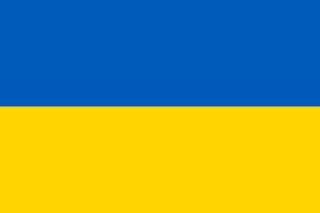
Ukraine sits in Eastern Europe, bordered by Russia to the east, Belarus to the north, Poland, Slovakia, and Hungary to the west, and Romania and Moldova to the southwest, with a coastline on the Black Sea.
Ukraine's name is generally understood to derive from an old Slavic word relating to a borderland or frontier region, reflecting its historic position at the edge of various neighbouring states and empires.
Landscape: Mostly fertile plains and steppe, historically known as one of the world's most productive agricultural regions, with the Carpathian Mountains in the west.
Climate: Temperate continental, warm summers and cold winters.
Food: Borscht, a beet soup, is widely regarded as a national dish (also claimed by Russia and Poland), alongside varenyky, dumplings similar to pierogi.
Kyiv is one of the oldest cities in Eastern Europe, tracing its founding legend back over 1,500 years, and served as the centre of Kyivan Rus', the medieval state considered a shared ancestor of Ukraine, Russia, and Belarus. With a population of around 3 million, it remains Ukraine's political and cultural centre.
The trident is Ukraine's national emblem, with roots going back to the seals of Kyivan Rus' rulers over a thousand years ago. Sunflowers, grown extensively across Ukraine's fertile farmland, are widely regarded as the country's unofficial national flower.
Pysanky, elaborately decorated Easter eggs using a wax-resist dyeing technique, are one of Ukraine's most recognised folk art traditions, alongside vyshyvanka, embroidered folk shirts with patterns that traditionally vary by region. Ukrainian folk music and choral singing traditions, particularly polyphonic styles specific to certain regions, remain actively performed and taught today.
Saint Sophia's Cathedral in Kyiv, built in the 11th century, is a UNESCO World Heritage Site, and the Chernobyl Exclusion Zone, site of the 1986 nuclear disaster, has become an unusual but significant site of historical memory and, in peacetime, tourism. The Carpathian wooden churches of Ukraine, built without a single nail using centuries-old joinery techniques, are collectively recognised as a UNESCO World Heritage Site.
Ukraine's Carpathian Mountains support brown bears, wolves, and lynx, and the country's fertile steppe grasslands, much of it now farmland, were historically home to significant wild horse and bird populations.
Ukraine is majority Orthodox Christian, split between different Orthodox church jurisdictions, a divide with real political significance given Ukraine's relationship with Russia. Ukrainian language and cultural identity have taken on particular national importance amid the country's recent history.
Ukraine is historically one of the world's largest exporters of wheat and other grains, earning it the nickname 'breadbasket of Europe,' alongside sunflower oil, of which it's the world's largest exporter.
Independence Day on August 24th marks 1991, when Ukraine declared independence following the collapse of the Soviet Union, and has taken on particular significance and heightened public observance since 2022. Easter, calculated according to the Orthodox calendar, is celebrated with the traditional decorating of pysanky eggs, and Vyshyvanka Day, held each May, celebrates traditional Ukrainian embroidered clothing as a deliberate expression of national identity. Ivana Kupala in early July, a midsummer folk tradition involving bonfires and flower wreaths, predates Christianity's arrival in the region. Kupala Night bonfire jumping, said to bring good fortune, remains genuinely practised in rural communities each summer.
Football holds the largest following in Ukraine, and the country has also produced world-class boxers and gymnasts, including some of the sport's most dominant Olympic competitors in recent decades. Ukraine's professional boxing tradition in particular has produced multiple heavyweight world champions. Ukrainian gymnasts and figure skaters have also achieved significant Olympic success relative to the country's population.
Ukraine is a semi-presidential republic, splitting executive authority between a directly elected President and a Prime Minister accountable to Parliament. The country has faced significant recent upheaval, including the 2014 Euromaidan protests that led to a change in government, the subsequent annexation of Crimea, and the large-scale invasion beginning in 2022, all of which have profoundly shaped its modern political trajectory.
Hoverla, in the Carpathian Mountains, is Ukraine's highest point at 2,061 metres. The lowest point sits at sea level along Ukraine's Black Sea and Sea of Azov coastlines.
There's no especially close match for Ukraine's flag, the plain horizontal split of blue over yellow, representing sky over wheat fields, is simple enough that it's fairly distinctive, though several other flags use blue and yellow together in different arrangements, including Sweden and Kazakhstan, neither of which shares Ukraine's specific plain two-band horizontal layout.
The blue-and-yellow flag has roots in medieval heraldry from the region, was suppressed for most of the Soviet era, and was formally readopted in 1992 after Ukrainian independence.
Home to some of the most fertile farmland on Earth, historically known as the 'breadbasket of Europe.'
Play today's Flagpie →© Flagpie 2026