
Oceania
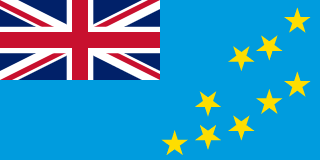
Tuvalu is one of the smallest and lowest-lying countries on Earth, a chain of atolls in the central Pacific sitting north of Fiji and south of Kiribati.
Tuvalu's name means 'eight standing together' in Tuvaluan, referring to the eight traditionally inhabited islands of the archipelago (a ninth island was added to the country later), reflecting the union of these communities into one nation.
Landscape: One of the smallest and lowest-lying countries on Earth, made up of three reef islands and six atolls.
Climate: Tropical, warm year-round with a wet season and rising sea levels posing a genuine existential threat to the country.
Food: Fish, coconut, and pulaka (a starchy root vegetable) form the basis of traditional Tuvaluan meals.
Funafuti serves as Tuvalu's capital and only significant urban centre, an atoll so narrow in places that the ocean is visible on both sides simultaneously. With a population of around 6,000, it holds the distinction of being one of the smallest and lowest-lying national capitals on Earth, at real and immediate risk from rising sea levels.
The Pacific frigate bird, and traditional woven fans and mats, remain closely tied to Tuvaluan cultural identity, alongside the flag's eight stars representing the country's original inhabited islands.
Traditional Tuvaluan dance, the fatele, involving rhythmic clapping, singing, and coordinated movement, remains a genuinely significant and actively performed community tradition, and traditional pandanus weaving produces mats and fans still used in everyday and ceremonial life. Traditional Tuvaluan community meeting houses, called maneapa, remain the genuine social and decision-making centre of each island community.
Tuvalu itself, as one of the smallest and most climate-vulnerable countries in the world, has become an internationally significant symbol in climate change discussions, with the government having taken the notable step of creating a digital twin of the nation to preserve its identity even if the physical islands become uninhabitable.
Tuvalu's surrounding waters support significant reef fish populations and sea turtles, though the country's very limited land area means terrestrial wildlife remains correspondingly minimal.
Tuvalu is overwhelmingly Christian, and the country's traditional communal land ownership and extended family obligations remain genuinely central to how Tuvaluan society and daily life function.
Tuvalu's economy relies significantly on fishing licence revenue and, notably, income generated from leasing its unusually valuable '.tv' internet domain suffix, alongside remittances from Tuvaluans working abroad.
Independence Day on October 1st marks 1978, when Tuvalu gained sovereignty from British colonial rule. Given Tuvalu's significant Christian population, Christmas and Easter are both widely observed, and the country's National Children's Day reflects the genuine cultural importance placed on family and community across its scattered atolls. Tuvalu's Gospel Day in May celebrates the arrival of Christianity with church services across the islands.
Weightlifting and traditional outrigger canoe racing both hold cultural significance in Tuvalu, similar to other Pacific island nations, and the traditional dance fatele, involving rhythmic clapping and coordinated movement, remains a genuinely significant community activity comparable in social importance to organised sport. Tuvaluan athletes have also competed in weightlifting at the Commonwealth Games.
Tuvalu is a parliamentary constitutional monarchy, with the British monarch as ceremonial head of state represented domestically by a Governor-General, while a Prime Minister holds real executive power accountable to a single-chamber parliament. The country has become an internationally significant voice in climate change discussions, given its extreme vulnerability to rising sea levels, and has taken the notable step of creating a digital archive of the nation in case its physical territory becomes uninhabitable. Tuvalu's economy relies significantly on fishing licence revenue and income from leasing its valuable '.tv' internet domain.
Tuvalu's highest point sits at just 5 metres above sea level, tied for the lowest national high point in the world. The lowest point sits at sea level throughout the country's nine low-lying atolls.
Fiji's flag shares Tuvalu's use of a light-blue field with the Union Jack in the canton, both former British colonies retaining that colonial-era element, though Fiji's fly carries a shield-based coat of arms rather than Tuvalu's scattering of stars representing its own islands, different enough to avoid real confusion. The nine-star arrangement, reflecting the country's actual island positions, is a genuinely unique geographic detail.
Adopted in 1978 at independence, briefly replaced by a different design in the 1990s before the original Union Jack version was restored by popular request.
One of the smallest and lowest-lying countries on Earth, made up of just three reef islands and six atolls.
Play today's Flagpie →© Flagpie 2026