
Asia
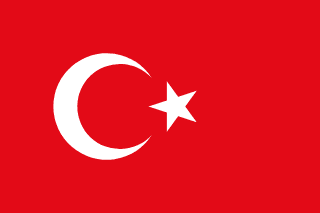
Turkey straddles both Europe and Asia, the only country in the world to sit on two continents, bordered by Greece and Bulgaria to the west, Georgia, Armenia, and Azerbaijan to the east, and Iran, Iraq, and Syria to the southeast.
Turkey's name comes from the Turkic peoples who migrated into the region from Central Asia beginning around the 11th century. The country officially adopted the name Türkiye internationally in 2022, a request made specifically to avoid the English word being confused with the bird of the same name.
Landscape: Spans two continents, with a mountainous interior plateau, Mediterranean and Aegean coastline, and the Black Sea to the north.
Climate: Mediterranean along the coasts, with a harsher, more continental climate on the central plateau.
Food: Kebabs, baklava, and Turkish delight are internationally known, alongside a strong tradition of meze, small shared starter dishes.
Ankara became Turkey's capital in 1923 under Mustafa Kemal Atatürk, replacing Istanbul (then still commonly called Constantinople), a deliberate move away from the former Ottoman imperial capital as part of building a new, modern republic. With a population of around 5.7 million, it lacks Istanbul's historical weight but functions as the country's political and administrative centre.
The tulip holds deep significance in Turkish culture, having originated in Central Asia and the Ottoman Empire before spreading to the Netherlands, and it remains closely associated with Ottoman art and design. The grey wolf carries strong symbolic weight in Turkic mythology, tied to a legend about the founding of early Turkic peoples.
Turkish carpet weaving has a documented history stretching back centuries, with regional styles from Anatolia prized internationally for their intricate patterns and quality. Traditional Ottoman ceramics from İznik, known for their vivid blue and red glazes, remain highly sought after by collectors.
The Hagia Sophia in Istanbul, first built as a cathedral in the 6th century, later converted to a mosque, then a museum, and back to a mosque again in 2020, reflects the layered religious and political history of the city itself. Cappadocia's unusual rock formations and underground cities are another of Turkey's most visited landmarks.
The Anatolian leopard, once thought extinct in Turkey, has had rare confirmed sightings in recent years, renewing conservation interest. Turkey's position straddling Europe and Asia also makes it an important migratory corridor for birds travelling between the two continents.
Turkey is majority Muslim, predominantly Sunni, though the country is constitutionally secular, a legacy of reforms under Atatürk in the 1920s. It's also home to Kurdish, Armenian, and other minority communities, each with distinct cultural and linguistic traditions.
Turkey is a significant exporter of textiles and clothing, cars, and machinery, and its position bridging Europe and Asia has long made it an important hub for regional trade and manufacturing.
Republic Day on October 29th marks the 1923 founding of the Republic of Turkey under Mustafa Kemal Atatürk, following the collapse of the Ottoman Empire, and remains the country's most significant national holiday. Eid al-Fitr and Eid al-Adha are both widely observed given Turkey's overwhelmingly Muslim population, and Children's Day on April 23rd, tied to the anniversary of the country's first parliament convening, is a distinctly Turkish holiday celebrating the country's youngest citizens.
Football is Turkey's most popular sport by a wide margin, with intense rivalries between Istanbul's major clubs drawing some of the most passionate fan cultures in European football. Oil wrestling, a traditional sport where competitors cover themselves in olive oil, has been practised in Turkey for centuries and remains a genuinely significant part of Turkish sporting heritage, alongside a strong modern weightlifting tradition.
Turkey is a presidential republic, having shifted from a parliamentary to a presidential system following a 2017 constitutional referendum that significantly expanded presidential powers. The country straddles both Europe and Asia geographically, and its political identity has long balanced secular republican traditions established by Atatürk against a more recent resurgence of religious and nationalist politics.
Mount Ararat, near the border with Armenia and Iran, is Turkey's highest point at 5,137 metres, and holds deep religious significance as the traditional resting place of Noah's Ark according to the biblical account. The lowest point sits at sea level along Turkey's extensive Mediterranean and Black Sea coastlines.
Tunisia's flag shares the same red field with a white crescent and star that Turkey's does, and it's not a coincidence, Tunisia's design was directly influenced by Ottoman-era Turkish flags during a period of Ottoman rule over the region. Algeria and Pakistan both use crescent-and-star symbolism too, though on fundamentally different coloured or arranged flags, different enough that only Tunisia is a genuinely close visual match.
Based on the last flag of the Ottoman Empire, adopted in 1844, kept largely unchanged when the Republic of Turkey was founded in 1923, with exact proportions standardised by law in 1936.
The only country in the world that sits on two continents at once, with land in both Europe and Asia.
Play today's Flagpie →© Flagpie 2026