
North America
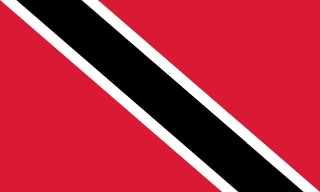
Trinidad and Tobago is a two-island country at the southernmost end of the Caribbean, sitting just off the northeastern coast of Venezuela.
Trinidad's name comes from the Spanish word for 'trinity,' given by Christopher Columbus in 1498, reportedly after three hills he spotted on the island reminded him of the Holy Trinity. Tobago's name likely derives from tobacco, a crop associated with the island by early European visitors.
Landscape: The southernmost Caribbean islands, close enough to Venezuela to share similar geology, with rainforest, swamp, and beaches.
Climate: Tropical, warm year-round with a wet season, sitting just outside the main Caribbean hurricane belt.
Food: Doubles, a street food of curried chickpeas between two pieces of fried flatbread, is a genuine national favourite.
Port of Spain became the capital under Spanish colonial rule and remained so through subsequent British administration and independence in 1962. With a population of around 37,000 in the city proper, and considerably more across the wider urban area, it functions as the country's political and commercial centre.
The scarlet ibis and cocrico are Trinidad and Tobago's two national birds, one for each island, and the chaconia, a red flowering plant, is the national flower.
Steelpan, or steel drum, music originated in Trinidad in the mid-20th century, created from repurposed oil drums, and remains one of the country's most significant cultural inventions and exports, alongside a strong Carnival costume-making tradition. Carnival costume design in Trinidad has grown into a serious annual creative industry, with elaborate feathered and beaded costumes representing months of dedicated craftsmanship.
The Pitch Lake, the largest natural deposit of asphalt in the world, is one of Trinidad's more unusual landmarks, and Trinidad's Caroni Swamp is a major nesting site for the scarlet ibis, the country's national bird. Tobago's Buccoo Reef and Nylon Pool, a shallow sandbar in turquoise water, are among the twin islands' most visited natural attractions.
Trinidad, unlike most Caribbean islands, was once connected to the South American mainland, giving it a notably different and more diverse range of wildlife, including species typically associated with continental South America rather than island ecosystems.
Trinidad and Tobago is religiously diverse, with significant Christian, Hindu, and Muslim populations reflecting a history of both African and South Asian indentured labour migration, an unusually mixed religious landscape for the Caribbean.
Trinidad and Tobago is a significant exporter of petrochemicals and natural gas, with an economy considerably more industrialised than many of its Caribbean neighbours due to substantial offshore oil and gas reserves.
Independence Day on August 31st marks 1962, when the country gained sovereignty from British colonial rule, and Republic Day on September 24th marks 1976, when Trinidad and Tobago became a republic, removing the British monarch as head of state. Carnival, held in the days before Lent, is by far the country's most significant cultural celebration, widely considered the origin point for Caribbean carnival traditions celebrated across the wider region. Divali and Eid are both officially recognised public holidays, reflecting the country's significant Hindu and Muslim populations.
Cricket holds the largest following in Trinidad and Tobago, the twin islands having contributed significantly to the historically dominant West Indies cricket team. Football also draws major national attention, the country having become the smallest nation by population ever to qualify for a FIFA World Cup, in 2006, a genuinely remarkable achievement. Trinidad and Tobago has also produced notable Olympic sprinters and swimmers relative to the country's small population.
Trinidad and Tobago is a parliamentary republic, with a largely ceremonial President as head of state and a Prime Minister holding real executive power, accountable to a bicameral parliament. Tobago, the smaller of the two main islands, retains its own subsidiary legislature with significant local authority over island-specific affairs. The islands' oil and gas wealth has historically funded significant social welfare and infrastructure investment.
El Cerro del Aripo, on Trinidad, is the country's highest point at 940 metres. The lowest point sits at sea level around the two islands' coastlines.
There's no especially close match for Trinidad and Tobago's flag, the diagonal black band bordered in white against a red field is a distinctive combination among national flags, and the diagonal stripe design specifically is meant to represent the earth, water, and fire elements alongside the unity of the nation's people, a symbolic layout not closely echoed elsewhere.
Adopted in 1962 at independence, designed specifically with black, white, and red so it wouldn't resemble the flag of any other nation at the time.
Home to the Pitch Lake, the largest natural deposit of asphalt in the world.
Play today's Flagpie →© Flagpie 2026