
Oceania
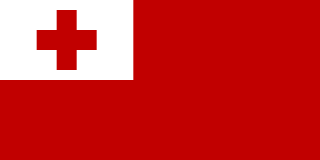
Tonga is an archipelago nation in the South Pacific, sitting southeast of Fiji, made up of over 170 islands, only a small number of which are inhabited.
Tonga's name means 'south' in the Tongan language, reflecting the archipelago's position relative to other Polynesian island groups as understood by early Pacific navigators.
Landscape: A chain of volcanic and coral islands in the South Pacific, mostly low-lying with some higher volcanic peaks.
Climate: Tropical, warm year-round with a wet season and cyclone risk.
Food: Lu pulu, corned beef and coconut cream wrapped in taro leaves, is widely considered the national dish.
Nukuʻalofa has served as Tonga's capital since the 19th century, its name meaning 'abode of love.' With a population of around 23,000, it remains the country's dominant urban centre, and Tonga holds the distinction of being the only Pacific island nation never formally colonised by a foreign power.
The Pacific golden plover, a migratory bird, and the red flower of the heilala tree, Tonga's national flower, are both closely tied to national identity, and the Tongan monarchy itself, one of the oldest continuous royal lines in the world, functions as a powerful unifying national symbol.
Tongan ngatu (bark cloth) making, produced through an elaborate communal process and decorated with traditional stencilled patterns, remains a genuinely significant craft tied to important ceremonial gift-giving, and traditional Tongan wood carving and weaving remain widely practised. Traditional Tongan tapa cloth gift exchange remains genuinely central to weddings, funerals, and other major life events, reflecting deep community and family obligation.
The Haʻamonga ʻa Maui, a large stone trilithon whose exact original purpose remains debated, is sometimes called the 'Stonehenge of the Pacific,' and the royal palace in Nukuʻalofa reflects Tonga's continuous monarchy.
Tonga's waters are one of the few places in the world where visitors can legally swim with humpback whales during their annual breeding migration, a significant and carefully regulated ecotourism draw.
Tonga is overwhelmingly Christian, predominantly Methodist, and the country's monarchy and traditional social hierarchy remain genuinely significant to how Tongan society functions, with the king holding real constitutional authority alongside an elected parliament.
Tonga's economy relies significantly on agricultural exports including squash and vanilla, alongside substantial remittances from Tongans living abroad, particularly in New Zealand, Australia, and the United States.
Emancipation Day on June 4th marks 1970, when Tonga became fully independent from British protection, having never actually been formally colonised, a point of particular national pride. King's Birthday, observed annually, reflects the continued central importance of the monarchy to Tongan identity, and given Tonga's overwhelmingly Christian, particularly Methodist, population, Sunday remains genuinely observed as a strict day of rest, with most commercial activity halted by law. Tonga's Heilala Festival each July celebrates the King's birthday with cultural performances and traditional crafts. Tonga's Constitution Day in November marks the kingdom's 1875 founding legal document.
Rugby union holds a place in Tongan national identity matched by few other sports, the small kingdom having produced a remarkable number of players who've gone on to represent other countries, particularly New Zealand and Australia, at the international level. Boxing has also produced notable Tongan Olympic competitors.
Tonga is a constitutional monarchy, with the King holding significant genuine executive authority alongside an elected Legislative Assembly. The country holds the distinction of being the only Pacific island nation never formally colonised by a foreign power, and Tonga's monarchy remains one of the oldest continuous royal lines in the world. Tonga's economy relies significantly on remittances from Tongans living abroad, particularly in New Zealand and Australia.
Kao, a volcanic island peak, is Tonga's highest point at 1,046 metres. The lowest point sits at sea level around the country's many islands. Tonga's volcanic and coral islands vary considerably in terrain across the scattered archipelago.
Switzerland's flag shares Tonga's use of a red field with a white cross, though Tonga's cross sits within a canton rather than filling the whole flag as Switzerland's does, different enough in overall layout that the two aren't especially likely to be confused despite the shared basic colour and symbol. The cross-in-canton design is relatively uncommon among Pacific Island nations' flags generally.
Designed by King George Tupou I.
Adopted in 1875, protected under the country's constitution from ever being changed.
The only Pacific island nation never formally colonised by a European power.
Play today's Flagpie →© Flagpie 2026