
Asia
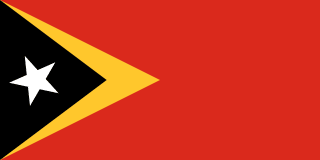
Timor-Leste occupies the eastern half of the island of Timor in Southeast Asia, sharing its only land border with Indonesia, which controls the western half of the island.
Timor-Leste's name combines 'Timor,' from the Malay word for 'east,' with 'Leste,' the Portuguese word also meaning 'east,' making the country's name essentially 'East East' in translation, reflecting its position on the eastern half of the island of Timor.
Landscape: Mountainous and rugged, occupying the eastern half of the island of Timor, with a coastline on both the Timor Sea and the Savu Sea.
Climate: Tropical, hot with a distinct wet and dry season.
Food: Batar da'an, a corn and vegetable dish, is widely eaten, reflecting Timor-Leste's staple crops of corn and rice.
Dili has served as the country's capital since Portuguese colonial times, and became capital of a fully independent Timor-Leste in 2002 following a long and difficult struggle first against Portuguese colonial rule and then Indonesian occupation. With a population of around 280,000, it remains the country's main political and commercial centre.
The crocodile holds deep significance in Timorese creation mythology, with local legend describing the island of Timor itself as having formed from the body of a giant crocodile, making it a powerful unofficial national symbol.
Tais, traditional handwoven textiles with patterns varying significantly by region, remain a genuinely significant living craft and important part of Timorese ceremonial and everyday cultural life. Traditional Timorese betel nut chewing customs remain a genuinely significant part of everyday social interaction and welcome ceremonies.
The Cristo Rei statue overlooking Dili, and the historic sites tied to the country's independence struggle, including Santa Cruz Cemetery, site of a significant 1991 massacre during Indonesian occupation, reflect Timor-Leste's recent and often difficult path to nationhood.
Timor-Leste's surrounding waters, part of the Coral Triangle, hold exceptional marine biodiversity, and the country's remaining forest supports the Timor deer and several bird species found only on the island.
Timor-Leste is overwhelmingly Roman Catholic, a legacy of Portuguese colonial influence that also became a significant unifying force of resistance identity during the period of Indonesian occupation, distinguishing it religiously from the rest of overwhelmingly Muslim Indonesia. Timor-Leste's 2002 independence made it the first new sovereign nation of the 21st century, following a UN-administered transition period after decades of conflict.
Timor-Leste's economy relies significantly on oil and gas revenue from offshore reserves, alongside coffee, historically one of the country's most significant agricultural exports.
Independence Restoration Day on May 20th marks 2002, when Timor-Leste achieved full independence following a UN-administered transition, making it the first new sovereign nation of the 21st century. Popular Consultation Day on August 30th commemorates the 1999 referendum in which Timorese voted overwhelmingly for independence from Indonesia. Timor-Leste's Veterans Day in November honours those who fought during the Indonesian occupation. Timor-Leste's Proclamation of Independence Day marks the country's brief 1975 declaration before occupation.
Football holds the largest domestic following in Timor-Leste by a wide margin, even without major international competitive success to match, and traditional martial arts and boxing have also produced notable Timorese competitors at the regional Southeast Asian level. Timorese athletes have also competed in boxing and taekwondo at regional Southeast Asian Games. Timorese weightlifting has also grown through Pacific and Southeast Asian Games participation. Timorese runners have also competed in marathon events at international competitions.
Timor-Leste is a semi-presidential republic, splitting executive authority between a directly elected President and a Prime Minister accountable to a single-chamber parliament. The country's modern political history was profoundly shaped by a brutal Indonesian occupation lasting from 1975 to 1999, and Timor-Leste has pursued significant reconstruction and reconciliation since achieving full independence in 2002. Timor-Leste's economy relies significantly on oil and gas revenue from offshore reserves.
Tatamailau (Mount Ramelau) is Timor-Leste's highest point at 2,986 metres. The lowest point sits at sea level around the country's coastline. Timor-Leste's mountainous terrain covers much of the eastern half of the island it shares with Indonesia.
There's no especially close match for Timor-Leste's flag, the red field with black and yellow triangles pointing inward from the hoist and a white star is a distinctive combination, those colours specifically representing the struggle for independence, the country's colonial past, and hope for the future respectively. The inward-pointing triangle design is relatively uncommon among Southeast Asian nations' flags.
First used briefly in 1975 before Indonesian occupation, formally readopted in 2002 when Timor-Leste achieved full independence.
One of the newest countries in the world, gaining full independence in 2002.
Play today's Flagpie →© Flagpie 2026