
Africa
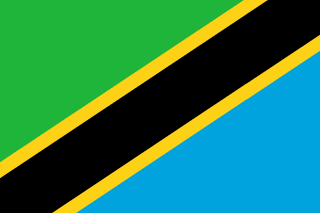
Tanzania sits on the Indian Ocean coast of East Africa, bordered by Kenya and Uganda to the north, Rwanda, Burundi, and the Democratic Republic of the Congo to the west, and Zambia, Malawi, and Mozambique to the south.
Tanzania's name combines Tanganyika and Zanzibar, the two territories that merged in 1964 to form the modern country, with the name itself constructed as a blend of both original names.
Landscape: Includes Mount Kilimanjaro (Africa's highest peak), the Serengeti plains, and a long Indian Ocean coastline including the island of Zanzibar.
Climate: Varies by region, tropical along the coast, cooler in the highlands.
Food: Ugali, a maize staple, is eaten across the country, often alongside grilled meat or fish influenced by Zanzibar's Swahili coastal cuisine.
Dodoma became Tanzania's official capital in 1996, though Dar es Salaam remains the country's largest city and primary commercial centre, similar to arrangements in a handful of other countries that separate political and economic capitals. With a much smaller population than Dar es Salaam, Dodoma was chosen partly for its central location within the country.
The giraffe, found in significant numbers across Tanzania's savanna, is closely associated with the country internationally, and Mount Kilimanjaro, Africa's highest peak, functions as an unofficial national symbol of pride.
Makonde woodcarving, from the Makonde people of southern Tanzania and northern Mozambique, is internationally recognised for its intricate, often abstract figurative style, and Tinga Tinga painting, a colourful folk art style developed in the 1960s, has become a significant Tanzanian art export. Zanzibar's carved wooden doors, historically a sign of a household's wealth and status, remain a distinctive feature of Stone Town's architecture today.
Mount Kilimanjaro, the highest free-standing mountain in the world, and the Serengeti, home to one of the largest annual wildlife migrations on Earth, are both UNESCO World Heritage Sites and among Tanzania's most visited landmarks. Stone Town in Zanzibar, reflecting centuries of Swahili, Arab, Persian, Indian, and European influence, is a UNESCO World Heritage Site in its own right.
The Serengeti hosts the great wildebeest migration, involving over a million animals moving between Tanzania and Kenya each year, and Tanzania's Ngorongoro Crater holds one of the highest densities of wildlife anywhere in Africa within a single contained area.
Tanzania is roughly split between Christian and Muslim populations, with Zanzibar specifically being overwhelmingly Muslim, and the country is home to well over a hundred distinct ethnic groups, an unusually high number reflecting its complex settlement history.
Tanzania is a significant exporter of gold, coffee, and cashew nuts, with mining and agriculture both forming substantial parts of the national economy.
Union Day on April 26th marks 1964, when Tanganyika and Zanzibar merged to form modern Tanzania, and Independence Day on December 9th separately marks Tanganyika's own 1961 independence from Britain, predating the union by several years. Eid al-Fitr and Eid al-Adha are both significant holidays given Zanzibar's overwhelmingly Muslim population, alongside Christian holidays observed more prominently on the mainland. Saba Saba Day in July marks the founding of Tanzania's ruling party and is treated as a significant political anniversary.
Football holds the largest domestic following in Tanzania, and the country has also produced notable long-distance runners, part of the wider East African distance-running tradition shared with Kenya and Ethiopia. Boxing and athletics both draw significant local followings too. Traditional wrestling remains practised in various forms across Tanzania's many ethnic communities, particularly in rural areas.
Tanzania is a semi-federal presidential republic, with Zanzibar retaining its own separate government and legislature for domestic island affairs while remaining part of the wider union for defence, foreign policy, and other national matters. This arrangement, established at the 1964 union, gives Tanzania a genuinely distinctive two-tier political structure among African nations.
Mount Kilimanjaro is Tanzania's highest point at 5,895 metres, the highest peak in Africa and one of the famous Seven Summits, its snow-capped equatorial peak drawing climbers from around the world. Lake Tanganyika's shoreline holds the lowest point at around 773 metres above sea level, Tanzania's lowest point despite being well above true sea level, since the country is landlocked apart from its coastal strip.
Kenya and South Africa both use black somewhere in their own flag designs too, part of a broader Pan-African colour tradition, though Tanzania's specific diagonal split of green and blue divided by a black-and-gold band is distinctive enough in its diagonal arrangement, unusual among national flags generally, that it isn't easily mistaken for either.
Adopted in 1964 when Tanganyika and Zanzibar united to form Tanzania, combining elements of both territories' earlier flags.
Home to both Africa's highest point, Mount Kilimanjaro, and one of its deepest lakes, Lake Tanganyika.
Play today's Flagpie →© Flagpie 2026