
Asia
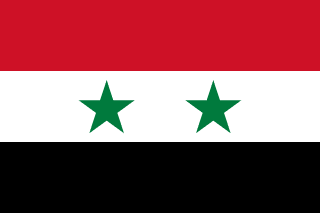
Syria sits in the Middle East, bordered by Turkey to the north, Iraq to the east, Jordan to the south, and Lebanon and Israel to the west, with a coastline on the Mediterranean Sea.
Syria's name has ancient roots, possibly derived from 'Assyria,' though the exact historical relationship between the two names remains debated among scholars, with the modern country's borders reflecting 20th-century colonial-era boundaries rather than any single ancient territory.
Landscape: Includes a Mediterranean coastal strip, mountains, and the wide Syrian Desert making up much of the east and south.
Climate: Mediterranean along the coast, increasingly arid moving inland toward the desert.
Food: Kibbeh, a dish of minced meat and bulgur wheat, is widely considered a national dish, alongside a strong regional mezze tradition.
Damascus is widely considered one of the oldest continuously inhabited cities in the world, with archaeological evidence of settlement stretching back over 11,000 years. With a population of around 2.5 million, it has served as a major political and religious centre for millennia, though decades of recent conflict have significantly affected the city and country.
The hawk of Quraysh, tied to early Islamic and Arab historical symbolism, has appeared on various versions of Syria's coat of arms, alongside the country's shifting flags reflecting its complex 20th and 21st-century political history.
Damascus steel, a legendary metalworking technique producing distinctively patterned blades, has ancient roots in the city, and traditional Syrian mosaic and inlaid woodwork, particularly furniture using mother-of-pearl, reflect centuries of skilled craftsmanship. Traditional Aleppo soap-making, using olive and laurel oils in a process passed down for centuries, remains one of the world's oldest continuously produced soap traditions.
The ancient city of Palmyra, a major Roman-era trading city whose ruins were significantly damaged during recent conflict, and the Old City of Damascus, a UNESCO World Heritage Site, reflect Syria's extraordinarily deep historical layering.
Syria's remaining semi-arid steppe and mountain regions support species adapted to the region's climate, though decades of conflict have significantly affected conservation efforts and wildlife monitoring across the country.
Syria is majority Sunni Muslim, with significant Alawite, Christian, Druze, and Kurdish communities, reflecting one of the most religiously and ethnically diverse populations in the Middle East, a diversity that has both enriched the country's history and, at times, contributed to significant internal tension.
Syria's formal export economy has been severely affected by over a decade of civil war, with pre-conflict exports historically including oil, textiles, and agricultural products, though current trade capacity remains substantially diminished.
Independence Day on April 17th marks 1946, when Syria gained full sovereignty following the withdrawal of French forces. Given Syria's significant Sunni, Alawite, and Christian populations, a wide range of religious holidays are observed, though the country's recent history of civil war has significantly disrupted normal celebration and public life for much of the population. Evacuation Day, marking the 1946 French withdrawal, remains observed alongside Syria's broader independence commemorations.
Football holds the largest domestic following in Syria, even amid over a decade of devastating civil conflict that has severely affected the country's sporting infrastructure and international competitive presence. Wrestling and weightlifting have historically also produced notable Syrian competitors at the regional level.
Syria's political situation has undergone dramatic change recently, with the government of Bashar al-Assad, in power since 2000 and preceded by his father's rule since 1971, having fallen in late 2024 following a rapid rebel offensive, ending over five decades of Assad family rule and leaving the country's political future genuinely uncertain. Syria's ancient cities, including Damascus and Aleppo, hold significant historical and archaeological importance despite recent conflict damage. Syria's future governance structure remains genuinely uncertain following the recent change in leadership.
Mount Hermon, shared with Lebanon and Israel, includes Syria's highest point at around 2,814 metres. The lowest point is near the Sea of Galilee area, sitting around 200 metres below sea level. Syria's terrain ranges from Mediterranean coastal plains to semi-arid desert in the east.
Egypt, Iraq, and Yemen all use variations of the same red-white-black horizontal Pan-Arab tricolour Syria's flag does, tracing back to the 1916 Arab Revolt flag, and the countries are typically distinguished only by the number and arrangement of stars, Syria's own two green stars specifically setting it apart from Egypt's eagle or Iraq's script. Syria's two stars specifically distinguish it from Egypt's eagle and Yemen's plain design within the same colour family.
Has changed several times since independence, tied to the country's various unions and political shifts, the current version restored in 2024 after the fall of the previous government, based on the flag first used at independence in 1946.
Home to Damascus, often cited as one of the oldest continuously inhabited cities in the world.
Play today's Flagpie →© Flagpie 2026