
Europe
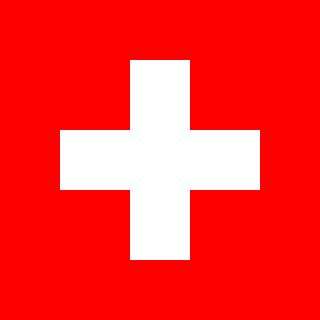
Switzerland is a landlocked, mountainous country in Central Europe, bordered by Germany to the north, France to the west, Italy to the south, and Austria and Liechtenstein to the east.
Switzerland's name comes from Schwyz, one of the three original cantons that formed the Swiss Confederacy in 1291, whose name was gradually applied to the whole country as the confederation grew to include more cantons over the following centuries.
Landscape: Dominated by the Alps in the south and the Jura mountains in the northwest, with a central plateau where most of the population lives.
Climate: Temperate, varying significantly with altitude, alpine regions see heavy snow while lower valleys stay milder.
Food: Cheese fondue and Swiss chocolate are the country's best known culinary exports, alongside rösti, a fried grated potato dish.
Bern became Switzerland's federal capital in 1848, chosen partly as a compromise between the country's larger, more prominent cities and its different linguistic regions. With a population of around 135,000, it remains notably smaller than Zurich or Geneva, reflecting the deliberately understated role of Swiss federal government relative to the country's individual cantons.
The edelweiss, a small white alpine flower found at high altitude, has come to symbolise Swiss identity and mountaineering culture, partly through international popularisation via film and song. The Swiss cross, a white cross on a red background, appears both on the national flag and, in reversed colours, on the flag of the International Committee of the Red Cross, founded in Geneva.
Swiss watchmaking has an international reputation built over centuries, particularly in the Jura mountains region, and Swiss chocolate-making and cheese production, both closely tied to specific regions and towns, remain significant craft and export industries.
The Matterhorn, one of the most photographed mountains in the world, sits on the border with Italy, and the Rhine Falls near Schaffhausen is the largest waterfall in Europe by volume. Switzerland's extensive network of castles, including Chillon Castle on Lake Geneva, reflects its long history of small, independent political territories.
The Alpine ibex, once nearly hunted to extinction in the region, has recovered significantly across the Swiss Alps through sustained conservation efforts. Switzerland's mountain lakes and forests also support golden eagles and a range of alpine-adapted species.
Switzerland is historically split between Catholic and Protestant regions, tracing back to the Reformation, with the divide still loosely visible in different cantons today. The country recognises four official languages, German, French, Italian, and Romansh, each tied to specific regions rather than spoken interchangeably nationwide.
Switzerland is a major exporter of pharmaceuticals, precision machinery, and watches, and its banking and financial services sector remains one of the largest and most significant in the world relative to the country's small size.
Swiss National Day on August 1st marks the founding of the Swiss Confederacy in 1291, traditionally celebrated with bonfires and fireworks across the country's mountains and lakesides. Sechseläuten in Zurich, held each spring, involves the ceremonial burning of a snowman effigy called the Böögg, with the speed of its burning traditionally said to predict the coming summer's weather.
Skiing and other winter sports hold deep cultural significance given Switzerland's alpine geography, and the country has also produced some of tennis's most dominant modern players. Switzerland is additionally home to the headquarters of FIFA and the International Olympic Committee, giving it an outsized administrative role in global sport well beyond its own competitive achievements.
Switzerland is a federal republic with an unusually decentralised political system, governed by a seven-member Federal Council rather than a single president, with the role of ceremonial head of state rotating annually among its members. The country makes exceptionally frequent use of direct democracy, with national referendums held several times a year on a wide range of policy questions, a level of direct citizen input rare among modern democracies.
Dufourspitze, part of the Monte Rosa massif on the border with Italy, is Switzerland's highest point at 4,634 metres. The lowest point is the shore of Lake Maggiore in the country's south, sitting at around 193 metres above sea level, still Switzerland's lowest point despite being well above true sea level, since the country is entirely landlocked and mountainous.
There's essentially no close match for Switzerland's flag globally, a plain white cross on a red square background, a design shared meaningfully only with the flag of the International Committee of the Red Cross, which deliberately reversed Switzerland's own colours as a tribute, since the organisation was founded in Geneva. That relationship runs the opposite direction from confusion, though, since the Red Cross flag isn't a national flag at all.
The white cross on red has roots going back to the 14th century, formally adopted as the national flag in 1889.
One of only two countries in the world with a perfectly square national flag.
Play today's Flagpie →© Flagpie 2026