
Europe
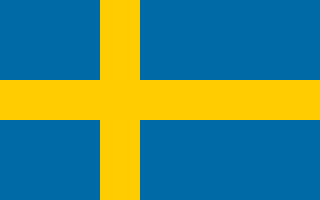
Sweden stretches along the eastern side of the Scandinavian Peninsula, bordered by Norway to the west and Finland to the northeast, with a long coastline on the Baltic Sea.
Sweden's name comes from the Svear, an early Germanic people who inhabited the region around modern Stockholm and Uppsala, whose name was gradually extended to describe the whole kingdom that formed around them.
Landscape: Long and narrow, spanning forested lowlands in the south to mountainous, sparsely populated terrain in the Arctic north.
Climate: Temperate in the south, becoming subarctic further north, with long, dark winters above the Arctic Circle.
Food: Meatballs served with lingonberry sauce are the best known Swedish dish abroad, alongside a strong tradition of pickled and cured fish.
Stockholm was founded in the 13th century, traditionally dated to 1252, built across a cluster of islands where Lake Mälaren meets the Baltic Sea, a position that made it easy to defend and control trade. With a population of around a million, it remains spread across those same islands today, connected by dozens of bridges.
The elk (moose) is closely associated with Swedish national identity, found throughout the country's extensive forests, though the linnea flower, a small twinbell-shaped bloom favoured by the botanist Carl Linnaeus, is the more official unofficial national flower.
Dala horses, small carved and brightly painted wooden horses originally made in the Dalarna region, have become an internationally recognised symbol of Swedish craft and design. Swedish design more broadly, particularly in furniture and homeware, carries a strong global reputation for minimalism and function.
The Vasa Museum in Stockholm houses a nearly fully intact 17th-century warship that sank on its maiden voyage and was recovered centuries later, one of the best-preserved ships of its age anywhere in the world. Sweden's far north also offers regular views of the aurora borealis.
The Eurasian lynx and wolverine both survive in Sweden's northern forests, alongside significant reindeer herds, historically and culturally central to the Indigenous Sámi people of the region.
Sweden is among the most secular countries in the world, with a large majority of the population identifying with no active religious practice, despite the historic Church of Sweden remaining a cultural touchstone for holidays and life events. The Sámi people represent Sweden's Indigenous population, with their own distinct language and traditions.
Sweden is a significant exporter of machinery, motor vehicles, and paper and timber products, home to major global companies including Volvo, IKEA, and Ericsson.
Midsummer, held on the Friday closest to the summer solstice in late June, is arguably Sweden's most beloved celebration, marked by dancing around a flower-decorated maypole, a tradition that draws on the country's deep seasonal awareness given its far northern latitude. Sweden's National Day on June 6th is a comparatively recent and low-key addition to the calendar, only becoming a public holiday in 2005, and Lucia, in mid-December, involves candlelit processions marking the return of light as the darkest part of the year passes.
Ice hockey and football both hold major followings in Sweden, but the country has also produced a remarkable number of world-class tennis players and, more recently, become one of the most successful nations per capita in competitive esports and pop music production, an unusual but genuinely significant part of modern Swedish cultural export.
Sweden is a parliamentary constitutional monarchy, with the King serving a purely ceremonial role and real executive power held by a Prime Minister accountable to the Riksdag, Sweden's single-chamber parliament. The country's proportional representation system typically produces coalition or minority governments, and Sweden has a long-standing reputation for consensus-driven politics.
Kebnekaise, in Swedish Lapland, is the country's highest point at 2,097 metres, its exact height changing slightly year to year as its glacier melts and its rocky peak becomes the taller of its twin summits. The lowest point is a reclaimed area near Kristianstad in the south, sitting around 2 metres below sea level.
Denmark, Norway, Finland, and Iceland all share the same basic Nordic cross layout Sweden's flag uses, a design tracing directly back to Denmark's own flag, the oldest continuously used national flag design in the world, with each country distinguished mainly by its specific colour combination. Sweden's own blue-and-yellow pairing is distinctive enough within that family that it isn't easily mistaken for its neighbours, even though the underlying cross shape is shared.
The blue-and-gold cross design is tied to a legend from 1157, though the flag wasn't formally standardised until centuries later, with the current exact proportions set in 1906.
Home to over 100,000 lakes and thousands of islands along its coastline.
Play today's Flagpie →© Flagpie 2026