
Africa
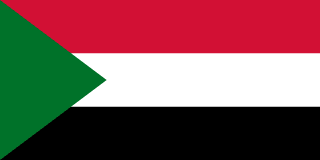
Sudan sits in northeastern Africa, bordered by Egypt to the north, the Red Sea to the northeast, Eritrea and Ethiopia to the east, South Sudan to the south, and Chad and Libya to the west.
Sudan's name comes from the Arabic phrase 'bilad al-sudan,' meaning 'land of the Blacks,' historically used by Arab geographers to describe the wider region of sub-Saharan Africa south of the Sahara.
Landscape: Spans desert in the north to savanna in the south, with the Nile River running through the centre of the country.
Climate: Hot and arid in the north, becoming more tropical and wetter moving south.
Food: Ful medames, slow-cooked fava beans, is widely considered a national dish, typically eaten for breakfast.
Khartoum was founded in 1821 by Ottoman-Egyptian forces at the strategic confluence of the Blue Nile and White Nile, the two rivers whose waters visibly differ in colour before merging. With a population of around 6 million across the metropolitan area, it remains Sudan's political and economic centre despite significant recent conflict having heavily affected the city.
The secretary bird appears on Sudan's coat of arms, and the Nile River itself functions as the country's most powerful unofficial symbol, central to both ancient Sudanese civilisation and the modern nation's geography and economy.
Sudanese silverwork and traditional Nubian pottery, tied to a civilisation predating even ancient Egypt in parts of the country, reflect deep historical craft traditions, and traditional Sudanese basket weaving remains practised across various regions. Traditional Sudanese wrestling, particularly among Nuba communities, remains a significant and actively practised cultural sport tied to specific harvest celebrations.
The pyramids of Meroë, built by the ancient Kingdom of Kush, are less well known internationally than Egypt's but more numerous, with over 200 pyramids remaining, a UNESCO World Heritage Site reflecting Sudan's own deep ancient civilisation.
Sudan's Dinder National Park, part of a larger cross-border protected area shared with Ethiopia, supports significant savanna wildlife, and the country's Red Sea coast holds relatively undeveloped coral reef systems.
Sudan is overwhelmingly Muslim, predominantly Sunni, and the country's ancient Nubian civilisation, which once ruled Egypt itself as pharaohs during the 25th dynasty, remains a significant and increasingly recognised part of Sudanese historical identity.
Sudan is a significant exporter of gold and livestock, alongside crude oil, though the loss of most oil reserves to South Sudan upon its 2011 independence significantly reshaped Sudan's export economy.
Independence Day on January 1st marks 1956, when Sudan gained sovereignty from joint British-Egyptian administration. Given Sudan's overwhelmingly Muslim population, Eid al-Fitr and Eid al-Adha are both major national holidays, and Sudan's Uprising Day in April commemorates the 2019 protests that led to the removal of long-time leader Omar al-Bashir. Sudan's Armed Forces Day in August reflects the continued central role of the military in national life. Sudan's Unity Day reflects ongoing efforts toward national reconciliation amid conflict.
Football holds the largest domestic following in Sudan by a wide margin, even amid the country's significant recent political instability. Traditional Nuba wrestling, tied to specific harvest celebrations among Nuba communities, remains a genuinely significant cultural and sporting tradition in parts of the country. Sudanese athletics has also produced competitors at regional East African championships.
Sudan's political situation has been severely unstable in recent years, with a devastating civil war breaking out in 2023 between rival factions of the military, following the earlier 2019 removal of long-time leader Omar al-Bashir, making Sudan's current governance genuinely difficult to describe with confidence. Sudan's gold and agricultural exports remain significant despite the severe disruption caused by ongoing civil conflict.
Jebel Marra, a volcanic massif in the Darfur region, is Sudan's highest point at 3,042 metres. The lowest point sits at sea level along Sudan's Red Sea coastline. Sudan's terrain spans Saharan desert in the north to more fertile savanna further south.
Egypt, Syria, Iraq, and Yemen all use variations of the same red-white-black horizontal Pan-Arab tricolour Sudan does, tracing back to the 1916 Arab Revolt flag, and Sudan's plain green triangle at the hoist, without any additional emblem, star, or script, makes it the simplest version among this closely related family of regional flags. Sudan's plain green triangle, without further symbolism, distinguishes it from its more elaborately marked regional cousins.
Adopted in 1970, based on the same Pan-Arab colour tradition used across much of the Arab world.
Home to more pyramids than Egypt, though much smaller in scale.
Play today's Flagpie →© Flagpie 2026