
Africa
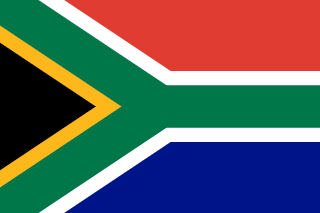
South Africa sits at the southern tip of the African continent, bordered by Namibia, Botswana, Zimbabwe, Mozambique, and Eswatini, and entirely surrounding the small country of Lesotho.
South Africa's name is straightforwardly descriptive, referring to its position at the southern tip of the African continent, adopted when the country was formed as a union of previously separate British colonies and Boer republics in 1910.
Landscape: A large interior plateau ringed by mountains, with coastline on both the Atlantic and Indian Oceans.
Climate: Mostly semi-arid, with a Mediterranean climate around Cape Town and subtropical conditions along the eastern coast.
Food: A braai, a style of barbecue, is a genuine national institution, alongside bobotie, a spiced minced meat dish with a baked egg topping.
South Africa is unusual in having three capital cities, Pretoria for the executive branch, Cape Town for the legislature, and Bloemfontein for the judiciary, a compromise reached when the country's four founding provinces united in 1910 and none wanted to give up its own claim entirely. Pretoria, the largest of the three with around 2.9 million people, was founded in 1855 and named after Boer leader Andries Pretorius.
The springbok, a fast, agile antelope, is South Africa's national animal and lends its name to the national rugby team, one of the most successful in the world. The king protea, a large and distinctive flowering plant native to the region, is the national flower.
Zulu beadwork, with colours and patterns historically carrying specific coded meanings, is one of South Africa's most recognised craft traditions, alongside Ndebele house painting, known for its bold geometric patterns painted directly onto exterior walls.
Table Mountain, overlooking Cape Town, is one of Africa's most recognisable natural landmarks, alongside Robben Island, where Nelson Mandela was imprisoned for 18 years, now a museum and UNESCO World Heritage Site.
South Africa is home to the 'Big Five,' lion, leopard, elephant, rhinoceros, and buffalo, historically the five animals considered most dangerous to hunt on foot and now the centrepiece of the country's wildlife tourism industry. Kruger National Park is one of the largest and best known game reserves in Africa.
South Africa is majority Christian, with significant Muslim, Hindu, and traditional African religious minorities, reflecting its history of Indigenous, European, and Asian settlement. The country recognises 12 official languages, more than almost any other nation, a direct reflection of its ethnic and cultural diversity.
South Africa is one of the world's largest exporters of gold and platinum group metals, alongside coal and other minerals, with mining forming a historically central part of the national economy.
Freedom Day on April 27th marks the 1994 election that ended apartheid and brought Nelson Mandela to power as the country's first democratically elected president, a date of profound national significance. Heritage Day on September 24th celebrates the country's cultural diversity, and Human Rights Day on March 21st commemorates the 1960 Sharpeville massacre, a pivotal and tragic moment in the anti-apartheid struggle. Nelson Mandela International Day on July 18th, his birthday, encourages 67 minutes of community service, one minute for each year of his public life dedicated to fighting for justice.
Rugby holds a unique place in South African culture, the national team's 1995 World Cup win, presented by Mandela himself wearing the captain's jersey, became a defining symbol of post-apartheid national unity, and the Springboks have gone on to win the tournament multiple times since. Cricket and football also both carry significant national followings.
South Africa is a parliamentary republic, with a President serving as both head of state and government, elected by the National Assembly rather than directly by voters. The African National Congress, the party Mandela led, has governed continuously since the end of apartheid in 1994, though its dominance has narrowed considerably in more recent elections.
Mafadi, in the Drakensberg range, is South Africa's highest point at 3,450 metres, part of a dramatic mountain escarpment shared with the small enclave nation of Lesotho. The lowest point sits at sea level along the country's extensive coastline, where the Atlantic and Indian Oceans meet.
There's genuinely no close match for South Africa's flag anywhere in the world, the six-colour Y-shaped design is entirely unique in both its layout and its use of that many colours in a single unified pattern. Its closest conceptual cousin might be Eswatini's flag for sharing a broadly similar colour palette, but the actual design is different enough that there's no real risk of confusing the two.
Designed by Frederick Brownell.
Adopted in 1994, designed specifically for the transition out of apartheid, replacing a flag that had been in use since 1928.
One of only 17 officially recognised 'megadiverse' countries, home to three of the world's biodiversity hotspots.
Play today's Flagpie →© Flagpie 2026