
Africa
Somalia occupies the tip of the Horn of Africa, bordered by Djibouti to the northwest, Ethiopia to the west, and Kenya to the southwest, with the longest coastline of any country on mainland Africa.
Somalia's name likely derives from 'Soomaali,' possibly combining words meaning 'go' and 'milk,' referencing the region's historic nomadic pastoral culture centred around herding livestock.
Landscape: Mostly arid plateau and plains, with the longest coastline of any mainland African country along the Indian Ocean and Gulf of Aden.
Climate: Hot and arid across most of the country, one of the driest climates in Africa.
Food: Bariis iskukaris, spiced rice often served with goat or camel meat, is widely eaten across the country.
Mogadishu has been a significant Indian Ocean trading port for over a thousand years, historically an important Islamic and Swahili coastal city before Italian colonisation and eventual Somali independence. With a population of around 2.5 million, it remains the country's largest city and political centre despite decades of conflict having significantly affected its infrastructure and governance.
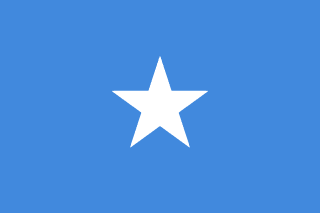
The leopard, once found throughout Somalia, is closely tied to the country's wildlife heritage, and the five-pointed star on Somalia's flag represents the five regions historically considered part of the wider Somali ethnic homeland, only some of which are within the country's current borders.
Somali basket weaving and traditional silverwork, particularly among nomadic pastoral communities, reflect the country's deep herding heritage, and Somali oral poetry holds an unusually significant and highly developed place in cultural and even political life. Traditional Somali frankincense and myrrh harvesting, tied to trees found along the country's northern coast, has ancient roots stretching back to historic trade with Egypt and beyond.
The ancient port ruins along Somalia's coast, including ancient trading sites tied to historic Indian Ocean commerce, reflect the region's deep maritime trading history, though ongoing instability has limited formal preservation and access to many sites.
Somalia's arid interior and coastal waters support species adapted to extreme heat and aridity, and the country's very long coastline, the longest in mainland Africa, holds significant fishing potential that remains substantially underdeveloped.
Somalia is overwhelmingly Sunni Muslim, and traditional clan structures remain genuinely significant to social organisation and, at times, political life, reflecting the country's deep pastoral and nomadic cultural roots.
Somalia's formal economy remains limited given decades of instability, with livestock exports to the Arabian Peninsula forming a historically significant, if informally organised, part of the country's trade.
Independence Day on July 1st marks 1960, when the formerly separate British and Italian Somaliland territories united to form modern Somalia. Given Somalia's overwhelmingly Muslim population, Eid al-Fitr and Eid al-Adha are both major national holidays, observed with particular significance nationwide. Somalia's Poetry Day celebrates the country's deep oral storytelling and poetic tradition. Somaliland's own separate Independence Day, in the self-declared northern region, is observed locally though not internationally recognised.
Football holds the largest domestic following in Somalia, even amid decades of significant political instability that have limited the sport's international development. Traditional Somali poetry and oral storytelling, while not sport, hold a place in cultural life that carries comparable social significance and prestige. Somali athletics has also produced notable long-distance runners, part of the wider East African tradition.
Somalia is a federal parliamentary republic, with a President serving as head of state and a Prime Minister holding significant executive power, accountable to a bicameral parliament. The country has experienced prolonged instability since the collapse of its central government in 1991, with the self-declared but internationally unrecognised Somaliland region in the north maintaining its own separate, relatively stable governance. Somalia's livestock exports to the Arabian Peninsula remain a historically significant part of its informal economy.
Shimbiris is Somalia's highest point at 2,416 metres. The lowest point sits at sea level along Somalia's coastline, the longest of any mainland African country. Somalia's terrain ranges from coastal plains to a mountainous northern region near the Gulf of Aden.
There's no especially close match for Somalia's flag, the plain light-blue field with a single white five-pointed star is a genuinely distinctive and minimalist combination, that light-blue shade specifically chosen as a nod to the flag of the United Nations, which oversaw the territory before independence. The plain light-blue field with a single star remains one of the simplest designs among all current national flags.
Designed by Mohammed Awale Liban.
Adopted in 1954 while still under UN trusteeship, kept unchanged through independence in 1960.
Has the longest coastline of any country on mainland Africa.
Play today's Flagpie →© Flagpie 2026