
Oceania
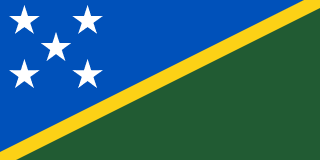
Solomon Islands is a nation of hundreds of islands in the South Pacific, sitting east of Papua New Guinea and northwest of Vanuatu.
Solomon Islands was named by Spanish explorer Álvaro de Mendaña in the 16th century, who believed, incorrectly, that the islands might be the source of the biblical King Solomon's legendary gold wealth.
Landscape: Hundreds of volcanic and coral islands, mostly mountainous and densely forested.
Climate: Tropical, warm and humid year-round with a wet season and cyclone risk.
Food: Poi, made from taro, and fish dishes cooked in coconut milk are widely eaten traditional staples.
Honiara became Solomon Islands's capital following the Second World War, developed around a former American military base established during the significant Pacific campaign fighting that took place there, including the Battle of Guadalcanal. With a population of around 92,000, it remains the country's main urban centre across an otherwise very rural, island-dispersed population.
The frigate bird and traditional shell money, historically used across the islands for ceremonial exchange and dowries, are both closely tied to Solomon Islands identity.
Solomon Islands shell money-making, crafting small discs from shells into strings used for traditional ceremonial exchange, remains a genuinely practised craft on some islands, and traditional wood carving, particularly nguzunguzu canoe prow figures meant to protect voyagers, reflects deep maritime spiritual tradition. Traditional Solomon Islands panpipe orchestras, particularly from Malaita, produce a distinctive polyphonic musical tradition recognised internationally among ethnomusicologists.
Guadalcanal, site of one of the most significant battles of the Pacific theatre in the Second World War, holds numerous wartime relics and memorials, and the Marovo Lagoon is one of the largest saltwater lagoons in the world.
Solomon Islands's rainforests and reefs support significant biodiversity, including numerous bird and orchid species found only within the archipelago, reflecting the islands' relative isolation.
Solomon Islands is overwhelmingly Christian, and the country's culture remains deeply tied to traditional customary land ownership and specific island and clan identities, with over 70 distinct languages spoken across the archipelago. Traditional bride price customs, involving shell money and other valuables, remain widely observed in marriage arrangements across many communities.
Solomon Islands is a significant exporter of timber and fish, with logging in particular forming a substantial, if increasingly contested, share of the country's export economy.
Independence Day on July 7th marks 1978, when the Solomon Islands gained sovereignty from British colonial rule. Given the country's significant Christian population, Christmas and Easter are both widely observed, and Battle of Guadalcanal commemorations reflect the islands' significant role in Second World War Pacific fighting. Solomon Islands' Whit Monday reflects the country's significant Anglican Christian population. Solomon Islands' Provincial Government Day recognises the country's decentralised governance structure.
Football holds the largest domestic following in the Solomon Islands, the national futsal team having achieved notable success at the international level relative to the country's small population. Rugby league and traditional canoe racing also both draw significant local followings. Solomon Islands athletes have also competed in weightlifting at the Commonwealth Games. Solomon Islands beach volleyball has also grown through Pacific Games participation.
The Solomon Islands is a parliamentary constitutional monarchy, with the British monarch as ceremonial head of state represented domestically by a Governor-General, while a Prime Minister holds real executive power accountable to a single-chamber parliament. The country's relationship with China has grown significantly closer in recent years, a notable and closely watched shift in the wider Pacific's geopolitical balance. The Solomon Islands' timber and fishing industries remain central to its export economy.
Mount Popomanaseu is the Solomon Islands's highest point at 2,335 metres. The lowest point sits at sea level around the country's many islands. The Solomon Islands' volcanic terrain across its many islands supports dense rainforest and significant biodiversity.
Papua New Guinea's flag shares a similar diagonal split concept with the Solomon Islands's own design, though the Solomon Islands uses blue and green divided by a yellow diagonal stripe with stars, different enough in colour and detail from Papua New Guinea's red-and-black bird-and-constellation design to avoid real confusion. The yellow diagonal stripe dividing blue and green is a distinctive structural choice among Pacific nations' flags.
Adopted in 1977, chosen shortly before independence from Britain.
Made up of six major islands and over 900 smaller ones.
Play today's Flagpie →© Flagpie 2026