
Europe
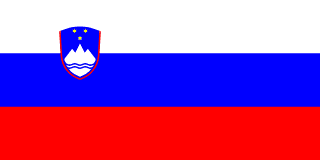
Slovenia sits in Central Europe, bordered by Italy to the west, Austria to the north, Hungary to the northeast, and Croatia to the south and east, with a short coastline on the Adriatic Sea.
Slovenia's name shares the same Slavic root as Slovakia's, both ultimately tracing to the word for Slavic peoples generally, with the specific 'Slovenia' form distinguishing the particular South Slavic group that settled the region.
Landscape: Includes a small stretch of Adriatic coastline, the Julian Alps, and the Karst Plateau, with dense forest covering over half the country.
Climate: Alpine in the mountains, Mediterranean along the coast, continental elsewhere.
Food: Potica, a rolled pastry with a variety of fillings, is a traditional favourite, alongside a strong Alpine dairy and mushroom-foraging culture.
Ljubljana has been continuously settled since Roman times, when it was known as Emona, and became capital of independent Slovenia in 1991. With a population of around 290,000, it's known for its pedestrian-friendly, largely car-free historic centre along the Ljubljanica River.
Mount Triglav, Slovenia's highest peak, is a powerful national symbol appearing on both the flag and coat of arms, said to be so central to Slovenian identity that climbing it once was considered something close to a rite of passage.
Idrija lace-making, recognised by UNESCO, has been practised in the town of Idrija for centuries, and Slovenia has a strong beekeeping tradition, including distinctively painted wooden beehive panels unique to the region. Traditional Slovenian potica, a rolled pastry with varying fillings, is treated as much as a craft as a food, with families often maintaining closely guarded recipes.
Lake Bled, with its small island church and hilltop castle, is Slovenia's most photographed landmark, and the Škocjan Caves, an extensive underground river canyon system, are a UNESCO World Heritage Site.
Slovenia's forests, covering around 60% of the country, support brown bears, wolves, and lynx, among the highest forest-cover proportions in Europe relative to national land area. The Soča River, known for its striking turquoise colour, supports a distinct native trout species found only in this river system.
Slovenia is historically Roman Catholic, though the country has become increasingly secular, and Slovenian national identity has remained strongly tied to the Slovenian language, distinct from all of its neighbours. Slovenia was the first of the former Yugoslav republics to join the European Union, in 2004, reflecting its comparatively rapid post-independence economic development.
Slovenia is a significant exporter of machinery, cars and vehicle parts, and pharmaceuticals, with an economy closely integrated into the wider Central European manufacturing network.
Statehood Day on June 25th marks 1991, when Slovenia declared independence from Yugoslavia, and Prešeren Day on February 8th, a cultural rather than political holiday, honours France Prešeren, Slovenia's national poet, and is treated as a celebration of Slovenian culture and the arts more broadly. Independence and Unity Day on December 26th marks a 1990 referendum in which Slovenians overwhelmingly voted for independence. Kurentovanje, a pre-Lenten carnival featuring elaborately costumed figures meant to chase away winter, remains a distinctly Slovenian folk tradition.
Skiing, particularly alpine and ski jumping, holds deep cultural significance in Slovenia given its mountainous Alpine terrain, and the country has produced a remarkable number of successful winter sport competitors relative to its small population. Basketball has also grown significantly in international standing in recent years. Slovenian cycling and mountaineering both carry deep cultural roots given the country's alpine terrain.
Slovenia is a parliamentary republic, with a directly elected President serving a largely ceremonial role and a Prime Minister holding real executive power, accountable to a bicameral parliament. The country was the first of the former Yugoslav republics to declare independence, in 1991, following a brief ten-day war, and later became the first of them to join both the European Union and the eurozone.
Triglav, Slovenia's highest point at 2,864 metres, is so central to national identity that it appears directly on the country's flag and coat of arms, and climbing it is sometimes described as a rite of passage for Slovenians. The lowest point sits at sea level along Slovenia's short Adriatic coastline.
Russia, Slovakia, and Serbia all share Slovenia's underlying white-blue-red horizontal Pan-Slavic tricolour base, and Slovenia's own coat of arms featuring Mount Triglav and wavy lines representing its rivers and coastline is what distinguishes it most clearly from its close Slavic cousins once the emblem is visible.
Adopted in 1991 upon independence from Yugoslavia, another near-identical Pan-Slavic tricolour distinguished from Slovakia's and Russia's by its own distinct coat of arms.
More than half the country is covered in forest, one of the highest forest-cover rates in Europe.
Play today's Flagpie →© Flagpie 2026