
Europe
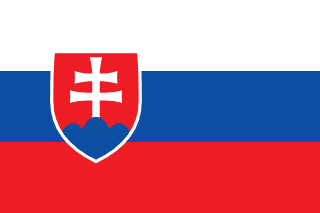
Slovakia is a landlocked country in Central Europe, bordered by Czechia and Austria to the west, Poland to the north, Ukraine to the east, and Hungary to the south.
Slovakia's name comes from the Slovaks, a West Slavic people whose name shares roots with 'Slav' more broadly, an ethnonym possibly connected to an old word meaning 'those who speak (the same language),' distinguishing them from foreign, non-Slavic-speaking peoples.
Landscape: Mountainous in the north, home to the Tatra range, with lowland plains in the south along the Danube.
Climate: Temperate continental, cold winters and warm summers.
Food: Bryndzové halušky, potato dumplings with a sheep cheese sauce, is widely considered the national dish.
Bratislava has served as capital of Slovakia since the country's peaceful split from Czechoslovakia in 1993, though the city itself has a much longer history as a coronation site for Hungarian kings during periods when it was part of the Kingdom of Hungary. With a population of around 475,000, it sits unusually close to two other national capitals, Vienna and Budapest, both within about an hour's drive.
The double cross on three hills, appearing on Slovakia's coat of arms, represents the country's mountain ranges and Christian heritage, and the linden tree, shared symbolically with other Slavic nations, is closely tied to Slovak folk culture.
Slovak folk costume varies significantly by region, and traditional wire crafting, a technique historically used by travelling Slovak tinkers to repair pottery, has become a recognised decorative art form in its own right.
Spiš Castle, one of the largest castle complexes in Central Europe, and the wooden churches of the Carpathian region, built without nails using traditional joinery, are both UNESCO World Heritage Sites. The High Tatras, the smallest alpine mountain range in the world by area, offer dramatic peaks despite their comparatively compact footprint.
Slovakia's Tatra Mountains support brown bears, wolves, and lynx, and the country holds one of the highest densities of large carnivores remaining in Central Europe relative to its size. Slovakia's caves, including the Domica cave system, are among the most extensive limestone cave networks in Central Europe.
Slovakia is majority Roman Catholic, with religious practice remaining somewhat stronger there than in neighbouring Czechia, and the country has a significant Hungarian minority population concentrated in its southern regions.
Slovakia is a significant exporter of cars, producing more vehicles per capita than any other country in the world, alongside machinery and electronics.
Constitution Day on September 1st marks the 1992 adoption of Slovakia's constitution ahead of its 1993 split from Czechoslovakia, and Day of the Constitution of the Slovak Republic is treated as a foundational moment for the modern independent state. Struggle for Freedom and Democracy Day on November 17th, shared with the Czech Republic, commemorates both a 1939 student protest and the 1989 Velvet Revolution. Slovak folk festivals, particularly in the Východná region, showcase traditional costume and music passed down through generations.
Ice hockey holds a place close to the centre of Slovak national identity, particularly significant given the sport's shared history with the Czech Republic before the two countries' peaceful 1993 split, and Slovakia has continued to produce world-class players since. Football and skiing both also draw significant domestic followings. Slovak tennis has also produced several internationally ranked competitors in recent decades.
Slovakia is a parliamentary republic, with a directly elected President serving a largely ceremonial role and a Prime Minister holding real executive power, accountable to a single-chamber National Council. The country emerged from the peaceful 1993 dissolution of Czechoslovakia, and later joined both the European Union and the eurozone. Slovakia joined the eurozone in 2009, adopting the euro earlier than several of its regional neighbours.
Gerlachovský štít, in the High Tatras, is Slovakia's highest point at 2,655 metres, the highest peak in the entire Carpathian mountain range. The lowest point is where the Bodrog River exits the country, sitting around 94 metres above sea level, Slovakia's lowest point despite being well above true sea level, since the country is entirely landlocked.
Russia, Slovenia, and Serbia all share Slovakia's underlying white-blue-red horizontal Pan-Slavic tricolour base, and Slovakia's own coat of arms, a double cross on three blue hills, was added specifically in 1992 to distinguish it from Russia's near-identical plain design, which lacks any central emblem at all.
Based on the same Pan-Slavic tricolour tradition as several neighbours, with a coat of arms added in 1992 specifically to distinguish it from Russia's and Slovenia's near-identical flags.
Home to more castles per capita than almost any other country in the world.
Play today's Flagpie →© Flagpie 2026