
Europe
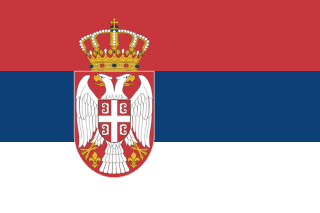
Serbia is a landlocked country in the Balkans, bordered by Hungary to the north, Romania and Bulgaria to the east, North Macedonia and Kosovo to the south, and Croatia, Bosnia and Herzegovina, and Montenegro to the west.
Serbia's name comes from the Serbs, a South Slavic people whose own name's origin is debated, with some linguists tracing possible roots to an old Slavic word related to family or kinship, though this isn't definitively settled.
Landscape: Landlocked, spanning the fertile Pannonian Plain in the north and increasingly mountainous terrain further south.
Climate: Continental, cold winters and warm summers.
Food: Ćevapi, small grilled sausages, is one of Serbia's most widely eaten dishes, alongside a strong tradition of stuffed peppers and slow-cooked stews.
Belgrade sits at the confluence of the Danube and Sava rivers, a strategically significant position that made it fought over by numerous empires throughout history, changing hands dozens of times across its long history. With a population of around 1.4 million, its name literally means 'white city,' referring to the white walls of an early medieval fortress there.
The double-headed white eagle appears on Serbia's coat of arms, tied to Byzantine and Serbian Orthodox tradition, and the country's medieval monasteries hold particular symbolic and religious significance to Serbian national identity.
Serbian folk costume varies by region but often features intricate embroidery and woven textiles, and traditional Serbian pottery and woodcarving remain practised crafts, particularly in more rural areas. Serbian brass band music, particularly the trumpet-driven style associated with the Guča festival, has become one of the country's most internationally recognised musical exports.
The medieval monasteries of Studenica and Sopoćani, both UNESCO World Heritage Sites, reflect Serbia's deep Orthodox Christian heritage, and the Belgrade Fortress, overlooking the river confluence, has been rebuilt and fought over for close to two thousand years.
Serbia's mountainous southern regions support brown bears, wolves, and lynx, and the Danube River, running through the country, supports significant fish and bird populations. Đerdap National Park, along the Danube's dramatic Iron Gates gorge, protects one of the largest remaining stretches of undisturbed forest in the Balkans.
Serbia is majority Orthodox Christian, with the Serbian Orthodox Church playing a historically central role in Serbian national identity, particularly through centuries of Ottoman rule when it helped preserve Serbian culture and language.
Serbia is a significant exporter of cars and automotive parts, machinery, and agricultural products, with its economy increasingly integrated into wider European supply chains in recent years.
Statehood Day on February 15th marks both the beginning of the 1804 uprising against Ottoman rule and the 1835 adoption of Serbia's first constitution, two significant events sharing the same date. Armistice Day on November 11th holds particular weight in Serbia given the country's substantial losses during the First World War, and Slava, a family patron saint feast day, remains a genuinely significant and widely observed tradition specific to Serbian Orthodox culture. Guča Trumpet Festival each August draws hundreds of thousands for a celebration of traditional Balkan brass band music, one of the country's most distinctive cultural exports.
Basketball and tennis both hold major places in Serbian sporting identity, the country having produced some of the most dominant modern players in both sports relative to its comparatively small population. Water polo and volleyball have also both produced significant international success for Serbia in recent decades.
Serbia is a parliamentary republic, with a directly elected President holding significant real authority alongside a Prime Minister, accountable to a single-chamber National Assembly. The country's borders and political identity were significantly reshaped by the breakup of Yugoslavia through the 1990s, and Serbia's relationship with Kosovo, which declared independence in 2008, remains a significant unresolved issue in its foreign policy.
Midžor, in the Balkan Mountains near the border with Bulgaria, is Serbia's highest point at 2,169 metres. The lowest point is where the Danube River exits the country, sitting around 35 metres above sea level, Serbia's lowest point despite being well above true sea level, since the country is entirely landlocked.
Slovenia and Croatia both share Serbia's underlying red-white-blue Pan-Slavic tricolour base, distinguished mainly by each country's own distinct central emblem, Serbia's double-headed eagle coat of arms setting it apart once visible. Russia uses the same three colours in the same order too, without any central emblem at all, making it the closest match to a plain, unadorned version of Serbia's flag.
The red-blue-white tricolour dates back to the 19th century, was suspended during the Yugoslav era, and was restored after Serbia became fully independent in 2006.
The birthplace of Nikola Tesla, one of history's most influential inventors.
Play today's Flagpie →© Flagpie 2026