
Europe
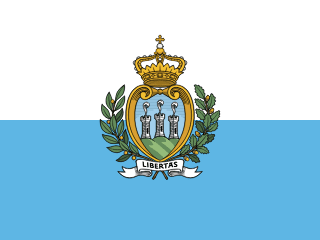
San Marino is a tiny country entirely surrounded by Italy, perched on the slopes of Monte Titano, and one of the world's oldest surviving republics.
San Marino is named after Saint Marinus, a stonemason who, according to tradition, founded the country in 301 AD after fleeing religious persecution on the nearby island of Rab, making it one of very few countries named directly after its founding figure.
Landscape: Small and mountainous, built around Mount Titano, entirely surrounded by Italy.
Climate: Mediterranean, mild with warm summers and cool winters.
Food: Piadina, a thin flatbread, and a strong pasta tradition reflect San Marino's close culinary ties to the surrounding Italian region.
The City of San Marino has served as the country's capital since its founding, built atop Monte Titano, whose steep, defensible terrain historically helped the tiny republic maintain independence surrounded entirely by Italy. With a population of around 4,000 in the city itself, it holds the distinction of being one of the smallest national capitals in the world, and San Marino overall is considered the oldest surviving sovereign state and constitutional republic still in existence.
The three towers of Monte Titano, Guaita, Cesta, and Montale, appear on San Marino's flag and coat of arms, representing the fortifications that have defended the republic for centuries and remain the country's most recognisable symbol.
San Marino's craft traditions closely mirror those of the surrounding Italian region, including ceramics and traditional crossbow-making, tied to the country's historic militia tradition still ceremonially maintained today.
The three towers atop Monte Titano, along with the historic city walls, form a UNESCO World Heritage Site and remain San Marino's defining landmark, offering views across the surrounding Italian countryside to the Adriatic Sea.
San Marino's small size and mountainous terrain support species typical of the surrounding Apennine region, including birds of prey that nest among the cliffs below the historic towers.
San Marino is historically and predominantly Roman Catholic, and the country's system of two co-heads of state, the Captains Regent, elected every six months, is one of the oldest continuously functioning governmental systems in the world.
San Marino's economy relies significantly on tourism, banking, and postage stamp sales, a surprisingly significant revenue source historically, alongside modest manufacturing given the country's tiny size and lack of substantial natural resources.
Anniversary of the Founding of the Republic on September 3rd marks the traditional founding of San Marino by Saint Marinus in 301 AD, celebrated with historical parades and medieval costume given the country's status as the world's oldest surviving republic. Investiture of the Captains Regent, held twice yearly on April 1st and October 1st, marks the installation of the country's two co-heads of state. San Marino's Liberation Day in September doubles as both a civic and religious observance given the country's patron saint origins.
Football and motorsport both hold significant places in San Marino's sporting identity, the country having hosted rounds of the Formula One World Championship at a circuit named after it, even though the actual track sits just across the border in Italy. Shooting sports have also produced San Marino's rare Olympic medals relative to its tiny population.
San Marino is a parliamentary republic, governed by two Captains Regent elected every six months from within the Grand and General Council, San Marino's parliament, a system considered one of the oldest continuously functioning forms of government in the world. The country's economy relies significantly on tourism, banking, and postage stamp sales. San Marino's tax and banking policies have historically made it a notable financial centre relative to its tiny size.
Monte Titano, upon which the historic capital sits, is San Marino's highest point at 749 metres. The lowest point is along the Ausa River, sitting around 55 metres above sea level, San Marino's lowest point despite being well above true sea level, since the country is entirely landlocked, surrounded by Italy.
There's no especially close match for San Marino's flag, the white-and-blue horizontal bands topped by a coat of arms depicting three towers atop Monte Titano are a distinctive combination, those three towers specifically representing the historic fortifications that have defended the republic for centuries.
The white and blue colours date back centuries, with the coat of arms formally added to the state flag in 1862.
One of the smallest countries in the world, and among the oldest surviving republics, claiming to have been founded in the year 301.
Play today's Flagpie →© Flagpie 2026