
North America
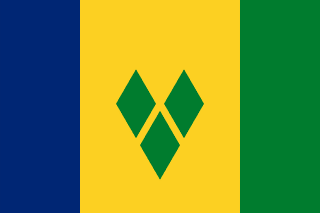
Saint Vincent and the Grenadines is a chain of islands in the Caribbean's Windward Islands, sitting south of Saint Lucia and north of Grenada.
Saint Vincent was named by Christopher Columbus after Saint Vincent of Saragossa, reportedly because he sighted the island on the saint's feast day, while the Grenadines, a chain of smaller islands, take a diminutive form of the name Grenada, the larger island to their south.
Landscape: A volcanic main island with a mountainous, forested interior, alongside a chain of over 30 smaller islands and cays.
Climate: Tropical, warm year-round with a wet season and hurricane risk.
Food: Roasted breadfruit and fried jackfish is widely considered the national dish.
Kingstown has served as the country's capital since British colonial times, its botanical gardens, established in 1765, among the oldest in the Western Hemisphere. With a population of around 15,000 in the city itself, it remains the country's main commercial and administrative centre.
The Saint Vincent parrot, found only on the island and displaying strikingly varied colouration between individuals, is the national bird, and the soufrière, an active volcano, holds deep significance in the country's natural and cultural identity.
Traditional basket weaving using local straw and vine materials, and Vincentian steel pan music, shared culturally with the wider Caribbean, remain significant living traditions. Traditional Vincentian boat-building, producing wooden fishing vessels by hand, remains practised in several coastal communities.
La Soufrière, an active volcano that has erupted multiple times, most recently in 2021, dominates Saint Vincent's northern landscape, and the Tobago Cays, a group of small uninhabited islands within a marine park, are among the Grenadines's most pristine natural sites. Parts of the Pirates of the Caribbean film franchise were filmed in the Grenadines, drawing renewed international attention to the islands.
The Saint Vincent parrot survives in the island's remaining rainforest, and the surrounding Grenadines waters support significant coral reef systems and sea turtle populations.
Saint Vincent and the Grenadines is majority Christian, predominantly Anglican and Methodist, and the country's Garifuna heritage, tied to Indigenous Caribbean and African ancestry, remains a significant part of the island's cultural history, particularly on Saint Vincent itself.
Saint Vincent and the Grenadines's economy relies significantly on tourism and banana exports, alongside a smaller manufacturing sector producing processed foods and beverages.
Independence Day on October 27th marks 1979, when Saint Vincent and the Grenadines gained sovereignty from British colonial rule. Carnival (Vincy Mas), held in the summer rather than the more typical pre-Lent timing found elsewhere in the Caribbean, remains the country's most significant cultural celebration, drawing the diaspora home from around the world. National Heroes Day in March honours Chief Joseph Chatoyer, a key figure in Indigenous Carib resistance history. National Workers Day in May recognises the contribution of labour to the country's development.
Cricket holds the largest domestic following in Saint Vincent and the Grenadines, the islands having contributed players to the historically dominant West Indies team, and sailing carries particular cultural significance given the Grenadines's status as a major Caribbean yachting destination. The Grenadines' sailing regattas draw significant international competitive attention each year.
Saint Vincent and the Grenadines is a parliamentary constitutional monarchy, with the British monarch as ceremonial head of state represented domestically by a Governor-General, while a Prime Minister holds real executive power accountable to a single-chamber House of Assembly. A 2009 referendum on removing the monarchy and becoming a republic was narrowly defeated, keeping the current constitutional arrangement in place. The country's economy relies significantly on tourism, agriculture, and a modest offshore financial sector.
La Soufrière, an active volcano on Saint Vincent, is the country's highest point at 1,234 metres, having erupted as recently as 2021. The lowest point sits at sea level around the country's many islands. The country's volcanic terrain includes La Soufrière, which has erupted as recently as 2021.
There's no especially close match for Saint Vincent and the Grenadines's flag, the three green diamonds arranged in a distinctive V-shape on a blue-yellow-green background, nicknamed the 'Gems of the Antilles,' make it a genuinely unique combination among Caribbean flags. The three-diamond arrangement is genuinely unique among all Caribbean nations' flags.
Adopted in 1985, the third version since independence, with the arrangement of the diamonds redesigned specifically to more clearly resemble a 'V' for Vincent.
Made up of over 30 islands and islets in the Caribbean.
Play today's Flagpie →© Flagpie 2026