
North America
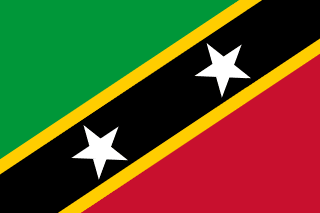
Saint Kitts and Nevis is a two-island country in the Caribbean's Leeward Islands, the smallest sovereign country in the Americas by both area and population.
Saint Kitts was named by Christopher Columbus after Saint Christopher, though the name was later shortened informally to Kitts by English settlers. Nevis's name comes from the Spanish 'Nuestra Señora de las Nieves' (Our Lady of the Snows), after clouds around the island's peak reminded early explorers of snow.
Landscape: Two small volcanic islands, mountainous and forested with beaches along the coast.
Climate: Tropical, warm year-round with a wet season and hurricane risk.
Food: Stewed saltfish with spicy plantains and dumplings is widely considered the national dish.
Basseterre has served as Saint Kitts and Nevis's capital since French colonial times, its name meaning 'low land' in French, describing the town's coastal position. With a population of around 14,000, it remains the country's main port and commercial centre.
The brown pelican, found along the islands' coastlines, is the national bird, and Saint Kitts and Nevis's sugar industry, though no longer economically dominant, remains deeply tied to national historical identity and memory.
Traditional Kittitian and Nevisian basket weaving and the mas (masquerade) tradition, involving elaborate costumes performed during Carnival, reflect the islands' African and Caribbean cultural heritage. Traditional Kittitian sugar mill ruins scattered across the island reflect centuries of plantation history still visible in the landscape today.
Brimstone Hill Fortress, an extensively preserved 17th-century British fortification, is a UNESCO World Heritage Site and one of the best-preserved historic fortresses in the Caribbean. Nevis Peak, a dormant volcano covered in rainforest, dominates the smaller island and remains a popular hiking destination.
The islands' surrounding waters support significant populations of green vervet monkeys, introduced centuries ago and now a common and distinctive sight, alongside sea turtles nesting on their beaches. Saint Kitts's rainforest interior supports a small population of introduced African green monkeys alongside native bird species.
Saint Kitts and Nevis is majority Christian, predominantly Protestant, and the country holds the distinction of being the smallest sovereign state in the Americas by both population and land area.
Saint Kitts and Nevis's economy relies significantly on tourism and a citizenship-by-investment programme, one of the oldest in the world, rather than substantial goods exports given the country's very small size.
Independence Day on September 19th marks 1983, when Saint Kitts and Nevis gained sovereignty from British colonial rule, the smallest sovereign state in the Americas by both population and area. Carnival, held around Christmas and New Year rather than the more typical pre-Lent timing found elsewhere in the Caribbean, remains the country's most significant cultural celebration. National Heroes Day in September honours key figures from the country's path to independence.
Cricket holds the largest domestic following in Saint Kitts and Nevis, the islands having contributed players to the historically dominant West Indies team, and athletics has also produced notable competitors relative to the country's very small population. The islands have also produced notable competitors in track and field at regional championships. The federation has also produced competitors in swimming at regional championships.
Saint Kitts and Nevis is a federal parliamentary constitutional monarchy, with the British monarch as ceremonial head of state represented domestically by a Governor-General, while a Prime Minister holds real executive power accountable to a single-chamber National Assembly. Nevis, the smaller of the two islands, retains its own island administration with a constitutional right to secede that has been the subject of past referendums. The federation's citizenship-by-investment programme, one of the oldest in the world, remains a significant revenue source.
Mount Liamuiga, a dormant volcano on Saint Kitts, is the country's highest point at 1,156 metres. The lowest point sits at sea level around both islands' coastlines. Both islands feature volcanic peaks rising steeply from otherwise narrow coastal plains.
There's no especially close match for Saint Kitts and Nevis's flag, the green-yellow-black diagonal bands bordered in red with two white stars are a distinctive combination, those two stars specifically representing hope and liberty for the two islands that make up the federation. The diagonal band design is relatively uncommon among Caribbean nations' flags generally.
Adopted in 1983 upon independence, replacing an earlier flag used briefly after gaining self-governance in 1967.
The smallest sovereign country in the Americas, both by area and population.
Play today's Flagpie →© Flagpie 2026