
Europe
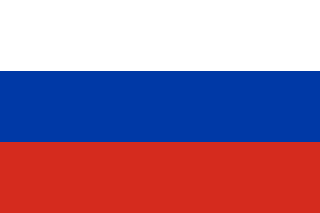
Russia spans Eastern Europe and the whole of northern Asia, the largest country on Earth by a wide margin, bordering more countries than any other nation and stretching across 11 time zones.
Russia's name derives from the Rus', a group of Varangian (Viking) traders and rulers who established a state centred on Kyiv and Novgorod in the 9th century, whose name was gradually applied to the wider territory and people that followed.
Landscape: The largest country on Earth by a wide margin, spanning vast plains, the Ural Mountains, Siberian forest and tundra, all the way to the Pacific coast.
Climate: Mostly continental to subarctic, with extremely cold winters across most of the country, particularly in Siberia.
Food: Borscht, a beet soup, and pelmeni, dumplings similar to ravioli, are among Russia's best known traditional dishes.
Moscow first rose to prominence in the 14th century as the centre of the growing Grand Duchy of Moscow, and has served as Russia's capital for most of its history since, aside from a period between 1712 and 1918 when Saint Petersburg held the role instead. With a population of around 13 million, it's the largest city in Europe by population and remains the political and economic centre of the country.
The Russian bear is a widely recognised, if unofficial, national symbol, used internationally as shorthand for Russia itself for centuries. The double-headed eagle, adopted from Byzantine tradition, appears on Russia's coat of arms and represents the country's historical position spanning both Europe and Asia.
Matryoshka nesting dolls and Fabergé-style enamel work are among Russia's best-known craft exports, alongside a long tradition of intricate lacquer box painting from towns like Palekh. Traditional Russian folk dress, still worn at festivals, varies by region but often features bright embroidery and the kokoshnik headdress.
Saint Basil's Cathedral, with its distinctive colourful onion domes, is one of the most recognisable buildings in the world, alongside the Kremlin, both in Moscow. Lake Baikal, the world's deepest and oldest freshwater lake, holds roughly a fifth of the planet's unfrozen fresh water.
The Siberian tiger, the largest cat in the world, survives in the wild only in a small remote region of far eastern Russia. Russia's vast territory also supports species ranging from polar bears in the Arctic to brown bears across its enormous forested interior.
Russian Orthodox Christianity is the country's dominant religious tradition, closely tied historically to Russian national identity, though decades of state atheism under the Soviet Union significantly reduced religious practice. Russia is also home to a substantial Muslim population, particularly in regions like Chechnya and Tatarstan.
Russia is one of the world's largest exporters of crude oil and natural gas, alongside metals, timber, and wheat, with energy exports historically forming an especially large share of the national economy.
Victory Day on May 9th, commemorating the Soviet Union's role in defeating Nazi Germany in 1945, is Russia's most significant patriotic holiday, marked by a major military parade through Red Square in Moscow. New Year is celebrated more prominently than Christmas in Russia, a legacy of the Soviet era's discouragement of religious observance, and Maslenitsa, a week-long pre-Lenten festival involving pancake-eating and folk traditions, remains widely celebrated.
Ice hockey holds particular national pride in Russia, the country having built one of the most consistently dominant international programmes in the sport's history, and Russia has also produced a remarkable number of world-class gymnasts, figure skaters, and chess grandmasters, the latter reflecting a genuinely deep cultural investment in the game going back to the Soviet era.
Russia is a federal semi-presidential republic, with a President holding substantial executive authority alongside a Prime Minister and a bicameral Federal Assembly. The country spans 11 time zones, the most of any nation on Earth, and its political system has become increasingly centralised around presidential power in recent decades.
Mount Elbrus, in the Caucasus Mountains near the border with Georgia, is Russia's highest point at 5,642 metres, and is generally considered the tallest peak in Europe, since the Caucasus range is conventionally treated as the continent's southeastern boundary. The lowest point is the shoreline of the Caspian Sea, sitting around 28 metres below sea level, the lowest point on the European continent.
Slovakia, Slovenia, and Serbia all use the exact same white-blue-red horizontal tricolour Russia does, part of a shared Pan-Slavic colour tradition tracing back to Russia's own flag being adopted as a symbol by 19th-century Slavic nationalist movements. The Netherlands uses the same three colours too, though in a different order, red-white-blue rather than white-blue-red, similar enough in palette that a passing glance could plausibly mix the two up.
The white-blue-red tricolour dates to Peter the Great's study of Dutch shipbuilding in the 1690s, was replaced by the Soviet flag from 1922 to 1991, and was restored after the Soviet Union's collapse.
The largest country on Earth by a huge margin, spanning 11 time zones.
Play today's Flagpie →© Flagpie 2026