
Europe
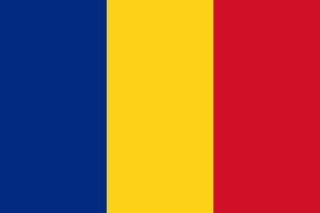
Romania sits in southeastern Europe, bordered by Ukraine to the north, Moldova to the northeast, Bulgaria to the south, Serbia to the southwest, and Hungary to the west, with a coastline on the Black Sea.
Romania's name reflects its Roman heritage, derived from 'Romanus,' since the region was once the Roman province of Dacia, and Romanian remains a Romance language, unusual for its location surrounded largely by Slavic-speaking neighbours.
Landscape: The Carpathian Mountains form a curved spine through the country, surrounded by plains and the Danube Delta along the Black Sea coast.
Climate: Temperate continental, cold snowy winters and warm summers.
Food: Sarmale, cabbage rolls filled with spiced meat and rice, is considered a national dish, alongside mămăligă, a cornmeal porridge similar to polenta.
Bucharest grew from a smaller fortress settlement into Romania's capital in 1862, following the unification of the Wallachia and Moldavia principalities. With a population of around 1.8 million, its grand early-20th-century architecture once earned it the nickname 'Little Paris.'
The golden eagle appears on Romania's coat of arms, and the country's rich folklore, including the legend of Dracula, tied loosely to the historical figure Vlad the Impaler, has become an internationally recognised, if not entirely accurate, cultural association.
Romanian folk costumes, particularly elaborately embroidered blouses from the Transylvania and Maramureș regions, remain genuinely worn at festivals, and Romania has strong wood carving and pottery traditions in its more rural regions. Romanian Easter egg decorating and traditional pottery from regions like Horezu, recognised by UNESCO, both remain living craft traditions rather than purely historical practices.
Bran Castle, popularly associated with the Dracula legend, is one of Romania's most visited sites, alongside the painted monasteries of Bucovina, their exterior walls covered in vivid religious frescoes dating back centuries.
Romania is majority Orthodox Christian, with the Romanian Orthodox Church playing a significant cultural role, and the country has a notable Hungarian minority population concentrated particularly in Transylvania.
Romania is a significant exporter of cars and automotive parts, machinery, and textiles, with a manufacturing sector increasingly integrated into the wider European supply chain.
Great Union Day on December 1st marks 1918, when Transylvania united with the Kingdom of Romania, forming the country's modern borders, and is Romania's most significant national holiday. Easter, calculated according to the Orthodox calendar and often falling on a different date to Western Easter, is the country's most important religious celebration, and Mărțișor on March 1st, marking the arrival of spring, involves the traditional gift of small red-and-white string trinkets. Dragobete in late February, sometimes described as a Romanian equivalent to Valentine's Day, has roots in older Romanian folk tradition rather than any imported custom.
Football and gymnastics both hold major places in Romanian sporting history, the latter having produced Nadia Comăneci, the first gymnast ever awarded a perfect score of 10 at the Olympics, in 1976, a genuinely historic sporting moment. Tennis has also produced several of the country's most successful recent international competitors. Romanian football produced one of Europe's most celebrated teams in the early 1990s, reaching the World Cup quarter-finals in 1994.
Romania is a semi-presidential republic, splitting executive authority between a directly elected President and a Prime Minister accountable to a bicameral parliament. The country's modern democracy dates to the 1989 revolution that violently overthrew communist dictator Nicolae Ceaușescu, one of the few Eastern Bloc transitions of that era that wasn't largely peaceful.
Moldoveanu Peak, in the Southern Carpathians, is Romania's highest point at 2,544 metres. The lowest point sits at sea level along Romania's short Black Sea coastline.
Chad's flag is functionally identical to Romania's, both use the same blue-yellow-red vertical tricolour, differing only in a very slightly different shade of blue, a coincidence entirely unrelated to any historical connection between the two countries and one of the most commonly cited examples of accidental national flag confusion anywhere in the world. Moldova and Andorra both use similar vertical tricolours too, though both add a central emblem that Romania's plain flag doesn't carry.
Adopted in its current tricolour form in 1848, removing a coat of arms that had been added and removed several times through the 20th century depending on the ruling government.
Home to Transylvania, the historical region that inspired the legend of Dracula.
Play today's Flagpie →© Flagpie 2026