
Africa
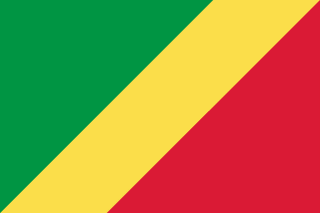
The Republic of the Congo sits on the Atlantic coast of Central Africa, bordered by Gabon to the west, Cameroon and the Central African Republic to the north, and the much larger Democratic Republic of the Congo to the east and south.
The Republic of the Congo takes its name from the Congo River, itself named after the historic Kingdom of Kongo, a powerful pre-colonial state, and is often referred to as Congo-Brazzaville to distinguish it from its much larger neighbour, the Democratic Republic of the Congo.
Landscape: Mostly covered by the Congo Basin rainforest, with a short Atlantic coastline and the Congo River forming much of its eastern border.
Climate: Tropical, hot and humid year-round.
Food: Saka saka, cassava leaves cooked with palm oil and often fish, is a widely eaten staple dish.
Brazzaville was founded in 1880 by French explorer Pierre Savorgnan de Brazza, after whom the city is named, and grew into a significant colonial administrative centre before becoming capital of independent Congo in 1960. With a population of around 2.1 million, it sits directly across the Congo River from Kinshasa, making the two capitals the closest pair of national capitals in the world.
The lion appears on the Republic of the Congo's coat of arms, and the country's flag, using Pan-African colours, reflects its independence-era solidarity with wider African liberation movements.
Congolese wood carving and mask-making, particularly among the Kongo and Teke peoples, reflect deep spiritual and ceremonial traditions shared culturally with the neighbouring Democratic Republic of the Congo. Traditional Congolese textile and raffia weaving, historically tied to the Kingdom of Kongo, remains produced in parts of the country's more rural regions.
The Basilique Sainte-Anne du Congo in Brazzaville, with its distinctive green-tiled roof, is a significant colonial-era landmark, and Odzala-Kokoua National Park protects one of the oldest and most biodiverse rainforest areas in the Congo Basin.
Odzala-Kokoua National Park is renowned for exceptional gorilla and forest elephant populations, among the most significant remaining strongholds for both species in Central Africa.
The Republic of the Congo is majority Christian, and the country's population reflects a mix of Bantu ethnic groups, with the Kongo, Teke, and Mbochi among the largest, each maintaining distinct languages and traditions.
The Republic of the Congo is a significant oil exporter, with crude oil forming the overwhelming majority of the country's export revenue, alongside timber from its substantial rainforest cover.
Independence Day on August 15th marks 1960, when the Republic of the Congo gained sovereignty from French colonial rule. Given the country's significant Christian population, Christmas and Easter are both widely observed, and Reconciliation Day in June reflects the country's efforts to move past periods of significant post-independence civil conflict. Congo's Tree Day in March promotes environmental awareness through nationwide planting events. Congo's National Youth Day celebrates the country's young population nationwide.
Football holds the largest domestic following in the Republic of the Congo by a wide margin, even without major recent international success to match, and basketball has also produced notable competitors given the country's participation in wider Central African regional competitions. Congolese basketball has also produced players competing in European leagues.
The Republic of the Congo is a presidential republic, with a President serving as both head of state and government. The country has experienced significant political instability across its post-independence history, including periods of Marxist governance and civil conflict in the 1990s, and its current President has held power for the majority of the decades since independence. The Republic of the Congo's oil exports remain central to its economy despite significant debt challenges in recent years.
Mont Nabeba is the Republic of the Congo's highest point at 1,020 metres. The lowest point sits at sea level along the country's short Atlantic coastline. The Republic of the Congo's terrain is dominated by dense equatorial rainforest across much of its territory.
The Democratic Republic of the Congo, its much larger neighbour sharing a name and the Congo River, uses an entirely different blue-yellow-red diagonal design, meaning despite their similar names, the two countries' actual flags aren't especially likely to be visually confused with each other. The diagonal design element sets it apart from most other Central African nations' horizontal or vertical stripe layouts.
First adopted in 1959, replaced by a socialist red flag from 1970 to 1991, then restored to its original Pan-African design after the fall of the country's Marxist government.
More than 65% covered by the Congo Basin rainforest, the second-largest rainforest on Earth.
Play today's Flagpie →© Flagpie 2026