
Europe
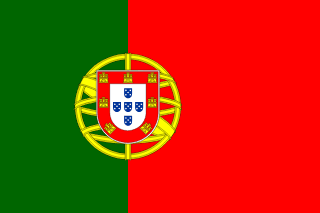
Portugal occupies the western edge of the Iberian Peninsula in southwestern Europe, bordered only by Spain to its north and east, with a long Atlantic coastline.
Portugal's name comes from Portus Cale, a Roman-era settlement near the mouth of the Douro River, which later gave its name to the surrounding region and eventually the whole country as it emerged as an independent kingdom in the 12th century.
Landscape: Mostly hilly to mountainous north of the Tagus River, with rolling plains to the south, and a long Atlantic coastline throughout.
Climate: Mediterranean, with mild, wet winters and hot, dry summers, especially inland.
Food: Bacalhau (dried, salted cod) is said to have a different recipe for every day of the year, alongside pastéis de nata, a custard tart known well beyond Portugal.
Lisbon has been a major settlement since Phoenician and Roman times, and became Portugal's capital in 1255, replacing Coimbra. With a population of around 545,000 in the city itself, it served as the launching point for Portugal's Age of Exploration in the 15th and 16th centuries, when Portuguese ships reached India, Brazil, and beyond.
The rooster of Barcelos is Portugal's most recognised unofficial national symbol, tied to a local legend about a rooster that supposedly crowed to prove a wrongly accused man's innocence. Portugal's national flower is the lavender, though the country's maritime history and the caravel ship are equally powerful symbols of national identity.
Portuguese azulejo tiles, distinctive hand-painted ceramic tiles often in blue and white, decorate buildings across the country and remain an actively practised craft tradition. Filigree jewellery, particularly from the Minho region, is another long-standing Portuguese craft.
The Tower of Belém and Jerónimos Monastery in Lisbon both date to the Age of Exploration and are UNESCO World Heritage Sites, built to commemorate Portugal's maritime achievements. The Douro Valley, one of the oldest demarcated wine regions in the world, is known for producing port wine.
The Iberian lynx, shared with neighbouring Spain, is the world's most endangered wild cat, and Portugal's Atlantic waters support significant populations of dolphins and seabirds, particularly around the Azores and Madeira archipelagos.
Portugal is historically and predominantly Roman Catholic, and the shrine at Fátima, where apparitions of the Virgin Mary were reported in 1917, remains one of the most significant Catholic pilgrimage sites in the world.
Portugal is a significant exporter of machinery, textiles and footwear, and wine, particularly port wine, which can legally only carry that name if produced in the Douro Valley region.
Freedom Day on April 25th marks the 1974 Carnation Revolution, a largely peaceful military coup that ended decades of dictatorship and restored democracy, named for the flowers that protesters placed in soldiers' rifle barrels. Portugal Day on June 10th, also marking the death of national poet Luís de Camões, celebrates Portuguese culture and the wider Portuguese-speaking world, and Santos Populares in June, particularly Saint Anthony's Day in Lisbon, involves street parties with grilled sardines and folk traditions. Carnival, though not a strictly Portuguese invention, is celebrated with particular regional flair in towns like Torres Vedras, drawing crowds for its satirical parade floats.
Football is overwhelmingly Portugal's most popular sport, the country having produced some of the modern game's most celebrated players despite its relatively small population, and Portugal won its first major international trophy, the European Championship, in 2016. Surfing has also grown significantly in profile in recent years, Portugal's Atlantic coast home to some of the largest waves ever surfed.
Portugal is a semi-presidential parliamentary republic, splitting authority between a directly elected President with mostly ceremonial powers and a Prime Minister who holds most real executive authority, accountable to Parliament. The country's current democratic constitution dates to 1976, adopted in the aftermath of the Carnation Revolution two years earlier.
Ponta do Pico, on the Azorean island of Pico, is Portugal's highest point at 2,351 metres, a volcanic peak considerably taller than anywhere on the Portuguese mainland. On the mainland itself, the lowest point sits at sea level along Portugal's Atlantic coastline.
There isn't a close match for Portugal's flag, the specific green-and-red split combined with its detailed central coat of arms and armillary sphere make it genuinely distinctive worldwide. Its closest conceptual relative might be Mexico or Italy for also pairing green with a detailed central emblem, but the actual colours and proportions differ enough that the resemblance is fairly loose rather than a genuine source of confusion.
Adopted in 1911 after the monarchy was overthrown and Portugal became a republic, replacing a blue-and-white royal flag with the current green-and-red design.
Home to the oldest bookshop still in continuous operation anywhere in the world, in Lisbon.
Play today's Flagpie →© Flagpie 2026