
Asia
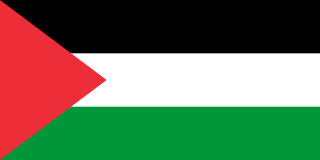
Palestine refers to the West Bank and Gaza Strip, two separate territories in the Middle East, the West Bank bordered by Israel and Jordan, and Gaza bordered by Israel and Egypt along the Mediterranean coast.
Palestine's name has ancient roots, likely derived from the Philistines, a people who inhabited the region's coastal areas in antiquity, with the name used by Greek and Roman writers and persisting through subsequent centuries of different rule.
Landscape: Includes the hilly West Bank and the low-lying, densely populated Gaza Strip along the Mediterranean coast.
Climate: Mediterranean, hot dry summers and mild wet winters.
Food: Musakhan, roasted chicken with sumac and onions over flatbread, is widely considered a national dish.
Ramallah functions as the administrative centre of the Palestinian Authority, though East Jerusalem is claimed as Palestine's intended capital, a status that remains one of the most contested and unresolved issues in the broader Israeli-Palestinian conflict. Gaza City serves as the main urban centre for the separately governed Gaza Strip.
The keffiyeh, a chequered black-and-white or red-and-white scarf, has become a widely recognised symbol of Palestinian identity and solidarity, worn both practically and as a deliberate statement of cultural and political identity.
Palestinian tatreez embroidery, using distinctive cross-stitch patterns historically varying by village and region, is recognised by UNESCO and remains a significant, actively practised craft carrying deep cultural and identity significance.
The Church of the Nativity in Bethlehem, built over the traditional birthplace of Jesus, is a UNESCO World Heritage Site, and the Old City of Hebron, with a documented history stretching back thousands of years, reflects the region's deep and layered religious significance.
The West Bank's hill country and the Gaza Strip's limited coastal habitat support a range of Mediterranean and semi-arid adapted species, though decades of conflict and dense settlement have significantly affected natural habitat across the territories.
Palestinians are majority Muslim, with a smaller Christian minority, and Palestinian cultural identity remains deeply tied to specific villages, foods, and embroidery patterns passed down through generations, particularly significant given the widespread displacement experienced by Palestinian families since 1948.
The Palestinian economy, significantly constrained by movement restrictions and ongoing conflict, exports modest amounts of olive oil, stone and marble products, and agricultural goods, alongside stone carving from Bethlehem, though formal trade capacity remains severely limited.
Land Day on March 30th commemorates a 1976 protest against land confiscation and remains a significant day of Palestinian national observance. Nakba Day on May 15th marks the 1948 displacement of Palestinians during the founding of Israel, a date of profound and continuing significance to Palestinian identity, and given the significant Muslim majority alongside a Christian minority, both Eid holidays and Christmas are observed. Jerusalem Day is observed by Palestinians as a specific day of solidarity regarding the city's contested status.
Football holds the largest domestic following among Palestinians, with the national team having competed internationally despite the significant logistical challenges posed by movement restrictions and the division between the West Bank and Gaza. Athletics and other individual sports have also produced Palestinian competitors at international and Olympic level.
Palestinian governance is genuinely split, with the Palestinian Authority administering parts of the West Bank and Hamas controlling Gaza, a division dating to 2007, while East Jerusalem, claimed as a future Palestinian capital, remains under Israeli control, together making Palestinian political status one of the most complex and contested situations in the world. Palestinian refugee populations remain significant across neighbouring Jordan, Lebanon, and Syria, shaping regional politics broadly.
Palestine's highest point sits at around 1,022 metres near Hebron in the West Bank highlands. The lowest point is along the Dead Sea shoreline, around 430 metres below sea level, the lowest point on Earth's land surface. The West Bank's hilly terrain contrasts sharply with the low-lying, densely populated Gaza Strip.
Jordan, the United Arab Emirates, and several other Arab nations all use the same red-black-white-green Pan-Arab colour combination Palestine does, tracing back to the 1916 Arab Revolt flag, and Palestine's flag is functionally identical to Jordan's own except for the absence of Jordan's distinctive white seven-pointed star, making the two genuinely easy to mix up at a glance.
Based on the flag of the 1916 Arab Revolt, first adopted by the Palestine Liberation Organization in 1964.
Home to Bethlehem and parts of Jerusalem, among the most historically significant cities in the world for three major religions.
Play today's Flagpie →© Flagpie 2026