
Europe
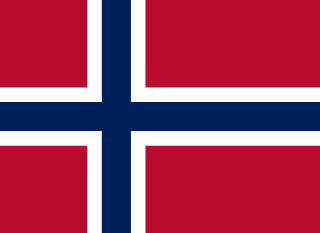
Norway stretches along the western side of the Scandinavian Peninsula in Northern Europe, bordered by Sweden to the east and Finland and Russia to the northeast, with an extremely long, fjord-carved Atlantic coastline.
Norway's name comes from Old Norse, roughly meaning 'the way north' or 'northern way,' likely referring to an ancient shipping route running along the country's long coastline.
Landscape: Dominated by fjords, mountains, and a famously long, rugged coastline stretching well into the Arctic Circle.
Climate: Milder than its latitude would suggest due to the Gulf Stream, though still cold with heavy snow in winter, particularly inland and in the north.
Food: Salmon and other seafood dominate Norwegian cooking, alongside a traditional dish of dried, salted cod called klippfisk.
Oslo was founded around 1040 AD, though it was largely rebuilt after a major fire in 1624 by King Christian IV, who briefly renamed it Christiania after himself, before the older name was restored in 1925. With a population of around 700,000, it remains Norway's political and economic centre, framed by fjords and forested hills on nearly every side.
The lion has represented Norwegian royalty and the state since medieval times, appearing on the country's coat of arms holding an axe tied to Saint Olaf, a former Norwegian king. Norway's national flower is the purple heather, common across the country's mountain landscapes.
The bunad, a regional folk costume with dozens of distinct local variations, remains genuinely worn for weddings, national day celebrations, and other formal occasions, not purely as historical costume. Norway also has strong woodworking and rosemaling (decorative folk painting) traditions.
The fjords of western Norway, deep glacial valleys flooded by the sea, are the country's most internationally recognised natural landmark, and the Viking Ship Museum in Oslo houses some of the best-preserved Viking-era ships in the world.
The Arctic fox, now rare in mainland Norway, survives in the country's northern regions and on the Svalbard archipelago, which also supports polar bears, walruses, and reindeer. Norway's coastal waters, particularly around Lofoten, also support significant populations of orcas and other whale species, drawn by the herring migrations that pass through each winter.
Norway has a state-linked history with the Church of Norway, Lutheran in tradition, though the country has become increasingly secular in practice, with a large share of the population not actively religious despite formal church membership. The Sámi people, Norway's Indigenous population in the north, maintain their own language and reindeer-herding traditions, with growing recognition of Sámi rights and culture in recent decades.
Norway is one of the world's largest exporters of crude oil and natural gas relative to its population, alongside seafood, particularly farmed salmon, of which it's the largest global producer.
Constitution Day on May 17th marks the 1814 signing of Norway's constitution and is celebrated with particular enthusiasm, marked by children's parades nationwide rather than military ones, a deliberately different tone from many other countries' national day celebrations. Midsummer, celebrated close to the solstice, and Christmas, with its distinctly Norwegian julebord (Christmas party) tradition, both hold deep seasonal significance given the country's far northern latitude.
Cross-country skiing is genuinely treated as something close to a birthright in Norway, the country having dominated the sport at the Winter Olympics for over a century, and Norway consistently tops the medal table at the Winter Games relative to its small population. Football also draws a significant following, and Norway has produced world-class chess players in recent years too. Norway's ski jumping and biathlon traditions are similarly strong, both drawing large domestic television audiences each winter season.
Norway is a parliamentary constitutional monarchy, with the King serving a ceremonial role and real executive power held by a Prime Minister accountable to the Storting, Norway's single-chamber parliament. The country notably remains outside the European Union, having rejected membership in two separate referendums, while still participating closely in European economic cooperation through other arrangements.
Galdhøpiggen, in the Jotunheimen mountains, is Norway's highest point at 2,469 metres. The lowest point sits at sea level along Norway's extraordinarily long and fjord-indented coastline, one of the longest of any country in the world when every inlet is measured.
Iceland's flag is Norway's closest match by a wide margin, both use the same red-white-blue Nordic cross combination, differing only in exact proportions, making the two genuinely easy to mix up unless placed side by side. Denmark, Sweden, and Finland all share the same underlying Nordic cross layout too, in different colour combinations, part of a shared regional design family tracing back to Denmark's own centuries-old flag.
Adopted in 1821, combining Denmark's cross layout, a nod to centuries of union between the two countries, with the blue of Norway's own historic flag.
Has the second-longest coastline in the world, thanks to its famously deep, winding fjords.
Play today's Flagpie →© Flagpie 2026