
Asia
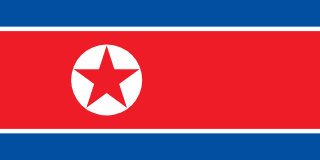
North Korea occupies the northern half of the Korean Peninsula in East Asia, bordered by China and Russia to the north and South Korea to the south.
North Korea's name reflects its position on the northern half of the Korean Peninsula, following the country's division after the Second World War, with 'Korea' itself tracing back to the Goryeo dynasty of the 10th to 14th centuries.
Landscape: Mostly mountainous, with narrow coastal plains and the fertile Amnok (Yalu) river valley along the Chinese border.
Climate: Continental, cold winters (colder than South Korea due to Siberian air masses) and warm, humid summers.
Food: Naengmyeon, cold buckwheat noodles, and kimchi are widely eaten, sharing much of its culinary tradition with South Korea prior to the division.
Pyongyang has been a significant settlement for over a thousand years and became capital of North Korea upon the peninsula's division in 1948. With a population of around 3 million, it's known for its highly planned, monumental architecture, including large public squares and statues built under the country's ruling government.
The Korean tiger and the magnolia flower are both closely tied to Korean identity generally, shared symbolically with South Korea despite the peninsula's political division.
North Korea maintains traditional Korean crafts including celadon pottery and hanbok-style dress, alongside a distinctive state-promoted style of large-scale collective mosaic and propaganda art not really found elsewhere in the world. Traditional Korean mask dance and folk music are preserved and performed in North Korea, sharing common roots with South Korean cultural traditions predating the peninsula's division.
The Juche Tower and Kim Il Sung Square in Pyongyang are significant state monuments, and Mount Paektu, considered the mythical birthplace of the Korean people in traditional belief, sits on the border with China. The Demilitarized Zone, separating North and South Korea, remains one of the most heavily fortified borders in the world and, unusually, has become an accidental wildlife refuge due to decades of minimal human activity within it.
North Korea's more remote, less developed mountainous regions provide habitat for Asiatic black bears and, according to some reports, rare Amur leopards, though wildlife data from the country is limited given restricted access for researchers.
North Korea is officially an atheist state, and independent religious practice is severely restricted, with the government instead promoting its own political ideology, Juche, as a central organising belief system.
North Korea's formal exports are limited and heavily affected by international sanctions, historically including minerals and textiles, though reliable, comprehensive trade data is not consistently available.
Day of the Sun on April 15th marks the birthday of Kim Il Sung, the country's founding leader, and remains North Korea's most significant public holiday, marked by mass displays and military parades. Day of the Shining Star in February similarly honours Kim Jong Il's birthday, and Liberation Day on August 15th, shared in spirit with South Korea, marks the end of Japanese colonial rule in 1945.
Football and gymnastics both hold significant places in North Korean sporting culture, the country having produced the Mass Games, an enormous synchronised gymnastics and artistic performance involving tens of thousands of participants, among the largest choreographed events in the world. Weightlifting and wrestling have also produced North Korean Olympic medallists across the decades.
North Korea is officially structured as a one-party socialist state under the Workers' Party of Korea, though real authority is concentrated within the ruling Kim family, which has led the country continuously since its founding in 1948 across three successive generations. The country's official ideology, Juche, emphasises self-reliance and remains central to its governance and public life. The country's official state ideology, Juche, emphasises political, economic, and military self-reliance as a core governing principle.
Paektu Mountain, an active volcano on the border with China, is North Korea's highest point at 2,744 metres, and holds deep symbolic significance as the mythologised birthplace of the Korean people and, in official state narrative, of Kim Jong Il himself. The lowest point sits at sea level along North Korea's coastline.
South Korea's flag shares almost nothing visually with North Korea's beyond both incorporating red, white, and blue, North Korea's flag is a red field bordered by blue stripes with a white circle and star, entirely distinct from the South's white background and red-and-blue taegeuk symbol, making genuine confusion between the two unlikely despite their shared origin as one nation.
Adopted in 1948, replacing the shared Korean flag used before the peninsula's division.
Uses its own calendar, which counts years from the birth of the country's founder in 1912.
Play today's Flagpie →© Flagpie 2026