
Europe
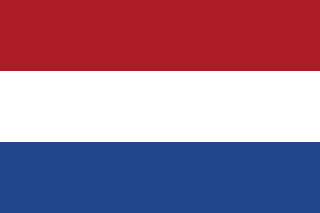
The Netherlands sits on the North Sea coast of Western Europe, bordered by Germany to the east and Belgium to the south, with much of its land famously reclaimed from or protected against the sea.
The Netherlands means 'low countries,' a direct reference to its flat, low-lying geography, much of which sits at or below sea level. The country is also commonly called Holland, technically the name of just two of its provinces, though the term is widely used internationally for the whole country.
Landscape: Famously low-lying and flat, with about a third of the country sitting below sea level and protected by an extensive system of dikes.
Climate: Temperate maritime, mild summers and cool winters, with rain spread fairly evenly through the year.
Food: Stroopwafels, cheese, and herring are among the best known Dutch foods, alongside fries served with mayonnaise rather than ketchup.
Amsterdam has been the Netherlands' official capital since 1814, though the seat of government actually sits in The Hague, an unusual split that dates back to historical political compromise. Amsterdam grew from a small fishing village around a dam on the Amstel river, which gives the city its name, into a major global trading centre by the 17th century, home to around 900,000 people today.
The tulip is inseparable from Dutch national identity internationally, despite originating in Central Asia and only being introduced to the Netherlands in the 16th century, where it became both a major export and, briefly, the subject of one of history's most famous speculative market bubbles. The lion appears on the Dutch coat of arms, tied to the historic House of Orange-Nassau.
Delftware, distinctive blue-and-white pottery first produced in the city of Delft in the 17th century, remains one of the Netherlands' best-known craft exports. Traditional Dutch clogs, wooden shoes once genuinely worn for agricultural and fishing work, are now largely a cultural symbol rather than everyday footwear.
The Rijksmuseum and Van Gogh Museum in Amsterdam hold some of the most significant collections of Dutch art in the world, and the country's extensive windmill and dike network, particularly at Kinderdijk, reflects centuries of engineering aimed at reclaiming land from the sea.
The Netherlands' extensive wetlands support significant populations of waterfowl, including the black-tailed godwit, the country's national bird. The Oostvaardersplassen nature reserve, created on reclaimed land, has become known for large grazing herds of semi-wild horses and cattle.
The Netherlands has become increasingly secular in recent decades, with a large share of the population identifying with no religion, though historically Protestant and Catholic Christianity were both significant, with a rough geographic divide between them. The country is also known for a long tradition of religious and social tolerance dating back to the 17th century.
The Netherlands is one of the world's largest exporters of flowers and agricultural produce despite its small size, thanks to highly efficient greenhouse farming, alongside machinery, chemicals, and refined petroleum products routed through the Port of Rotterdam, one of the largest ports in the world.
King's Day on April 27th, marking the current monarch's birthday, is the Netherlands's biggest national celebration, when the whole country turns out in orange, the House of Orange-Nassau's colour, for street markets and open-air parties nationwide. Liberation Day on May 5th marks the end of Nazi occupation in 1945, and Sinterklaas in early December remains a distinctly Dutch Christmas-adjacent tradition centred on a bishop figure who arrives by boat from Spain according to the story. Prinsjesdag in September marks the formal opening of the parliamentary year, when the monarch delivers a speech outlining the government's plans, arriving by golden carriage in a tradition dating back over a century.
Football holds the largest following in the Netherlands, the national team having reached three World Cup finals without ever winning, a source of good-natured national frustration, and the Dutch have also long been a dominant force in speed skating, a sport deeply tied to the country's historic winter canal culture.
The Netherlands is a parliamentary constitutional monarchy, with the King serving a ceremonial role and real executive power held by a Prime Minister accountable to Parliament. The country's proportional representation electoral system typically produces a large number of parties in parliament, meaning governments are almost always multi-party coalitions built after lengthy negotiation.
Vaalserberg, in the far southeastern tip of the country, is the Netherlands's highest point on the mainland at just 322 metres, reflecting the country's famously flat geography. A polder near Rotterdam holds the lowest point at around 7 metres below sea level, part of the extensive reclaimed land that gives the country its name.
Luxembourg's flag uses the exact same red-white-blue horizontal layout, differing mainly in a lighter shade of blue and a slightly different overall proportion, close enough that the resemblance is genuinely well known and occasionally a source of mild irritation between the two countries. France uses the same three colours too, though arranged vertically rather than horizontally, different enough in layout that confusion is less likely there.
Started as the orange-white-blue Prinsenvlag in the 1570s, with the orange stripe gradually replaced by red through the 1600s for reasons historians still debate, officially confirmed as red-white-blue by royal decree in 1937.
About a third of the country sits below sea level, protected by an extensive system of dikes and pumps.
Play today's Flagpie →© Flagpie 2026