
Asia
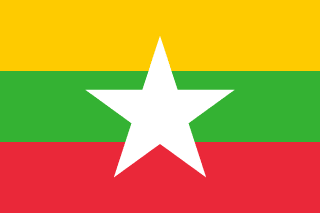
Myanmar sits in Southeast Asia, bordered by India and Bangladesh to the west, China to the north and east, and Laos and Thailand to the east, with a long coastline on the Bay of Bengal and Andaman Sea.
Myanmar's name has been used informally for centuries, though it was only formally adopted as the country's official English name in 1989, replacing Burma, a name derived from the Bamar ethnic majority.
Landscape: Central lowlands and the Irrawaddy River valley ringed by mountains, with a long coastline on the Bay of Bengal and Andaman Sea.
Climate: Tropical monsoon, hot with a pronounced wet season.
Food: Mohinga, a fish-based noodle soup, is widely considered the national dish, often eaten for breakfast.
Naypyidaw became Myanmar's capital in 2005, a purpose-built city constructed suddenly and with relatively little advance public explanation, replacing Yangon (Rangoon). With a population far smaller than Yangon's, it remains a largely administrative city, built with unusually wide roads and significant distances between government buildings.
The peacock has represented Burmese and later Myanmar identity for centuries, historically tied to the country's royal dynasties. Padauk, a golden-flowered tree, blooms briefly each year and is closely associated with the Burmese new year festival.
Burmese lacquerware, produced using techniques passed down over centuries, particularly around the city of Bagan, remains a significant craft export, and traditional weaving, including intricately patterned longyi (sarong-style garments), is still widely worn as everyday clothing. Traditional Burmese puppet theatre, using elaborately carved marionettes, was historically used to tell stories from Buddhist scripture and royal history.
Bagan, home to thousands of ancient Buddhist temples and pagodas built between the 9th and 13th centuries, is one of the most significant archaeological sites in Southeast Asia, and the Shwedagon Pagoda in Yangon, covered in genuine gold, is one of the most sacred sites in Burmese Buddhism. Inle Lake, known for its distinctive leg-rowing fishermen technique found nowhere else in the world, is another of Myanmar's most visited natural and cultural sites.
Myanmar is home to Asian elephants and, in its more remote forest regions, some of the last significant tiger populations remaining in Southeast Asia, though both face serious conservation pressure.
Myanmar is overwhelmingly Buddhist, specifically Theravada Buddhism, deeply woven into daily life and national identity, alongside significant ethnic minority populations, including the Shan, Karen, and Rohingya, some of whom have faced serious and well-documented persecution.
Myanmar is a significant exporter of natural gas, gems, particularly rubies and jade, and garments, though international sanctions in response to domestic political issues have affected trade in recent years.
Independence Day on January 4th marks 1948, when Myanmar (then Burma) gained sovereignty from British colonial rule. Thingyan, the Burmese New Year water festival held in mid-April, is the country's most significant celebration, closely related to similar water festivals across Buddhist Southeast Asia, and Full Moon Day of Kason in May commemorates several major events in the Buddha's life on a single shared date.
Chinlone, a traditional non-competitive sport involving keeping a woven rattan ball aloft using any part of the body except the hands, is treated as something close to a national art form in Myanmar, blending sport with genuine performance and dance. Football also draws a significant domestic following, and traditional Burmese boxing, lethwei, permits headbutts and is considered one of the most physically demanding combat sports in the world. Traditional Burmese cane ball games remain widely played informally in villages and city streets alike.
Myanmar's political situation has been in significant flux in recent years, with a military government having seized power in a 2021 coup, ending a period of gradual civilian democratic transition that had followed decades of direct military rule. The country's political structure and stability remain genuinely uncertain and contested as a result.
Hkakabo Razi, in the country's far north near the borders with China and India, is Myanmar's highest point at 5,881 metres, one of the highest peaks in Southeast Asia and genuinely difficult to access. The lowest point sits at sea level along Myanmar's coastline on the Bay of Bengal and Andaman Sea.
There's no especially close match for Myanmar's flag, the current design, adopted in 2010, uses a yellow-green-red horizontal tricolour with a white star, a combination and layout distinctive enough that it isn't easily confused with another national flag, though its predecessor design bore more resemblance to other socialist-era flags of the region.
Adopted in 2010, the third significantly different flag design in Myanmar's history since independence, replacing a design that had been in place since 1974.
Home to Mount Hkakabo, the highest peak in mainland Southeast Asia.
Play today's Flagpie →© Flagpie 2026