
Europe
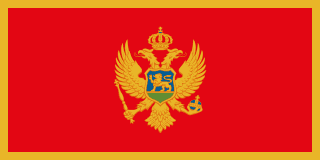
Montenegro sits on the Balkan Peninsula, bordered by Croatia and Bosnia and Herzegovina to the northwest, Serbia to the northeast, Kosovo to the east, and Albania to the southeast, with a coastline on the Adriatic Sea.
Montenegro's name means 'black mountain' in Venetian Italian, a reference to the dark, densely forested appearance of Mount Lovćen as seen from the sea by Venetian sailors centuries ago.
Landscape: Mostly mountainous, including part of the Dinaric Alps, with a short but dramatic Adriatic coastline including the Bay of Kotor.
Climate: Mediterranean along the coast, alpine and continental further inland.
Food: Kačamak, a thick cornmeal and potato dish, is a traditional mountain comfort food, alongside strong Adriatic seafood cooking along the coast.
Podgorica has served as Montenegro's capital since the country's independence in 2006, though the historic royal capital, Cetinje, retains ceremonial status as the 'Old Royal Capital.' With a population of around 190,000, Podgorica was largely rebuilt after extensive bombing during the Second World War.
The double-headed eagle, shared symbolically with several other Balkan and Orthodox Christian nations, appears on Montenegro's flag and coat of arms, tied to the country's historic royal dynasty.
Montenegrin filigree jewellery-making, particularly in the town of Cetinje, and traditional woven textiles reflect the country's blend of Mediterranean and Balkan mountain cultural influences. Traditional Montenegrin embroidery and woven textiles vary by region, often incorporating both Mediterranean coastal and Balkan mountain design influences.
The Bay of Kotor, a dramatic fjord-like inlet lined with medieval towns, is Montenegro's most significant landmark and a UNESCO World Heritage Site, alongside Durmitor National Park, known for deep canyons and glacial lakes. Ostrog Monastery, built directly into a vertical cliff face, is one of the most significant Orthodox Christian pilgrimage sites in the Balkans.
Durmitor National Park protects brown bears, wolves, and chamois across a dramatic alpine landscape, including the Tara River Canyon, one of the deepest canyons in Europe. Skadar Lake, the largest lake in the Balkans, shared with Albania, is one of Europe's most important bird habitats, home to the rare Dalmatian pelican.
Montenegro is majority Orthodox Christian, and the country's population includes significant Bosniak, Albanian, and Serb minorities, reflecting its position at a historic crossroads of Balkan ethnic and religious groups. Montenegro's small population and dramatic coastline have made it an increasingly popular yacht and luxury tourism destination in recent years.
Montenegro's economy relies significantly on tourism given its dramatic Adriatic coastline, alongside modest exports of aluminium and agricultural products.
Independence Day on May 21st marks 2006, when Montenegro voted in a referendum to separate from its union with Serbia, the most recent country in Europe to gain sovereignty through this process. Statehood Day in July commemorates a 1878 international recognition of Montenegrin independence, layering an older historical claim onto the country's more recent 21st-century sovereignty. Montenegro's Njegoš Day in November honours the country's most celebrated poet and historical ruler.
Water polo holds a place in Montenegrin national identity disproportionate to the country's very small population, the national team having won a European Championship, a genuinely remarkable achievement. Basketball and football also both draw significant domestic followings. Montenegrin handball has also achieved notable continental competitive success.
Montenegro is a parliamentary republic, with a directly elected President holding significant authority alongside a Prime Minister, accountable to a single-chamber parliament. The country peacefully separated from its union with Serbia in 2006 following a closely contested referendum, and Montenegro has since pursued membership in both NATO, which it joined in 2017, and the European Union. Montenegro's dramatic Adriatic coastline has driven significant growth in luxury tourism and yachting in recent years. Montenegro adopted the euro unilaterally without formally joining the eurozone, a notable monetary policy choice. Montenegro's small population and dramatic coastline have made it an increasingly popular film production location.
Zla Kolata is Montenegro's highest point at 2,534 metres. The lowest point sits at sea level along Montenegro's dramatic, fjord-like Adriatic coastline. Montenegro's terrain ranges dramatically from a short but spectacular Adriatic coastline to rugged interior mountains.
Serbia's flag shares Montenegro's underlying red field and double-headed eagle emblem, tracing back to shared historic Slavic and Byzantine heraldic tradition, though Montenegro's flag uses a red field bordered in gold rather than Serbia's horizontal red-blue-white tricolour, different enough overall that the two aren't especially likely confused despite the shared eagle motif.
Adopted in 2004, restoring a version of the flag used by the historic Kingdom of Montenegro before it became part of Yugoslavia.
One of the smallest countries in Europe, home to the Bay of Kotor, often described as Europe's southernmost fjord.
Play today's Flagpie →© Flagpie 2026