
Europe
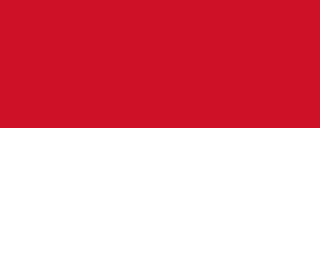
Monaco is a tiny city-state on the French Riviera, entirely surrounded by France except for its short Mediterranean coastline.
Monaco's name likely comes from an ancient Greek colony called Monoikos, meaning 'single house,' possibly referring to a temple dedicated to Hercules that once stood on the site, from which the name gradually evolved.
Landscape: The world's second-smallest country, almost entirely urbanised, built on a narrow strip of Mediterranean coastline and steep hillside.
Climate: Mediterranean, mild wet winters and hot dry summers.
Food: Socca, a thin chickpea flour pancake, and barbagiuan, deep-fried pastries filled with vegetables, reflect Monaco's close culinary ties to nearby Nice, France.
Monaco is itself a city-state, so there's no separate capital distinct from the country, with the historic quarter, Monaco-Ville, sitting atop a rocky promontory that has housed the ruling Grimaldi family's palace since the 13th century. The whole country has a population of around 39,000 packed into just over two square kilometres, making it the second most densely populated sovereign state in the world.
The red and white colours of the House of Grimaldi, Monaco's ruling family since 1297, are the country's most defining symbol, appearing on the flag exactly as they have for centuries.
Monaco's small size means it doesn't have extensive independent craft traditions distinct from its French Riviera surroundings, though the country has become closely associated internationally with luxury goods, high-end fashion, and fine jewellery retail rather than craft production itself.
The Monte Carlo Casino, opened in 1863, and the Prince's Palace, still the residence of Monaco's ruling family, are the country's most significant landmarks, alongside the Monaco Grand Prix circuit, which runs directly through the streets of the city each year.
Monaco's Oceanographic Museum, founded in 1910, holds significant marine research collections, and the country's small Mediterranean coastline supports typical regional marine life despite the country's almost entirely urbanised land area.
Monaco is historically and predominantly Roman Catholic, and the country's very small citizen population, Monégasques, make up a minority of total residents, with the majority being French, Italian, and other international residents drawn by favourable tax policies.
Monaco's economy is built around tourism, banking, and real estate rather than significant goods exports, functioning as a major luxury and financial hub disproportionate to its tiny physical size.
National Day (La Fête du Prince) is celebrated on November 19th, a date traditionally chosen by the reigning Prince himself, marked by fireworks over the harbour the evening before and a formal mass at Saint Nicholas Cathedral the following morning. Given Monaco's small size and close ties to France, French national and religious holidays are also widely observed throughout the year.
Motorsport holds a genuinely unique place in Monaco's identity, the Monaco Grand Prix, first held in 1929 and run directly through the streets of the principality, remains one of the most prestigious and recognisable races in Formula One. Tennis and sailing also draw significant attention given Monaco's status as a major yachting and luxury sporting hub.
Monaco is a constitutional monarchy, with the Prince holding significant executive authority alongside an elected National Council handling legislative matters. The principality has been ruled continuously by the House of Grimaldi since 1297, one of the longest-reigning ruling families in the world, and Monaco's tax policies have made it a significant international hub for wealthy residents and businesses. Monaco's citizens, Monégasques, pay no personal income tax, a policy central to the principality's identity as a wealth haven.
Monaco's highest point sits at around 161 metres along a path called the Chemin des Révoires, near the slopes of Mont Agel on the French border, giving the tiny principality one of the greatest elevation changes relative to surface area of any country in the world. The lowest point sits at sea level along Monaco's short Mediterranean coastline.
Indonesia's flag is essentially identical to Monaco's, both use the exact same red-over-white horizontal split, differing only in slightly different proportions, a coincidence the two countries have occasionally had to publicly clarify isn't a copy in either direction. Poland's flag uses the same two colours too, but reversed, white on top rather than red, different enough that mixing those two up specifically is less likely.
The red and white colours date to the 14th century, tied to the House of Grimaldi, the ruling family, and have remained essentially unchanged since.
The world's second-smallest country, with a coastline just a few kilometres long.
Play today's Flagpie →© Flagpie 2026