
Europe
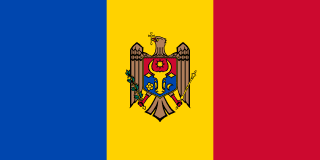
Moldova is a landlocked country in Eastern Europe, sandwiched between Romania to the west and Ukraine wrapping around its north, east, and south.
Moldova's name comes from the Moldova River, which runs through the historic region, itself possibly named after an old Germanic or Slavic word, though the precise original meaning remains debated among historians.
Landscape: Mostly rolling hills and fertile plains, landlocked between Romania and Ukraine, with the Dniester River running through the east.
Climate: Temperate continental, warm summers and cold winters.
Food: Mămăligă, a cornmeal porridge similar to polenta, is a genuine staple, typically served with cheese, sour cream, or stew.
Chișinău has been a significant settlement since the 15th century, and became capital of modern Moldova following independence from the Soviet Union in 1991. With a population of around 640,000, the city was significantly rebuilt after the Second World War, giving much of it a Soviet-era architectural character.
The aurochs, an extinct wild ox once found across Europe, appears on Moldova's coat of arms, a symbol with roots in the medieval principality of Moldavia that the modern country traces its heritage to.
Moldovan wine-making, with a documented history stretching back thousands of years, remains a genuinely central national tradition, and traditional Moldovan carpet weaving and pottery reflect deep regional folk art traditions. Traditional Moldovan folk dance and costume remain performed at national festivals, closely related stylistically to neighbouring Romanian traditions.
The Orheiul Vechi complex, combining ancient cave monasteries carved into limestone cliffs with a preserved traditional village, is Moldova's most significant historic and archaeological site. Milestii Mici, an underground wine cellar built in former limestone mines, holds the Guinness World Record for the largest wine collection in the world, with tunnels stretching over 200 kilometres.
Moldova's Codri Nature Reserve protects one of the largest remaining areas of natural forest in this heavily farmed country, home to wild boar and roe deer.
Moldova is majority Orthodox Christian, and the country's population and culture reflect close ties to neighbouring Romania, with Romanian widely spoken alongside the country's own recognition of the language, sometimes still referred to locally as Moldovan.
Moldova is a significant exporter of wine, agricultural products, and textiles, with wine in particular carrying deep cultural significance alongside its economic role.
Independence Day on August 27th marks 1991, when Moldova declared sovereignty following the collapse of the Soviet Union. Limba Noastră (Our Language) Day on August 31st celebrates the Romanian language and Moldovan cultural identity, a particularly significant holiday given the country's close linguistic and historical ties to neighbouring Romania. Moldova's National Wine Day in October celebrates the country's ancient winemaking tradition with nationwide tastings.
Football holds the largest domestic following in Moldova, even without major international competitive success to match, and the country has also produced notable competitors in weightlifting and wrestling relative to its small population. Moldovan weightlifting has produced notable competitors at international championships.
Moldova is a parliamentary republic, with a directly elected President serving alongside a Prime Minister who holds most day-to-day executive power, accountable to a single-chamber parliament. The country's breakaway Transnistria region, controlled by a separatist government since the early 1990s and not internationally recognised, remains a significant unresolved feature of Moldovan politics and territorial integrity. Moldova's wine industry, with roots stretching back thousands of years, remains central to both its economy and identity. Moldova remains one of the poorest countries in Europe by GDP per capita, a significant ongoing development challenge.
Bălănești Hill is Moldova's highest point at 430 metres, reflecting the country's generally rolling, low-lying terrain. The lowest point is along the Dniester River, sitting close to sea level, Moldova's lowest point despite being well above true sea level, since the country is entirely landlocked. Moldova's gently rolling terrain supports extensive vineyards across much of the country.
Romania's flag uses the exact same blue-yellow-red vertical tricolour as Moldova's, both countries sharing deep historical and linguistic ties, and Moldova's own coat of arms at the centre, an eagle holding a cross, olive branch, and sceptre, is what distinguishes it most clearly from Romania's plain, unadorned version of the same three stripes.
Adopted in 1990 shortly before independence from the Soviet Union, based directly on Romania's tricolour with a national emblem added to the centre.
Home to the world's largest wine cellar by number of bottles, stretching over 200 km underground.
Play today's Flagpie →© Flagpie 2026