
North America
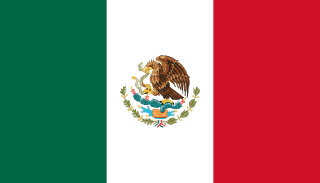
Mexico sits at the southern end of North America, bordered by the United States to the north and Belize and Guatemala to the south, with coastlines on both the Pacific Ocean and the Gulf of Mexico.
Mexico's name comes from the Mexica, another name for the Aztec people, whose empire was centred on the site of modern Mexico City. The exact meaning of 'Mexica' itself is debated, with theories linking it to Aztec mythology, though no single explanation is universally agreed on.
Landscape: Mountainous through much of the country, with deserts in the north, tropical lowlands in the south, and coastline on both the Pacific and the Gulf of Mexico.
Climate: Varies from arid desert in the north to tropical in the south and along the coasts.
Food: Tacos, mole, and tamales are among Mexico's best known dishes, built on a foundation of corn, beans, and chilli that goes back to pre-Columbian times.
Mexico City was built directly on top of Tenochtitlan, the Aztec capital, which Spanish conquistadors destroyed and rebuilt starting in 1521. With a population of around 9 million in the city proper and over 21 million across the wider metropolitan area, it's one of the largest urban areas in the Americas, and its historic centre still sits above the ruins of the Aztec city that came before it.
The golden eagle, depicted devouring a serpent atop a cactus on the Mexican flag, is the national animal, drawn directly from the Aztec legend that marked where Tenochtitlan was to be founded. The dahlia, native to Mexico, was declared the national flower by presidential decree in 1963.
Mexican craft traditions are deeply regional, from Oaxacan black pottery and alebrijes, brightly painted wooden folk-art creatures, to intricate embroidered textiles produced by numerous Indigenous communities, many techniques passed down largely unchanged for generations.
Chichén Itzá, a large Maya city built over a thousand years ago, is among Mexico's most visited archaeological sites and one of the New Seven Wonders of the World. Teotihuacan, an even older city near Mexico City, and the historic centre of Mexico City itself are both UNESCO World Heritage Sites.
The monarch butterfly migrates enormous distances each year to overwinter in Mexico's oyamel fir forests, a phenomenon that draws researchers and tourists alike. Mexico is also home to the axolotl, a salamander found in the wild only in a small number of lakes near Mexico City and now critically endangered.
Mexico is majority Roman Catholic, a legacy of Spanish colonisation, though the practice of Catholicism there often blends with Indigenous traditions, most visibly in celebrations like the Day of the Dead. The country also has a growing Protestant and Evangelical population, and significant Indigenous communities who maintain distinct languages and cultural practices.
Mexico is a major exporter of cars and automotive parts, electronics, and crude oil, and has become one of the largest manufacturing hubs in the Americas, closely tied to trade with the United States and Canada.
Día de los Muertos (Day of the Dead), held over the first two days of November, is Mexico's most internationally recognised celebration, honouring deceased loved ones with colourful altars, marigolds, and sugar skulls rather than treating death as something to mourn quietly. Independence Day on September 16th marks the 1810 declaration of independence from Spain, and Cinco de Mayo, more heavily celebrated in the United States than in Mexico itself, commemorates a single 1862 battle victory rather than independence. Las Posadas, held over nine nights in December, re-enacts Mary and Joseph's search for shelter before Jesus's birth, a tradition brought by Spanish missionaries and genuinely still observed in many communities.
Football is Mexico's most popular sport by a wide margin, the country having hosted the World Cup twice, and lucha libre, a distinctive, colourfully masked style of professional wrestling, holds deep cultural significance as genuine Mexican entertainment rather than just imported spectacle.
Mexico is a federal presidential republic, with a President serving a single six-year term with no possibility of re-election, another deliberate safeguard against the kind of entrenched single-party rule the country experienced for much of the 20th century under the PRI. The country's 32 states retain significant independent authority within the federal structure.
Pico de Orizaba, a dormant volcano, is Mexico's highest point at 5,636 metres and the third-highest peak in North America. The lowest point is a depression near Mexicali in the country's north, sitting around 10 metres below sea level.
Italy's flag uses the exact same green-white-red vertical tricolour as Mexico, differing only in that Mexico adds its detailed eagle-and-serpent emblem at the centre, making the two genuinely near-identical if that central coat of arms isn't rendered clearly or is too small to make out. Hungary uses a similar red-white-green combination too, though in a different order and arranged horizontally rather than vertically, different enough that confusion is less likely there.
First adopted in 1821 after independence from Spain, the central eagle emblem has been redrawn several times since, most recently standardised in 1968.
Home to dozens of active volcanoes, including Popocatépetl, one of the most closely monitored volcanoes on Earth.
Play today's Flagpie →© Flagpie 2026