
Africa
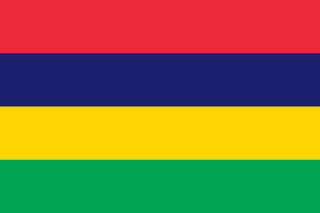
Mauritius is an island nation in the Indian Ocean, sitting east of Madagascar, off the southeastern coast of Africa.
Mauritius's name comes from Maurice of Nassau, a Dutch prince, after Dutch sailors named the previously uninhabited island in his honour when they claimed it in 1598.
Landscape: A small volcanic island ringed by coral reefs, with a central plateau and mountainous remnants of an ancient volcanic rim.
Climate: Tropical maritime, warm year-round with a wetter, hotter season and a cooler, drier season.
Food: Dholl puri, a flatbread filled with split pea, reflects the island's strong Indian culinary influence, alongside a mix of Creole, Chinese, and French cooking traditions.
Port Louis was founded by French colonists in 1735 as a naval base and has served as Mauritius's capital continuously since, through subsequent British colonial rule and independence in 1968. With a population of around 150,000, it remains the country's political and commercial centre.
The dodo, a flightless bird that once lived only on Mauritius and was hunted to extinction by the late 17th century, is the country's most famous symbol despite no longer existing, a permanent reminder built into the national coat of arms.
Mauritian model ship building, an intricate craft producing detailed replica sailing vessels, has become a genuinely significant local industry and export, and Mauritian sega music and dance, with roots among enslaved and indentured communities, remains a significant living cultural tradition.
Le Morne Brabant, a dramatic basalt mountain that once sheltered escaped enslaved people, is a UNESCO World Heritage Site commemorating resistance to slavery, and the coloured Seven Coloured Earths in Chamarel are a distinctive natural geological formation. The Pamplemousses Botanical Garden, established in 1770, is one of the oldest botanical gardens in the Southern Hemisphere and home to giant water lilies and a significant palm collection.
Mauritius has worked to bring back several species from the brink of extinction, including the Mauritius kestrel and pink pigeon, both of which had dropped to just a handful of individuals before dedicated conservation efforts helped them recover.
Mauritius is religiously diverse, with significant Hindu, Christian, and Muslim populations reflecting waves of Indian, European, and African settlement and indentured labour migration, making it one of the more religiously mixed countries in the world for its size.
Mauritius is a significant exporter of textiles and sugar, and has built a substantial offshore financial services sector, alongside a tourism industry that forms a major part of the national economy.
Independence Day on March 12th marks 1968, when Mauritius gained sovereignty from British colonial rule, and the same date later marked the country's 1992 transition to a republic. Given Mauritius's religious diversity, the country officially recognises major holidays across Hindu, Christian, Muslim, and Chinese traditions, including Diwali, Christmas, Eid, and Chinese New Year, reflecting its genuinely multicultural population. Mauritius's Thaipoosam Cavadee, a Hindu festival involving body piercing as devotion, draws significant participation.
Football holds the largest general domestic following in Mauritius, though the country's most significant individual international sporting achievement came in boxing, with Mauritius's first Olympic medal won in the sport. Sega dancing, though not a sport, is performed with an energy and cultural centrality that rivals major sporting events in national life. Mauritian athletes have also competed successfully in table tennis at regional championships. Mauritian deep-sea fishing tournaments draw international competitors given the island's rich surrounding waters.
Mauritius is a parliamentary republic, with a largely ceremonial President as head of state and a Prime Minister holding real executive power, accountable to a single-chamber National Assembly. The country is widely regarded as one of Africa's most stable and successful democracies, having maintained continuous multi-party elections since independence. Mauritius transitioned from a constitutional monarchy to a republic in 1992, removing the British monarch as head of state. Mauritius has developed a significant offshore financial services sector alongside its tourism and textile industries.
Piton de la Petite Rivière Noire is Mauritius's highest point at 828 metres. The lowest point sits at sea level around the island's coastline.
There's no especially close match for Mauritius's flag, the four equal horizontal stripes in red, blue, yellow, and green make it the only national flag in the world with exactly four horizontal bands of equal size, a genuinely unique structural distinction among all current national flags.
Adopted in 1968 upon independence from Britain, the only national flag in the world with four horizontal stripes of equal size.
Once the only known home of the dodo bird, extinct since the late 1600s.
Play today's Flagpie →© Flagpie 2026