
Africa
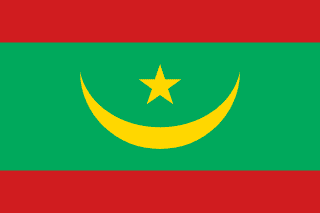
Mauritania sits on the Atlantic coast of West Africa, bordered by Western Sahara to the north, Algeria to the northeast, Mali to the east and south, and Senegal to the southwest.
Mauritania's name comes from the ancient Berber kingdom of Mauretania, though the modern country's borders don't closely correspond to the historic kingdom's actual territory, which was centred further north in present-day Morocco and Algeria.
Landscape: Around 90% covered by the Sahara Desert, with a narrow, more fertile strip along the Senegal River in the south.
Climate: Hot and arid across most of the country.
Food: Thieboudienne, a fish and rice dish shared with neighbouring Senegal, is widely eaten, alongside couscous and grilled meats.
Nouakchott was a small village before being chosen as Mauritania's capital upon independence in 1960, built essentially from scratch to house the new government, since no existing city was considered suitably central or developed. With a population of around 1.3 million, it has grown enormously beyond its original planned size.
The camel remains deeply significant to Mauritanian identity, tied to the country's historic Saharan trade routes and continuing nomadic pastoral traditions in rural areas.
Mauritanian silverwork and leatherwork, historically tied to Moorish craft traditions, and traditional woven tents used by nomadic communities remain significant, if increasingly less common, living crafts. Traditional Mauritanian tea ceremony, involving three specifically brewed rounds of tea, remains a genuinely significant daily social ritual.
The ancient trading towns of Chinguetti, Ouadane, Tichitt, and Oualata, all UNESCO World Heritage Sites, reflect Mauritania's historic role as a centre of Islamic scholarship and trans-Saharan trade centuries ago. The Eye of the Sahara, a massive circular geological formation visible from space, sits within Mauritania's desert and remains a subject of ongoing scientific study.
The Banc d'Arguin National Park, a UNESCO World Heritage Site along Mauritania's Atlantic coast, is one of the most important sites in the world for migratory birds, hosting millions of them each year. Mauritania's coastal waters, protected within Banc d'Arguin, support one of the last significant Mediterranean monk seal populations outside the Mediterranean itself.
Mauritania is overwhelmingly Muslim, and the country's population includes both Arab-Berber Moors and Black African communities, including the Fula and Soninke, with the relationship between these groups remaining a significant part of national social and political life.
Mauritania is a significant exporter of iron ore and fish products, with mining and its Atlantic fishing grounds both forming substantial parts of the national economy.
Independence Day on November 28th marks 1960, when Mauritania gained sovereignty from French colonial rule. Given Mauritania's overwhelmingly Muslim population, Eid al-Fitr and Eid al-Adha are both major national holidays, observed with particular significance given Mauritania's status as an Islamic republic. Mauritania's Africa Day in May marks the country's participation in the wider African Union.
Football holds the largest domestic following in Mauritania, the national team's qualification for its first ever Africa Cup of Nations in 2019 treated as a landmark achievement. Traditional camel racing remains significant too, tied to the country's deep Saharan nomadic heritage. Mauritanian athletics has grown through regional West African competition participation.
Mauritania is an Islamic presidential republic, with a President serving as both head of state and government, elected for a five-year term. The country has experienced numerous coups since independence, though it has seen greater political stability in more recent years, and Mauritania was among the last countries in the world to formally abolish slavery, in 1981, with the practice still documented as persisting informally in some areas. Mauritania's economy relies significantly on iron ore exports and its rich Atlantic fishing grounds. Mauritania's Sahara-spanning territory makes it one of the largest countries in Africa by land area. Mauritania's position bridging Arab North Africa and sub-Saharan Africa shapes much of its cultural and political identity.
Kediet ej Jill is Mauritania's highest point at 915 metres. The lowest point is Sebkha de Ndrhamcha, sitting around 5 metres below sea level. Mauritania's terrain is overwhelmingly Saharan desert, with a narrower fertile strip along the Senegal River in the south.
There's no especially close match for Mauritania's flag, the green field with a golden crescent and star, bordered by red stripes added in 2017, specifically representing the blood of those who fought for independence, a detail added relatively recently and not closely replicated by any other current national flag.
Adopted in 1959, with two red stripes added in 2017 following a national referendum, representing the blood shed by those who fought for independence.
Around 90% covered by the Sahara Desert.
Play today's Flagpie →© Flagpie 2026