
Europe
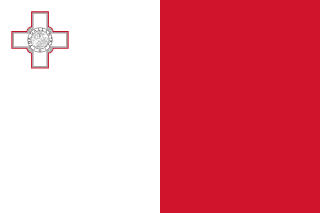
Malta is a small archipelago nation in the Mediterranean Sea, sitting south of Sicily and north of Libya and Tunisia.
Malta's name origin is debated, with theories ranging from a Phoenician word for 'refuge' or 'harbour' to a Greek word referring to honey, since ancient Malta was known for its honey production.
Landscape: A small, low-lying archipelago with a rocky coastline and very little natural water or forest cover.
Climate: Mediterranean, hot dry summers and mild, wetter winters.
Food: Rabbit stew is considered Malta's national dish, alongside pastizzi, flaky pastries filled with ricotta or mushy peas.
Valletta was built in the 16th century by the Knights of St. John following a major siege by the Ottoman Empire, purpose-designed as a fortified city and named after the Knights' Grand Master, Jean de Valette. With a population of around 5,800 within the city itself, it's among the smallest national capitals in the world by population.
The Maltese cross, associated with the Knights of St. John who once ruled the island, remains a powerful and widely used national symbol, and the Maltese national dog, the Kelb tal-Fenek, has hunted on the island for thousands of years.
Maltese lace-making and filigree silverwork both have centuries-long histories, and traditional Maltese boats, brightly painted with eyes on the bow said to ward off evil, remain in active use by local fishermen today. Traditional Maltese glassblowing, particularly the distinctive swirled Mdina Glass style developed in the 1960s, has become a well-known modern Maltese craft export.
The megalithic temples of Malta, including Ġgantija, are among the oldest free-standing structures in the world, predating even the pyramids of Egypt, and Valletta's fortified old city is a UNESCO World Heritage Site.
Malta's position along Mediterranean migration routes makes it an important stopover for many bird species, though the small islands have limited native large wildlife given their size and long history of dense human settlement. Malta's surrounding waters support significant populations of dolphins and, seasonally, migrating whales passing through the Mediterranean.
Malta is overwhelmingly Roman Catholic, with the religion deeply embedded in public life and national identity, reflecting centuries of rule connected to Catholic powers including the Knights of St. John.
Malta is a significant exporter of electronics, pharmaceuticals, and refined petroleum products, and has also built a substantial financial services and online gaming licensing industry relative to its small size.
Independence Day on September 21st marks 1964, when Malta gained sovereignty from British colonial rule, and Freedom Day on March 31st separately marks 1979, when the last British military forces departed the island, treated as an equally significant milestone in Malta's full sovereignty. Feast of Our Lady of Victory on September 8th also commemorates the end of the Great Siege of Malta in 1565, layering multiple historical memories onto Malta's early autumn calendar. Village feast days (festas), honouring local patron saints with fireworks and processions, remain genuinely central to community life across the islands.
Football holds the largest domestic following in Malta, and the country has also built a strong tradition in waterpolo, drawing significant crowds relative to its small population given Malta's close relationship with the sea. Traditional Maltese boat racing, particularly the regatta held each September, remains a genuinely significant local sporting and cultural event. Malta's diving and underwater sports scene has grown significantly given the exceptional visibility of its surrounding waters.
Malta is a parliamentary republic, with a largely ceremonial President as head of state and a Prime Minister holding real executive power, accountable to a single-chamber House of Representatives. The country gained independence from Britain in 1964 and became a republic in 1974, and Malta later joined the European Union in 2004, becoming one of its smallest member states.
Ta' Dmejrek, on the island of Malta itself, is the country's highest point at just 253 metres, reflecting the archipelago's generally low, rocky terrain. The lowest point sits at sea level around the islands' coastlines.
There's no especially close match for Malta's flag, the plain white-and-red vertical split with the George Cross in the canton is distinctive enough as a combination, the cross itself referencing a specific British military honour awarded to the entire island in 1942, a detail unique to Malta's own history that no other flag replicates.
The white-and-red design has roots going back centuries, with the George Cross added in 1943 in honour of the award King George VI gave the entire island for its resistance during the Second World War siege.
One of the most densely populated countries in Europe, despite being one of the smallest.
Play today's Flagpie →© Flagpie 2026