
Africa
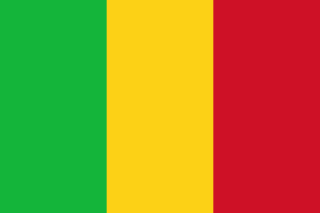
Mali is a landlocked country in West Africa, bordered by Algeria to the north, Niger to the east, Burkina Faso and Ivory Coast to the south, and Guinea, Senegal, and Mauritania to the west.
Mali's name comes from the Mali Empire, one of the wealthiest and most powerful states in medieval West Africa, renowned particularly for the immense gold wealth of Emperor Mansa Musa in the 14th century.
Landscape: Landlocked, spanning the Sahara Desert in the north, the Sahel in the centre, and more fertile savanna along the Niger River in the south.
Climate: Hot and dry across most of the country, with a short wet season in the south.
Food: Riz au gras, rice cooked with meat and vegetables in a rich sauce, is a widely eaten staple dish.
Bamako has served as Mali's capital since French colonial times, growing from a small settlement on the Niger River into the country's dominant political and economic centre. With a population of around 2.7 million, it remains one of the fastest-growing cities in Africa.
The lion is closely associated with Mali, referencing both the country's wildlife heritage and the legacy of the historic Mali Empire, and traditional Malian mud-cloth (bogolan) patterns function as a widely recognised cultural symbol.
Malian bogolan mud-cloth, dyed using fermented mud in intricate patterns, is one of the most internationally recognised African textile traditions, and Malian bronze and wood sculpture, particularly among the Dogon and Bambara peoples, holds deep spiritual significance.
Timbuktu, once a major centre of Islamic scholarship and trade during the Mali Empire, houses centuries-old manuscripts and mud-brick mosques, and the Bandiagara Escarpment, home to the Dogon people's distinctive cliff-dwelling villages, are both UNESCO World Heritage Sites.
Mali's remaining Sahel and desert regions support small populations of desert-adapted elephants and other wildlife adapted to increasingly harsh, arid conditions. Mali's Gourma region is home to the last population of desert-adapted elephants in the Sahel, migrating unusually long distances in search of water.
Mali is overwhelmingly Muslim, and the country's Dogon people maintain distinct traditional beliefs and cosmology alongside Islam, reflected in their unique cliffside architecture and elaborate mask ceremonies. Timbuktu's historic manuscripts, numbering in the hundreds of thousands, represent one of the largest collections of African written scholarship, painstakingly preserved and protected during periods of regional conflict.
Mali is a significant exporter of gold, one of Africa's larger producers, alongside cotton, with mining and agriculture both forming substantial parts of the national economy.
Independence Day on September 22nd marks 1960, when Mali gained sovereignty from French colonial rule, following the brief collapse of its short-lived federation with Senegal earlier that same year. Given Mali's overwhelmingly Muslim population, Eid al-Fitr and Eid al-Adha are both major national holidays. Mali's Army Day in January honours the country's armed forces amid ongoing regional security challenges.
Football holds the largest domestic following in Mali by a wide margin, and traditional Malian wrestling remains practised across various regions, tied to specific ethnic and community customs shared with several neighbouring West African nations. Malian basketball has also produced players competing at professional levels abroad.
Mali's political situation has been in significant flux in recent years, having experienced multiple military coups since 2020 amid ongoing security challenges from extremist violence across the wider Sahel region, with the country currently governed by a military transitional authority rather than an elected civilian government. Mali holds significant gold reserves, one of Africa's larger producers despite ongoing security challenges. Mali's ancient city of Timbuktu remains a significant, if currently difficult to access, historical and cultural site. Mali's ancient trans-Saharan trade routes once made it one of the wealthiest regions in the medieval world.
Hombori Tondo is Mali's highest point at 1,155 metres. The lowest point is along the Senegal River, sitting around 23 metres above sea level, Mali's lowest point despite being well above true sea level, since the country is entirely landlocked. Mali's terrain spans Saharan desert in the north to more fertile Sahel and savanna land along the Niger River in the south.
Guinea's flag uses the exact same green-yellow-red vertical tricolour as Mali's, both tracing back to a shared tribute to Ghana's independence-era flag, and Mali's plain, unadorned three stripes, without any central emblem, make it the version most easily mistaken for either Guinea's or Senegal's own variations on the same palette.
Adopted in 1961 after Mali separated from a short-lived federation with Senegal, removing a human figure that had been at the centre of the original 1959 design.
Home to Timbuktu, once one of the most important centres of Islamic scholarship and trade in the world.
Play today's Flagpie →© Flagpie 2026