
Africa
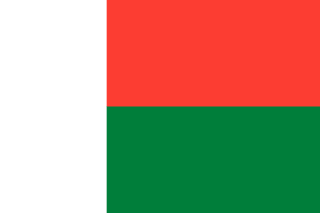
Madagascar is a large island nation in the Indian Ocean, sitting off the southeastern coast of Africa across the Mozambique Channel.
Madagascar's name origin is debated, one theory traces it to a mistaken reference by Marco Polo, who may have confused it with Mogadishu in Somalia, with the name subsequently sticking through later European maps despite the apparent error.
Landscape: The world's fourth-largest island, with a central highland plateau, tropical rainforest in the east, and drier savanna in the west.
Climate: Tropical along the coasts, more temperate in the central highlands, with a distinct wet and dry season.
Food: Romazava, a beef and leafy green stew, is widely considered the national dish, typically served with rice.
Antananarivo was founded in the early 17th century by the Merina kingdom, whose rulers eventually came to control most of the island before French colonisation. With a population of around 1.4 million, its name means roughly 'city of the thousand,' referring to a legendary group of soldiers said to have once guarded the site.
The ring-tailed lemur, found only on Madagascar, is the country's most internationally recognised symbol, and the traveller's palm, despite not actually being a true palm, is closely associated with Madagascar's distinctive flora.
Malagasy raffia weaving, using fibre from a native palm species, is a significant craft export, and traditional Malagasy wood carving, particularly funerary sculptures among certain ethnic groups, reflects deep spiritual beliefs about ancestry. Traditional Malagasy silk weaving, using silk from native wild silkworms rather than the domesticated species used elsewhere, is a distinctive local craft found almost nowhere else.
The Avenue of the Baobabs, lined with centuries-old baobab trees, is Madagascar's most photographed landscape, and the Royal Hill of Ambohimanga, a sacred site of the former Merina kingdom, is a UNESCO World Heritage Site.
Madagascar's long isolation from mainland Africa has produced extraordinary levels of endemic species, including over 100 species of lemur found nowhere else on Earth, alongside chameleons, baobab trees, and countless other unique plants and animals.
Madagascar blends Christian faith with traditional Malagasy ancestor veneration, including the famadihana, or 'turning of the bones' ceremony, in which families exhume and rewrap ancestors' remains as an act of continued honour and connection.
Madagascar is the world's largest producer and exporter of vanilla, alongside cloves and other spices, with vanilla in particular forming a significant and often highly volatile share of the country's export revenue.
Independence Day on June 26th marks 1960, when Madagascar gained sovereignty from French colonial rule, celebrated nationwide with parades and cultural performances. Famadihana, or 'turning of the bones,' though not a fixed annual public holiday, remains a genuinely significant traditional practice in which families periodically exhume and rewrap ancestors' remains as an act of continued honour and connection. Madagascar's Ancestors' Day traditions remain genuinely significant across many of the island's diverse regional communities.
Football and rugby both hold significant followings in Madagascar, rugby carrying particular weight given the country's historical ties to France, and Madagascar has also produced notable competitors in petanque, a French bowling game that remains genuinely popular given the same colonial-era cultural influence. Malagasy rugby has grown considerably in domestic popularity given the island's historic French ties. Malagasy pool (billiards) has produced notable competitors at African championship level.
Madagascar is a semi-presidential republic, splitting executive authority between a directly elected President and a Prime Minister accountable to a bicameral parliament. The country has experienced significant political instability since independence, including several disputed elections and periods of unconstitutional transfers of power, though it has generally returned to constitutional order following each episode. Madagascar's vanilla industry, the largest in the world, remains a significant and often volatile part of its export economy. Madagascar's extraordinary biodiversity, with the vast majority of its species found nowhere else, drives significant conservation-focused tourism.
Maromokotro is Madagascar's highest point at 2,876 metres. The lowest point sits at sea level along Madagascar's extensive coastline.
There's no especially close match for Madagascar's flag, the white vertical band at the hoist beside horizontal red and green stripes is a genuinely distinctive layout, the white and red tracing back to the historic Merina Kingdom's traditional colours, and green added to represent the island's coastal peoples, a combination not closely echoed by any other national flag.
Adopted in 1958, its white and red stripes tied to the historic Merina Kingdom that once ruled much of the island, with green added to represent coastal communities.
So isolated for so long that around 90% of its wildlife exists nowhere else on Earth.
Play today's Flagpie →© Flagpie 2026