
Europe
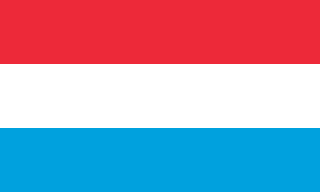
Luxembourg is a small, landlocked country in Western Europe, wedged between Belgium to the west, Germany to the east, and France to the south.
Luxembourg's name comes from an old Germanic phrase meaning 'small castle' or 'little fortress,' referring to a fortification built on a rocky outcrop in the 10th century around which the modern city and country later grew.
Landscape: Forested hills and valleys in the north (the Ardennes), with gentler farmland further south.
Climate: Temperate maritime, mild with rain spread through the year.
Food: Judd mat gaardebounen, smoked pork collar with broad beans, is considered the national dish.
Luxembourg City has served as capital since the country's founding, built around the original fortress that gave the country its name, with a position historically valuable enough that the city became known as the 'Gibraltar of the North' for its heavy fortification. With a population of around 130,000, it now hosts significant European Union institutions alongside a major international banking sector.
The red lion appears on Luxembourg's coat of arms, tied to the country's historic ruling House of Nassau, and the country's small size and neutrality have themselves become something of a national point of identity.
Luxembourg's craft traditions are closely tied to those of its French and German neighbours, though the country maintains its own distinct Luxembourgish language and associated folk customs, including specific local festivals and traditional dress for formal occasions. Luxembourg's wine-making tradition along the Moselle River valley, though small in scale, has been practised for centuries.
The Bock Casemates, an extensive network of underground tunnels carved into the rock beneath Luxembourg City, reflect the city's fortified history, and the Notre-Dame Cathedral houses the tombs of the country's royal family. The Mullerthal region, nicknamed 'Little Switzerland' for its rocky terrain and dense forest, offers hiking trails through dramatic sandstone formations unusual for such a small country.
Luxembourg's Ardennes forest region, shared with Belgium, supports wild boar and red deer, among the larger wild mammals remaining in this small, densely developed country.
Luxembourg is historically Roman Catholic, though the country has a notably large foreign resident population, close to half its total residents, given its role as a major international financial and EU administrative centre.
Luxembourg's economy is dominated by financial services and banking, one of the largest financial centres in the world relative to its small population, alongside steel production, historically the country's primary industry.
National Day on June 23rd celebrates the Grand Duke's official birthday, regardless of his actual birth date, and is marked by a torchlight procession and fireworks the evening before, followed by a Te Deum religious service. Schueberfouer, a traditional funfair held each August in Luxembourg City, dates back to the 14th century and remains one of the country's most significant annual public gatherings. The Emaischen Easter market in Luxembourg City features traditional whistling clay birds called Péckvillecher, a distinctly local craft tradition.
Cycling holds particular historic significance in Luxembourg relative to its tiny population, the country having produced multiple Tour de France winners in the early-to-mid 20th century, a genuinely remarkable achievement for such a small nation. Football also draws a significant domestic following, even without major international success to match. Luxembourg's small population makes its occasional individual sporting successes a source of particularly outsized national pride.
Luxembourg is a parliamentary constitutional monarchy, with the Grand Duke serving a largely ceremonial role and a Prime Minister holding real executive power, accountable to the Chamber of Deputies. The country is one of only a handful of grand duchies remaining in the world, and Luxembourg City hosts several major European Union institutions, giving the small country outsized administrative significance.
Kneiff, in the country's north, is Luxembourg's highest point at just 560 metres. The lowest point is where the Moselle River exits the country, sitting around 133 metres above sea level, Luxembourg's lowest point despite being well above true sea level, since the country is entirely landlocked.
The Netherlands's flag is Luxembourg's closest match by a wide margin, both use the same red-white-blue horizontal layout, differing mainly in a lighter shade of blue and slightly different proportions in Luxembourg's version, a resemblance close enough that it's genuinely well known and occasionally a source of mild confusion between the two countries.
Grew directly out of the Netherlands' own flag due to a shared monarch through the 19th century, with the current lighter blue shade officially fixed in 1972 to further distinguish it from the Dutch flag.
One of only three surviving grand duchies left in the world.
Play today's Flagpie →© Flagpie 2026