
Europe
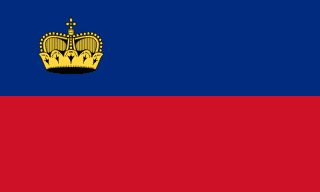
Liechtenstein is a tiny country in the Alps between Switzerland to the west and Austria to the east, one of only two doubly landlocked countries in the world.
Liechtenstein's name comes directly from the House of Liechtenstein, the princely family that purchased the territory in the early 18th century and gave it their own family name, one of relatively few countries named after its ruling dynasty.
Landscape: A tiny, mountainous country in the Alps, one of only two doubly landlocked countries in the world.
Climate: Alpine, cold winters and mild summers, varying with elevation.
Food: Käsknöpfle, a cheese-topped pasta dish similar to mac and cheese, is a traditional Liechtenstein comfort food.
Vaduz has served as Liechtenstein's capital for centuries, dominated by Vaduz Castle, still the residence of the country's ruling prince, perched on a hill overlooking the town. With a population of around 5,700, it remains one of the smallest national capitals in the world, genuinely walkable in its entirety within a short visit.
The princely crown, tied directly to the ruling House of Liechtenstein, was added to the national flag in 1937 after the country discovered its flag was identical to Haiti's, and remains the country's most distinctive national symbol.
Liechtenstein's small size means it shares much of its craft heritage with neighbouring Switzerland and Austria, including alpine woodworking and traditional dairy and cheese-making techniques tied to the country's mountain farming communities.
Vaduz Castle, still an active royal residence rather than purely a museum, and the Gutenberg Castle in nearby Balzers are among Liechtenstein's most significant landmarks.
Liechtenstein's alpine terrain, despite the country's tiny size, supports chamois and golden eagles, similar to the wildlife found across the wider Alpine region it sits within.
Liechtenstein is historically and predominantly Roman Catholic, and the country remains one of the few in Europe still governed as a genuine constitutional monarchy with real reigning power retained by its prince, alongside an elected parliament. Liechtenstein did not grant women the right to vote until 1984, one of the last countries in Europe to do so, a notable point in the country's otherwise long constitutional history.
Liechtenstein has an unusually large manufacturing and financial services sector relative to its tiny population, exporting precision instruments, dental products, and machinery, alongside functioning as a significant international banking centre.
National Day on August 15th, also the Catholic Feast of the Assumption, is Liechtenstein's most significant public holiday, marked by a firework display and a garden party at the Prince's castle to which all citizens are traditionally invited. Given Liechtenstein's small size and close ties to neighbouring Austria and Switzerland, many of the country's most significant celebrations remain genuinely local and village-based. Liechtenstein's Josefstag in March remains a traditional Catholic feast day observed as a public holiday.
Alpine skiing holds significant cultural weight in Liechtenstein given its entirely mountainous terrain, and the country has, remarkably for its tiny population, won Olympic medals in the sport, giving it one of the highest medals-per-capita ratios of any nation in Winter Olympics history. Football and cycling also draw modest domestic followings.
Liechtenstein is a parliamentary constitutional monarchy, with the Prince retaining significant genuine executive authority, including veto power over legislation, alongside an elected parliament called the Landtag. The country holds the distinction of being one of only two doubly landlocked nations in the world, meaning it's surrounded entirely by other landlocked countries. Liechtenstein's economy relies heavily on financial services and precision manufacturing despite its tiny population.
Grauspitz is Liechtenstein's highest point at 2,599 metres. The lowest point is where the Rhine River exits the country, sitting around 430 metres above sea level, Liechtenstein's lowest point despite being well above true sea level, since the country is entirely landlocked and mountainous. Liechtenstein's entirely alpine terrain gives the small country a dramatic landscape despite its tiny total area.
Haiti's flag was, until 1937, functionally identical to Liechtenstein's own blue-and-red design, a coincidence discovered when both countries' delegations arrived at the 1936 Olympics flying what appeared to be the same flag, prompting Liechtenstein to add its distinctive gold crown specifically to tell the two apart going forward.
A gold crown was added to the flag in 1937, after the country discovered at the 1936 Olympics that its flag was identical to Haiti's.
One of only two doubly landlocked countries in the world, meaning it's surrounded entirely by other landlocked countries.
Play today's Flagpie →© Flagpie 2026