
Africa
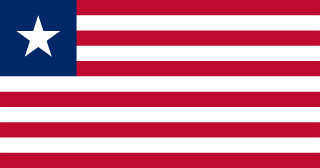
Liberia sits on the Atlantic coast of West Africa, bordered by Sierra Leone to the northwest, Guinea to the north, and Ivory Coast to the east. Its name comes from the Latin word for 'free,' after it was founded as a home for freed slaves.
Liberia's name comes from the Latin word for 'free,' chosen because the country was founded in the early 19th century by the American Colonization Society as a settlement for freed and formerly enslaved African Americans.
Landscape: A narrow coastal plain rising to rolling hills and plateau further inland, with dense rainforest covering much of the interior.
Climate: Tropical, hot and humid with a pronounced wet season.
Food: Rice is the everyday staple, typically served with a spiced palm butter or cassava leaf sauce.
Monrovia was founded in 1822 and named after United States President James Monroe, whose administration supported the colonisation effort, making it one of very few world capitals named directly after a foreign head of state. With a population of around 1.5 million, it remains Liberia's dominant political and economic centre.
The African bush elephant appears on Liberia's coat of arms, and the country's flag, closely modelled on the United States flag, reflects Liberia's founding by formerly enslaved African Americans and the American Colonization Society.
Liberian mask carving, tied to secret societies like the Poro and Sande that remain culturally significant among various ethnic groups, reflects deep spiritual and ceremonial traditions, and traditional Liberian textile dyeing techniques remain practised in rural areas. Traditional Liberian storytelling and oral history, passed through generations particularly by elder community members, remains an important, if increasingly less common, cultural practice.
Sapo National Park protects the largest remaining area of primary rainforest in Liberia, and the country's beaches, particularly around Robertsport, have become known internationally among surfers in recent years.
Liberia holds a significant share of the Upper Guinean rainforest, one of West Africa's most important remaining biodiversity hotspots, home to pygmy hippopotamuses and forest elephants.
Liberia is majority Christian, reflecting its founding by American settlers, alongside a significant Muslim minority and numerous Indigenous ethnic groups, including the Kpelle, Bassa, and Grebo, each with distinct languages and traditions. Liberia holds the distinction of being one of only two African countries never formally colonised by a European power, alongside Ethiopia.
Liberia is a significant exporter of rubber and iron ore, and maintains one of the largest ship registries in the world, with many international vessels registered under the Liberian flag despite having no direct connection to the country.
Independence Day on July 26th marks 1847, when Liberia became Africa's first modern republic, founded by freed and formerly enslaved African Americans with support from the American Colonization Society. Thanksgiving, held on the first Thursday of November, reflects the country's American founding influence, a distinctly Liberian version of the holiday separate from and predating the modern American one Liberians might otherwise be assumed to be copying.
Football holds a place in Liberian national identity matched by few other pursuits, closely tied to former player and later President George Weah, the only African to have ever won football's Ballon d'Or award, whose sporting fame directly propelled his subsequent political career. Basketball and athletics also draw significant domestic followings. Liberian athletics has produced regional competitors despite the country's limited sporting infrastructure. Liberian athletics has seen renewed international investment in training infrastructure in recent years.
Liberia is a presidential republic, with a President serving as both head of state and government, modelled significantly on the United States system given the country's founding history. Liberia experienced a devastating civil war from 1989 to 2003, whose legacy continues to shape the country's ongoing recovery and development. Liberia's 1847 founding makes it the oldest republic in Africa, predating most of the continent's other independent states by over a century. Liberia's rubber and iron ore industries remain significant, alongside its large international ship registry. Liberia's large international ship registry means many vessels worldwide fly its flag despite having no connection to the country.
Mount Wuteve is Liberia's highest point at 1,440 metres. The lowest point sits at sea level along Liberia's Atlantic coastline.
The United States's flag is Liberia's closest match by a wide margin, both use red-and-white stripes with a blue canton, a direct and deliberate historical echo, though Liberia's canton holds a single white star rather than the fifty found on the American flag.
Adopted in 1847, closely modelled on the flag of the United States, since Liberia was founded by freed American slaves and the American Colonization Society.
Africa's oldest modern republic, founded in 1847.
Play today's Flagpie →© Flagpie 2026