
Africa
Lesotho is a small, mountainous country entirely surrounded by South Africa, the only country in the world that lies completely above 1,000 metres in elevation.
Lesotho's name means 'land of the Sotho-speaking people,' referring to the Basotho, the country's dominant ethnic group, whose name and kingdom were consolidated under King Moshoeshoe I in the early 19th century.
Landscape: Entirely mountainous, the only country in the world lying completely above 1,000 metres elevation, surrounded entirely by South Africa.
Climate: Temperate, with genuinely cold, often snowy winters given the country's high elevation.
Food: Papa, a maize porridge, is the everyday staple, typically served with a vegetable relish called moroho.
Maseru was founded in 1869 as a British colonial administrative post along the Caledon River, and became capital of independent Lesotho in 1966. With a population of around 330,000, it remains the country's only major urban centre, given Lesotho's overwhelmingly rural, mountainous terrain.
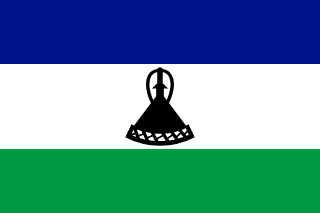
The Basotho hat, a distinctive conical straw hat with a topknot, is Lesotho's most recognisable national symbol, appearing on the flag itself, a rare example of an item of clothing serving as a country's central national emblem.
The Basotho blanket, a thick woven wool blanket worn as everyday dress rather than purely ceremonial, remains genuinely central to Basotho identity, alongside traditional grass weaving used to make the iconic mokorotlo hat. Traditional Basotho pony trekking, using a hardy local horse breed, remains both a practical means of mountain transport and a distinctive tourism draw.
Thaba Bosiu, a flat-topped mountain that served as King Moshoeshoe I's stronghold and capital during Lesotho's formative period, remains a significant site of national historical memory.
Sehlabathebe National Park, part of a shared UNESCO World Heritage Site with South Africa's Drakensberg range, protects high-altitude grassland habitat home to the endangered bearded vulture.
Lesotho is majority Christian, and the country is entirely surrounded by South Africa, a geographic situation that has shaped much of its economic and social life, with many Basotho historically working in South African mines. Lesotho is the only country in the world that lies entirely above 1,000 metres in elevation, giving it a notably cooler climate than much of the rest of southern Africa.
Lesotho is a significant exporter of textiles and garments, alongside diamonds, and water, sold to South Africa through a major dam and pipeline system given Lesotho's abundant highland rainfall.
Independence Day on October 4th marks 1966, when Lesotho gained sovereignty from British colonial rule. Moshoeshoe's Day on March 11th honours the founding king who united the Basotho nation in the early 19th century, a figure of profound significance to Lesotho's national identity. Lesotho's Family Day, observed nationally, reflects the strong cultural emphasis on extended family bonds.
Football holds the largest domestic following in Lesotho, even without major international competitive success to match, and traditional horse racing, using the hardy Basotho pony bred specifically for the country's mountainous terrain, remains a genuinely significant cultural and sporting tradition. Lesotho's athletics programme has grown through southern African regional competitions.
Lesotho is a parliamentary constitutional monarchy, with the King serving a largely ceremonial role and a Prime Minister holding real executive power, accountable to a bicameral parliament. The country is entirely surrounded by South Africa, a geographic situation, known as being an enclave, shared with only one other country in the world, and this has shaped much of Lesotho's economic and political relationship with its much larger neighbour. Lesotho's textile industry, exporting significantly to the United States, forms an important part of its economy.
Thabana Ntlenyana is Lesotho's highest point at 3,482 metres, the highest peak in southern Africa. Lesotho holds the unusual distinction of having the highest lowest point of any country in the world, at around 1,400 metres above sea level, since the entire country sits on an elevated plateau. Lesotho's entire territory sits above 1,000 metres, the only country in the world with this distinction.
There's no especially close match for Lesotho's flag, the Basotho hat, a distinctive conical straw hat with a topknot, appearing directly at the centre of a blue-white-green horizontal design is a genuinely unique choice, one of very few national flags in the world built around an actual item of traditional clothing.
Adopted in 2006, replacing a flag that had featured a shield and spears, simplified to a Basotho hat on a plain background.
The only country in the world that lies entirely above 1,000 metres in elevation.
Play today's Flagpie →© Flagpie 2026