
Asia
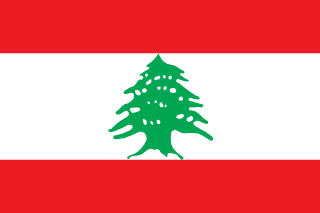
Lebanon sits on the eastern coast of the Mediterranean Sea, bordered by Syria to the north and east and Israel to the south.
Lebanon's name comes from a Semitic root meaning 'white,' likely referring to the snow-capped peaks of Mount Lebanon, visible for much of the year and a defining feature of the country's landscape.
Landscape: A narrow coastal plain backed by the Mount Lebanon range, with the fertile Beqaa Valley further inland.
Climate: Mediterranean along the coast, colder and snowier in the mountains.
Food: Hummus, tabbouleh, and a wide range of mezze (small shared dishes) form the backbone of Lebanese cuisine.
Beirut has been continuously inhabited for over 5,000 years, one of the oldest cities in the world, and has served as Lebanon's capital since the country's modern founding, despite being destroyed and rebuilt multiple times throughout its long history, most recently after the 1975-1990 civil war. With a population of around 2.4 million across greater Beirut, it remains the country's dominant economic and cultural centre.
The cedar of Lebanon, referenced in the Bible and prized for millennia as a building material, is the country's most significant national symbol, appearing at the centre of the Lebanese flag itself.
Lebanese silk weaving has historical roots going back centuries, particularly in Mount Lebanon, and the country has a strong tradition in gold and silverwork, alongside a globally recognised culinary craft in mezze-style small dish cooking.
Baalbek, home to some of the largest and best-preserved Roman temple ruins in the world, is a UNESCO World Heritage Site, and Beirut's National Museum holds significant archaeological collections spanning Lebanon's long history.
Lebanon's remaining cedar forests, though a fraction of their historical extent, are protected in reserves like the Cedars of God, some of the trees there believed to be over a thousand years old. Lebanon's position along a major bird migration corridor between Africa and Europe makes it an important, if under-monitored, stopover for millions of birds each year.
Lebanon is religiously diverse, with a roughly even split between Christian and Muslim populations and further division among numerous specific sects, a diversity formally built into the country's power-sharing political system.
Lebanon has historically exported jewellery, processed foods, and paper products, though the country's economy has faced severe difficulties in recent years, significantly affecting formal trade activity. Beirut historically functioned as a major regional banking and trade hub for the wider Middle East, a role significantly disrupted by the civil war and more recent economic crises.
Independence Day on November 22nd marks 1943, when Lebanon gained sovereignty from French administration, celebrated with military parades in Beirut. Given Lebanon's religious diversity, the country observes an unusually wide range of holidays across faiths, including both Christian and Muslim celebrations as official public holidays, a genuine reflection of its power-sharing political structure. Beirut's own founding anniversary is marked locally, reflecting the city's status as one of the oldest continuously inhabited urban centres in the world.
Basketball and football both hold major followings in Lebanon, with basketball in particular carrying deep domestic passion and some of the most competitive club rivalries in the Middle East. Skiing is also genuinely popular given Lebanon's mountainous terrain, one of relatively few countries in the region where it's possible to ski and visit the beach on the same day. Lebanon has also produced notable competitive swimmers and rowers given its Mediterranean coastal geography.
Lebanon is a parliamentary republic with a distinctive confessional power-sharing system, requiring the President to be a Maronite Christian, the Prime Minister a Sunni Muslim, and the Speaker of Parliament a Shia Muslim, a structure designed to balance the country's religious communities following a devastating civil war that lasted from 1975 to 1990. This confessional system, while designed to ensure fair representation, has also been criticised for entrenching sectarian divisions rather than resolving them.
Qurnat as Sawda, in the Mount Lebanon range, is the country's highest point at 3,088 metres, and remains snow-capped for much of the year, close to some of the world's oldest surviving cedar groves. The lowest point sits at sea level along Lebanon's Mediterranean coastline.
There's no especially close match for Lebanon's flag, the red-white-red horizontal stripes with a green cedar tree at the centre are distinctive enough as a combination that confusion is unlikely, though several other countries share the same red-white-red base structure alone, including Austria, Latvia, and Peru, all missing Lebanon's distinctive tree entirely.
Adopted in 1943 during the transition to independence from France, the cedar tree has represented Lebanon since antiquity.
Its capital, Beirut, has been destroyed and rebuilt at least seven times throughout its long history.
Play today's Flagpie →© Flagpie 2026