
Asia
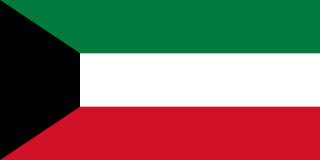
Kuwait is a small country at the northern tip of the Persian Gulf, wedged between Iraq to the north and Saudi Arabia to the south.
Kuwait's name comes from an Arabic diminutive of 'kut,' meaning a small fort or fortress, referring to an early fortified settlement built near the coast that the modern city later grew around.
Landscape: Mostly flat, low-lying desert with a coastline on the Persian Gulf.
Climate: Desert climate, extremely hot summers, mild winters.
Food: Machboos, a spiced rice dish with meat, is Kuwait's most widely eaten traditional meal.
Kuwait City grew around a small fort on the Persian Gulf coast, becoming a significant trading and pearling port before oil transformed the economy in the 20th century. With a population of around 3.2 million across the metropolitan area, it remains Kuwait's overwhelmingly dominant urban centre.
The falcon appears on Kuwait's coat of arms, and the country shares the broader Gulf region's cultural symbols, including Bedouin heritage and traditional dhow boats, once central to pearling and trade.
Kuwait has a strong historical tradition in dhow shipbuilding and pearl diving, both central to the country's pre-oil economy, alongside Bedouin weaving traditions like sadu, shared across the wider Gulf region.
The Kuwait Towers, completed in 1979, are the country's most recognisable modern landmark, combining a water tower function with an observation deck and restaurant. Failaka Island, holding ruins from ancient Greek and Bronze Age settlements, reflects a much older layer of history in the Gulf region than is often associated with the area.
Kuwait's desert terrain supports relatively limited wildlife given its arid climate, though the country's coastal wetlands, particularly Jahra Nature Reserve, are an important stop for migratory birds.
Kuwait is a significant global exporter of crude oil, with petroleum forming the overwhelming majority of the country's export revenue and government income. Kuwait also maintains one of the largest sovereign wealth funds in the world, built specifically to invest oil revenue for future generations after reserves eventually decline.
National Day on February 25th marks 1950, when the current Emir's predecessor came to power, and Liberation Day on February 26th, held the very next day, commemorates the end of the 1990-91 Iraqi occupation during the Gulf War, together forming Kuwait's most significant annual celebration period. Eid al-Fitr and Eid al-Adha are both major holidays given Kuwait's Muslim population. Kuwait's back-to-back National and Liberation Days each February are marked with citywide decorations that remain up for weeks.
Football holds the largest following in Kuwait, and the country has a notable history in international shooting sports, having produced Olympic medallists in trap shooting, a genuinely unusual area of strength for a country of Kuwait's size. Camel racing and falconry both remain significant traditional pursuits too. Kuwait has also hosted several regional multi-sport events, part of a broader push to raise its international sporting profile.
Kuwait is a constitutional emirate, with the Emir holding significant executive authority alongside an elected National Assembly, giving Kuwait one of the more genuinely competitive and long-standing parliamentary systems among the Gulf monarchies. Kuwaiti women gained the right to vote and run for office in 2005, a significant milestone in the country's political development. Kuwait's National Assembly has real legislative teeth, including the power to question ministers directly, making its parliamentary tradition unusually assertive among Gulf monarchies.
Kuwait's highest point sits at around 306 metres near the Iraqi border, an unnamed rise in the country's otherwise almost entirely flat desert terrain. The lowest point is at sea level along Kuwait's Persian Gulf coastline.
Sudan, Palestine, and Jordan all use the same red-white-black-green Pan-Arab colour combination Kuwait's flag does, tracing back to the 1916 Arab Revolt flag, though Kuwait's specific trapezoid-shaped black band at the hoist gives it a distinctive enough silhouette that it isn't often mistaken for the others despite the shared palette.
Adopted in 1961 upon independence from Britain, drawing on the same Pan-Arab colours used across the region.
One of the wealthiest countries in the world by oil reserves, with foreign nationals making up around 70% of its population.
Play today's Flagpie →© Flagpie 2026